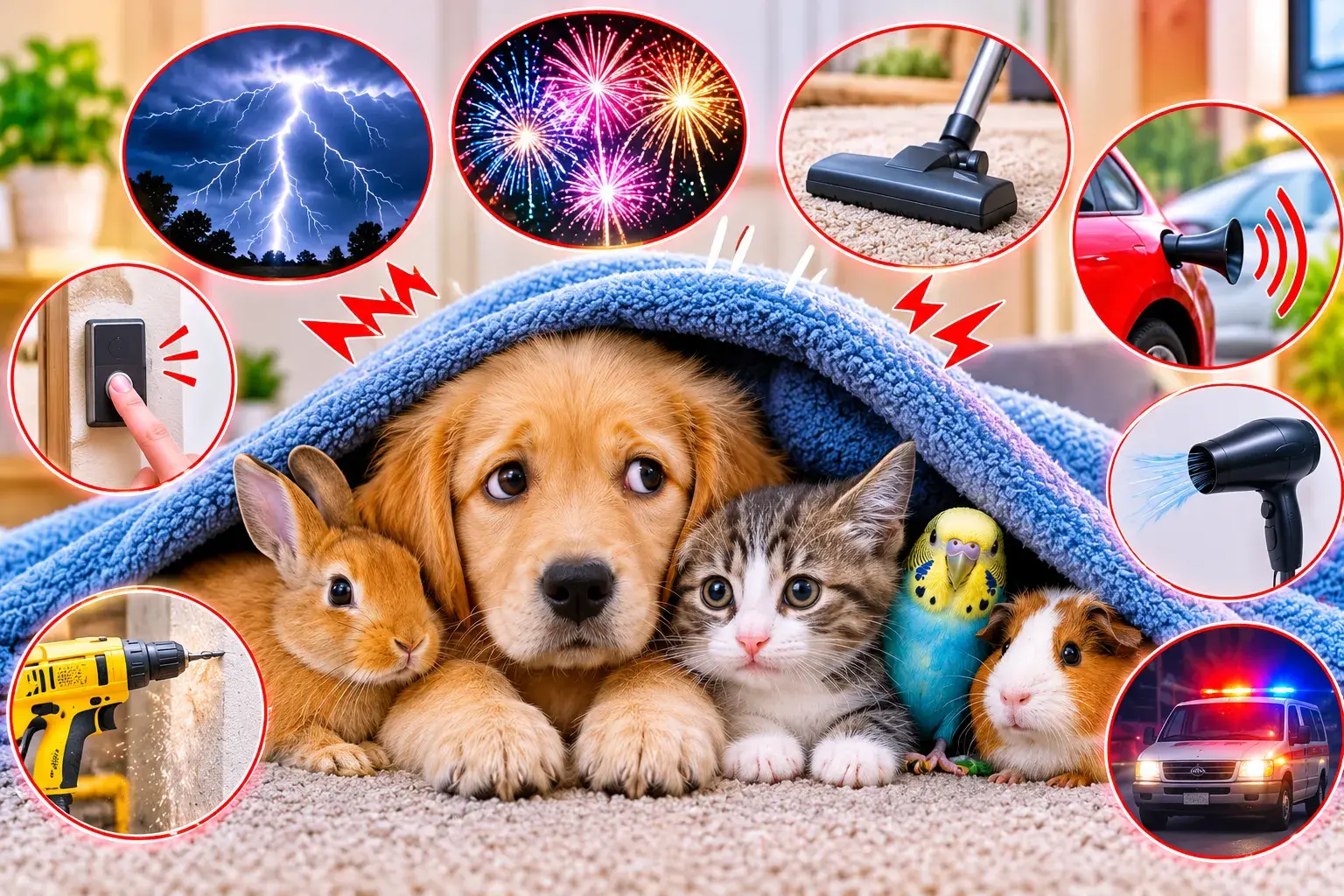
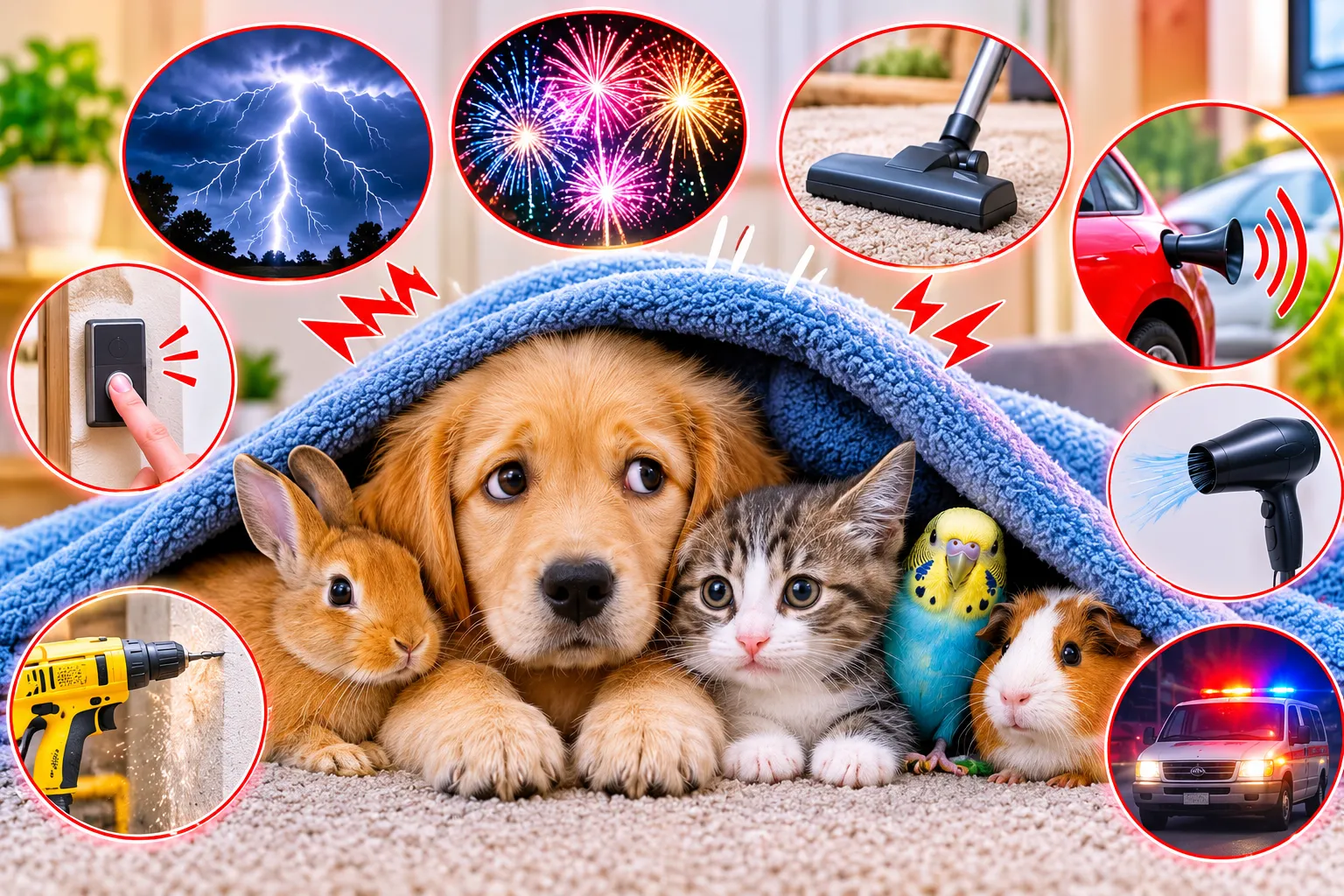
Pets bring happiness, love, and fun into our lives. Whether we have a playful dog, a quiet cat, a colourful bird, or a cute little rabbit, every pet has its own personality. But have you ever noticed your pet suddenly hiding, shaking, or running away after hearing a loud noise?
Animals hear and experience sounds differently from humans. Some everyday noises that seem normal to us can make pets feel frightened or uncomfortable. Thunder, fireworks, vacuum cleaners, and even doorbells can sometimes cause stress.
Let's look at ten common sounds that may scare different pets and learn how we can help our little companions feel safe.
1. Thunderstorms and Heavy Rain
Many pets become nervous when a thunderstorm begins. A sudden clap of thunder can make dogs shake or hide under furniture. Cats may search for a quiet corner, while rabbits and guinea pigs may become unusually still.
How to help: Keep your pets indoors during storms. Give them a comfortable place to rest, close the windows, and stay calm around them. Let them hide if that helps them feel safe.
2. Fireworks and Firecrackers
Fireworks may look beautiful to people, but their loud explosions can be frightening for animals. Dogs may bark or try to escape, cats may hide, and birds may become startled by sudden noises.
How to help: Keep your pets safely inside during celebrations. Close doors and windows, draw the curtains, and provide familiar toys or bedding. Make sure outdoor enclosures are secure.
3. Vacuum Cleaners
A vacuum cleaner can be scary for pets because it makes a loud noise and moves around the house. Some dogs bark at it, while many cats prefer to hide until the cleaning is finished.
How to help: Let your pet see the vacuum cleaner while it is switched off. Introduce its sound slowly and keep your pet at a comfortable distance. Never force it to come closer.
4. Car Horns and Traffic Noise
Busy roads can be noisy and confusing for pets. Car horns, motorcycle engines, and heavy vehicles may frighten young dogs during walks. Other pets living near busy streets may also become uncomfortable.
How to help: Take your dog for walks in quieter areas at first. Keep it on a secure leash and allow it to become familiar with outdoor sounds slowly.
5. Loud Music and Television
Pets may not enjoy loud music or sudden sounds coming from the television. Action movies, shouting, and unexpected sound effects can disturb animals that prefer a peaceful environment.
How to help: Keep the volume at a comfortable level. Avoid placing pet cages or beds close to speakers, and give your animals a quiet place to relax.
6. Doorbells and Knocking
A sudden doorbell or loud knock can surprise pets. Dogs may start barking, cats may run away, and birds may flap their wings when visitors arrive.
How to help: Introduce doorbell sounds gradually at a low volume. Reward calm behavior with treats and give nervous pets enough space when visitors come into the house.
7. Hair Dryers and Washing Machines
Some pets dislike the sound of hair dryers, washing machines, and other household appliances. The motor noise and vibrations may make them feel uncomfortable.
How to help: Keep pets away from operating appliances. Let them rest in another room and never force them to stay near a noisy machine.
8. Drilling and Construction Sounds
Drilling, hammering, and other construction noises can be difficult for pets to tolerate. These sounds may continue for a long time, making it hard for animals to relax.
How to help: Move your pets to a quieter room away from the construction area. Keep their food, water, and familiar bedding nearby.
9. Emergency Sirens and Motorcycle Engines
The loud sounds of emergency sirens and motorcycle engines can startle many animals. Some dogs may bark or howl, while cats and birds may become frightened and look for somewhere to hide.
How to help: Stay calm and help your pet move away from the noise. Give it time to settle down in a safe and quiet place.
10. Shouting and Sudden Loud Voices
Pets pay attention to the way people speak and behave around them. Loud shouting or sudden angry voices can make dogs, cats, and other animals feel uncomfortable.
How to help: Speak gently around your pets and avoid shouting during training. A peaceful home helps animals feel more secure and develop trust with their owners.
How to Know If Your Pet Is Scared of a Sound
Not all pets show fear in the same way. Some hide, while others become restless or make unusual sounds.
Here are a few signs to watch for:
Trembling or shaking
Hiding under furniture or inside small spaces
Barking, whining, or making unusual sounds
Flattening their ears or tucking their tails
Pacing or trying to escape
Losing interest in food or play
Staying unusually close to their owners
If your pet shows severe or repeated signs of fear, speak with a veterinarian.
Simple Ways to Make Your Pets Feel Safe
You do not need anything complicated to help a frightened pet. A little patience and understanding can make a big difference.
Give them a safe place: Prepare a comfortable corner where your pet can rest without disturbance.
Introduce sounds slowly: Let your pet become familiar with new sounds at a low volume.
Offer treats and praise: Reward relaxed behavior with something your pet enjoys.
Never punish fear: Hiding or shaking is not bad behavior. Your pet needs comfort, not punishment.
Keep a regular routine: Regular feeding, playtime, and sleeping schedules can help pets feel secure.
Give them time: Every animal is different, so allow your pet to become comfortable at its own pace.
If noise-related fear continues or affects everyday life, ask a veterinarian for professional advice.
Conclusion
Thunderstorms, fireworks, vacuum cleaners, traffic, and many other everyday sounds can make pets feel frightened. Dogs, cats, birds, rabbits, and guinea pigs all have different ways of reacting to noise.
As pet owners, we should learn to recognise their fears instead of ignoring them. A quiet resting place, gentle words, and patient care can help our furry and feathered friends feel more comfortable.
Our pets cannot always tell us what scares them, but their behavior gives us important clues. When we understand those clues and respond with kindness, we build a stronger bond with them.
A happy pet is not just a well-fed pet. It is also an animal that feels safe, protected, and loved at home.


Join the conversation
Discussion0
Join the conversation. Sign in to leave a response or reply to comments.