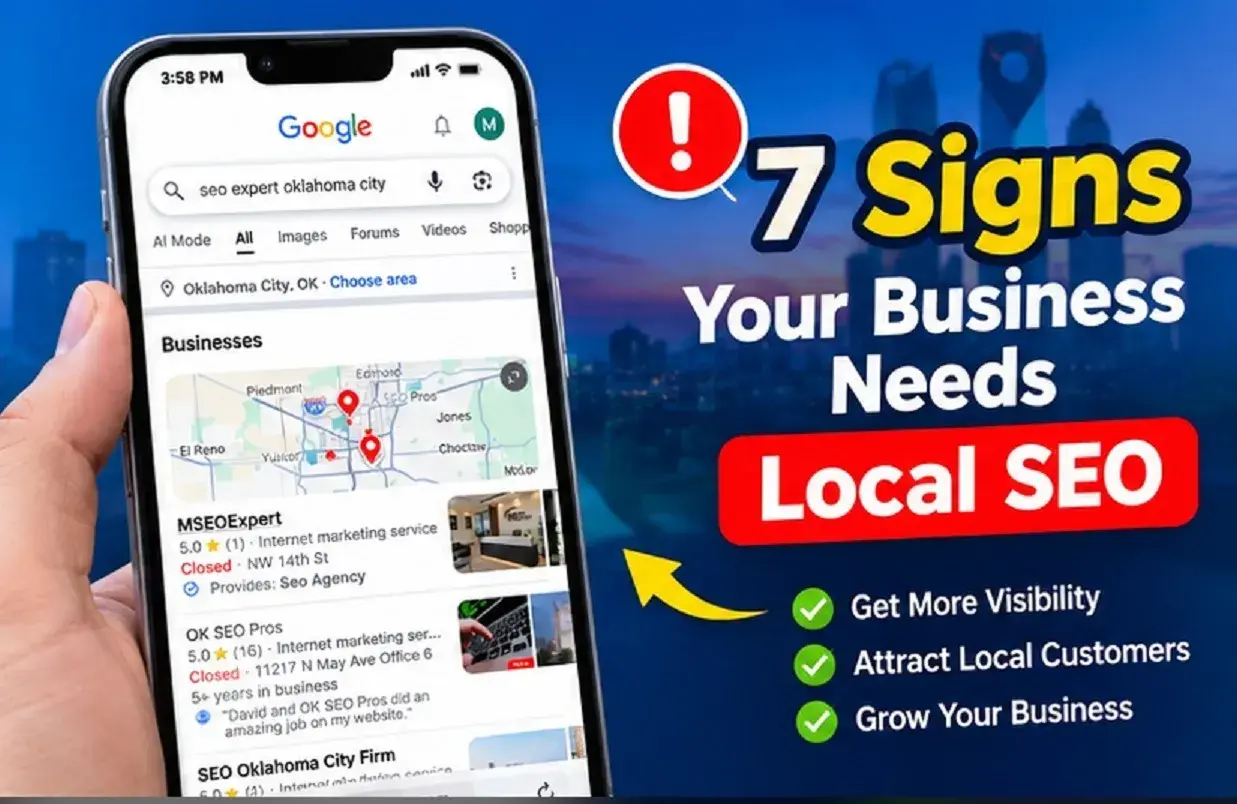
Is your business easy to find on Google Maps, or does it appear only when someone searches your exact business name? That difference matters. Most new customers search for a service, a product, or a nearby provider—not necessarily a company they already know. Here are seven signs that your local search presence may need attention.
Seven signs local search may be working against you
Your business does not appear for service-and-city searches. Searching your own business name is not enough. Try relevant searches customers might use, such as “plumber in Austin” or “dentist near me.” If competitors appear and you do not, your profile or website may not be matching the search clearly.
Your business details are inconsistent. Old addresses, outdated phone numbers, and slightly different business names can remain on directories long after a change. Review important listings and correct inaccurate information.
You have duplicate business profiles. Multiple profiles for one location can confuse customers and create ownership or review-management problems. Identify the legitimate profile before taking action on duplicates.
Your reviews are limited or unanswered. Reviews help customers assess whether a business is trustworthy. A steady, honest process for requesting feedback and thoughtful replies can improve the customer experience.
Your Google Business Profile has a status issue. An unverified, suspended, or restricted profile may have reduced visibility. Understand the status and follow Google's process; no agency can guarantee Google's decision.
Your website has only a general services page. Customers need clear information about the services you offer and the areas you genuinely serve. Relevant, useful pages can make that information easier to understand.
You cannot tell what your SEO provider has done. Reports should explain completed work, pending tasks, visibility trends, and limitations. If the report is impossible to understand, it is difficult to evaluate the service.
How to address the problems in the right order
Start with accuracy. Confirm profile ownership and status, correct categories and business details, and investigate duplicates. Then review citations across important directories. Once the business information is reliable, improve the website pages that match your real services and locations.
Next, create a compliant review process that invites every customer to share honest feedback. Do not buy reviews, offer incentives for positive ratings, or selectively ask only satisfied customers. Compare your profile and website with the competitors appearing for your priority searches, and use those findings to decide what to improve.
Choose reporting that makes sense
A useful monthly report should show work completed and pending, profile activity such as calls and direction requests where available, and visibility for agreed searches in defined areas. Remember that a call-button click is not necessarily an answered call, and a ranking in one neighborhood does not mean your business appears everywhere.
Avoid shortcuts that put your profile at risk
Do not create fake locations, duplicate pages for dozens of towns, or purchase reviews. Google says local results cannot be bought and are influenced by relevance, distance, and prominence. A responsible local SEO campaign focuses on accurate information, helpful pages, and consistent work—not guaranteed positions.
How many of these signs apply to your business? Request a free local SEO audit from MSEOExpert, or learn more about our Local SEO Services USA and the steps involved in improving local visibility.


Join the conversation
Discussion0
Join the conversation. Sign in to leave a response or reply to comments.