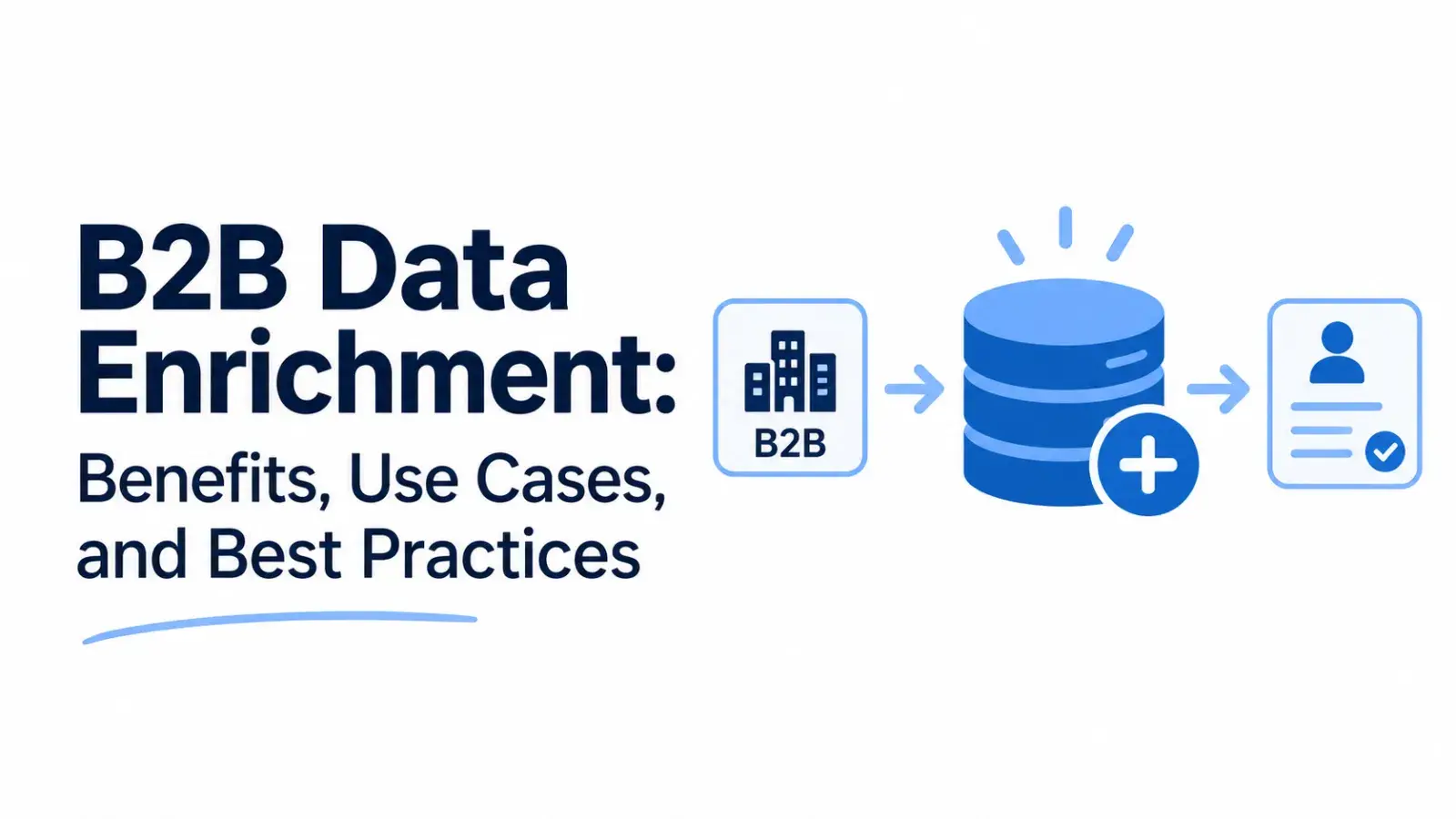
Businesses rely on accurate data to identify potential customers, understand their target audience, and make better decisions. However, B2B databases often contain incomplete, outdated, or incorrect information. Missing email addresses, job titles, company details, and employee information can make it difficult for sales and marketing teams to reach the right prospects.
This is where B2B data enrichment becomes important. It helps businesses improve existing records by adding relevant information about people and companies. Instead of working with incomplete contact lists, organizations can use enriched data to understand their prospects, personalize communication, and improve lead generation efforts.
In this guide, we will explore what B2B data enrichment is, its benefits, common use cases, and best practices for maintaining accurate business data.
What Is B2B Data Enrichment?
B2B data enrichment is the process of improving existing business and contact records by adding additional information from reliable data sources. It helps organizations turn basic information into more complete and useful business profiles.
For example, a company might have a database containing only a prospect's name and company email address. Through data enrichment, it may be possible to add additional details such as:
Full name and professional job title
Company name and website
Professional email address
Company industry and location
Employee count and company size
LinkedIn or other professional profile information
Company funding details
The purpose of enrichment is not simply to collect more information. It is to make existing data more useful for sales, marketing, recruitment, and business research.
A B2B data enrichment tool helps automate this process by finding and adding relevant information to existing records. Businesses can also use data enrichment APIs to connect enrichment capabilities with their own applications, CRM systems, and internal workflows.
Key Benefits of B2B Data Enrichment
B2B data enrichment offers several advantages for organizations that depend on business and contact information. Some of its most important benefits include:
1. Improved Data Accuracy
Incomplete or outdated information can affect business operations. Data enrichment helps improve the quality of existing records by adding updated professional and company details.
For example, if a sales team has a prospect's name but does not know their current job title or company, enrichment can help identify additional professional information.
This makes business databases more useful and reduces the need for manual research.
2. Better Lead Generation
Lead generation depends on identifying potential customers who match a business's target audience. However, basic contact lists often lack the information needed to understand whether a prospect is relevant.
With a B2B data enrichment tool, businesses can add details such as job titles, company size, industry, and location to existing lead records.
These additional details help sales and marketing teams prioritize relevant prospects and build more focused lead lists.
3. More Personalized Marketing Campaigns
Personalization requires an understanding of the people and businesses receiving marketing messages.
For example, a marketing team targeting SaaS founders may need information about their company, industry, professional role, and business size.
Enriched data provides additional context that helps businesses create more relevant email campaigns, outreach messages, and marketing strategies.
4. Reduced Manual Research
Finding professional and company information manually can take considerable time, especially when working with large prospect databases.
Data enrichment automates many information-gathering tasks. Instead of researching every contact individually, teams can use enrichment tools or APIs to retrieve relevant information more efficiently.
This allows employees to spend more time on sales conversations, customer relationships, and strategic activities.
5. Better Business Decisions
Accurate company information helps organizations understand their target markets and identify potential business opportunities.
For example, information about company size, industry, location, and funding can help businesses identify growing organizations and understand which market segments may be relevant to their products or services.
Enriched business data supports research and decision-making by providing more context about potential customers and companies.
Common Use Cases of B2B Data Enrichment
B2B data enrichment is useful across multiple business functions. Its applications depend on the type of information an organization needs and how it plans to use that information.
1. Sales Prospecting
Sales teams often begin with basic information about potential customers. However, they need additional details to understand whether a prospect is worth contacting.
Person enrichment can help identify professional details such as job titles, company associations, and available contact information.
Sales development representatives (SDRs) can use these details to research prospects and prepare more relevant outreach.
2. Marketing and Lead Qualification
Marketing teams generate leads through websites, landing pages, webinars, and other campaigns. However, submitted forms may contain limited information.
Data enrichment can add company and professional details to these leads, helping marketing teams understand their audience better.
For example, a company offering enterprise software may want to identify leads working in large organizations rather than small businesses.
Enriched records can support lead qualification and segmentation based on available business information.
3. CRM Data Management
Customer Relationship Management (CRM) systems store important information about prospects, customers, and business relationships.
Over time, CRM records can become incomplete or outdated. Employees may change positions, companies may update their information, and contact details may become invalid.
Businesses can use enrichment tools and APIs to add missing information and maintain more complete CRM records.
However, enrichment should be combined with regular data validation to ensure that records remain useful.
4. Recruitment and Talent Research
Recruitment teams frequently research professional backgrounds to identify potential candidates.
Person enrichment can help provide additional professional context, including job titles and company associations, where available.
This information can support candidate research and help recruiters understand professional profiles more efficiently.
5. Company Research and Market Analysis
Businesses often need detailed company information before approaching potential customers, partners, or investors.
Company enrichment can provide information such as:
Company name and domain
Industry and business category
Employee count
Company location
Funding information
Available company descriptions
These details can help businesses research organizations, understand market segments, and identify potential opportunities.
Types of B2B Data Enrichment
Different enrichment methods serve different business requirements. Understanding these categories helps organizations choose the right solution.
Enrichment Type | What It Provides |
Person Enrichment | Professional details about individuals |
Company Enrichment | Additional information about businesses |
Email Enrichment | Email discovery and verification |
Employee Enrichment | Employee and professional information |
Funding Enrichment | Company funding rounds and investment details |
Contact Enrichment | Missing information about business contacts |
For example, person enrichment focuses on individual professional records, whereas company enrichment focuses on business profiles.
Businesses may use one enrichment type or combine multiple types depending on their data requirements.
Best Practices for Effective B2B Data Enrichment
Using a B2B data enrichment tool does not automatically guarantee accurate or useful data. Businesses should follow certain practices to maintain data quality.
1. Start with Existing Data
Before enriching records, review the information already available in your database.
Identify missing fields, duplicate records, outdated contact details, and incomplete company profiles.
This helps determine which information needs enrichment.
2. Identify Your Data Requirements
Not every business needs the same information.
A sales team may prioritize professional emails and job titles, while a market research team may focus on company size, industry, and funding information.
Define your requirements before choosing an enrichment solution.
3. Choose the Right Enrichment Method
Select a tool or API based on your workflow.
If your team needs occasional lookups, a standalone tool may be sufficient. If you need automated enrichment across multiple applications, an API may be more suitable.
4. Validate Enriched Information
Always validate important information before using it in business operations.
For example, email verification can help identify potentially invalid email addresses before launching an outreach campaign.
Similarly, company information should be reviewed when making important business decisions.
5. Maintain Data Regularly
Business information changes over time. A contact who worked at one company six months ago may now be associated with another organization.
Establish a regular process for reviewing and updating important records.
6. Follow Data Privacy Regulations
Businesses should collect and process personal and professional information responsibly.
Depending on the location of the individuals and organizations involved, applicable regulations may include GDPR and other privacy laws.
Make sure your data collection, enrichment, storage, and outreach practices follow relevant legal requirements.
How to Choose the Right B2B Data Enrichment Tool
Selecting the right solution depends on your business objectives, data requirements, and budget.
Consider the following factors before making a decision:
Data coverage: Check whether the solution provides the types of people and company information you need.
Data accuracy: Understand how the provider sources, validates, and updates information.
Available enrichment features: Look for person enrichment, company enrichment, email lookup, and other relevant capabilities.
API availability: Check whether API access is available if you need automated enrichment.
Pricing: Compare credit consumption, usage limits, and pricing based on your expected volume.
Ease of use: Evaluate whether the platform is accessible to both technical and non-technical users.
Integration options: Check whether it fits your existing business applications and workflows.
Comparing these factors can help organizations find a solution that meets their requirements without paying for unnecessary features.
Conclusion
B2B data enrichment helps businesses improve incomplete records, understand potential customers, and make better use of their existing databases. From sales prospecting and lead qualification to company research and CRM management, enriched information supports several important business activities.
Choosing the right enrichment approach is equally important. Standalone tools are useful for individual lookups and manual research, while APIs support automated data enrichment within business applications and workflows.
Solutions such as EnrichmentAPI offer both tools and APIs, giving businesses flexibility in how they find and enrich people and company information.
Ultimately, effective B2B data enrichment is not just about collecting more data. It is about maintaining relevant, accurate, and useful information that supports better business decisions.
Frequently Asked Questions (FAQs)
1. What is a B2B data enrichment tool?
A B2B data enrichment tool is software that helps businesses add missing information to existing contact and company records. It can provide details such as professional emails, job titles, company information, industry, and employee count.
2. How does B2B data enrichment work?
B2B data enrichment works by using existing information, such as a person's name, email address, or company domain, to find additional relevant details from available data sources. The retrieved information is then added to the existing record.
3. What are the main benefits of B2B data enrichment?
The main benefits include improved data accuracy, better lead generation, personalized marketing, reduced manual research, improved CRM data quality, and more informed business decisions.
4. What is the difference between person enrichment and company enrichment?
Person enrichment focuses on individual professional information, such as job titles and company associations. Company enrichment focuses on business information, such as industry, employee count, location, and funding details.
5. Can I use a B2B data enrichment API instead of a tool?
Yes. A B2B data enrichment API allows developers to integrate enrichment capabilities into applications, CRM systems, and automated workflows. A standalone tool is generally more suitable for manual lookups.
6. Does EnrichmentAPI offer both data enrichment tools and APIs?
Yes. EnrichmentAPI provides both standalone data enrichment tools and APIs for finding and enriching professional and company information. Businesses can choose either option depending on their workflow and technical requirements.


Join the conversation
Discussion0
Join the conversation. Sign in to leave a response or reply to comments.