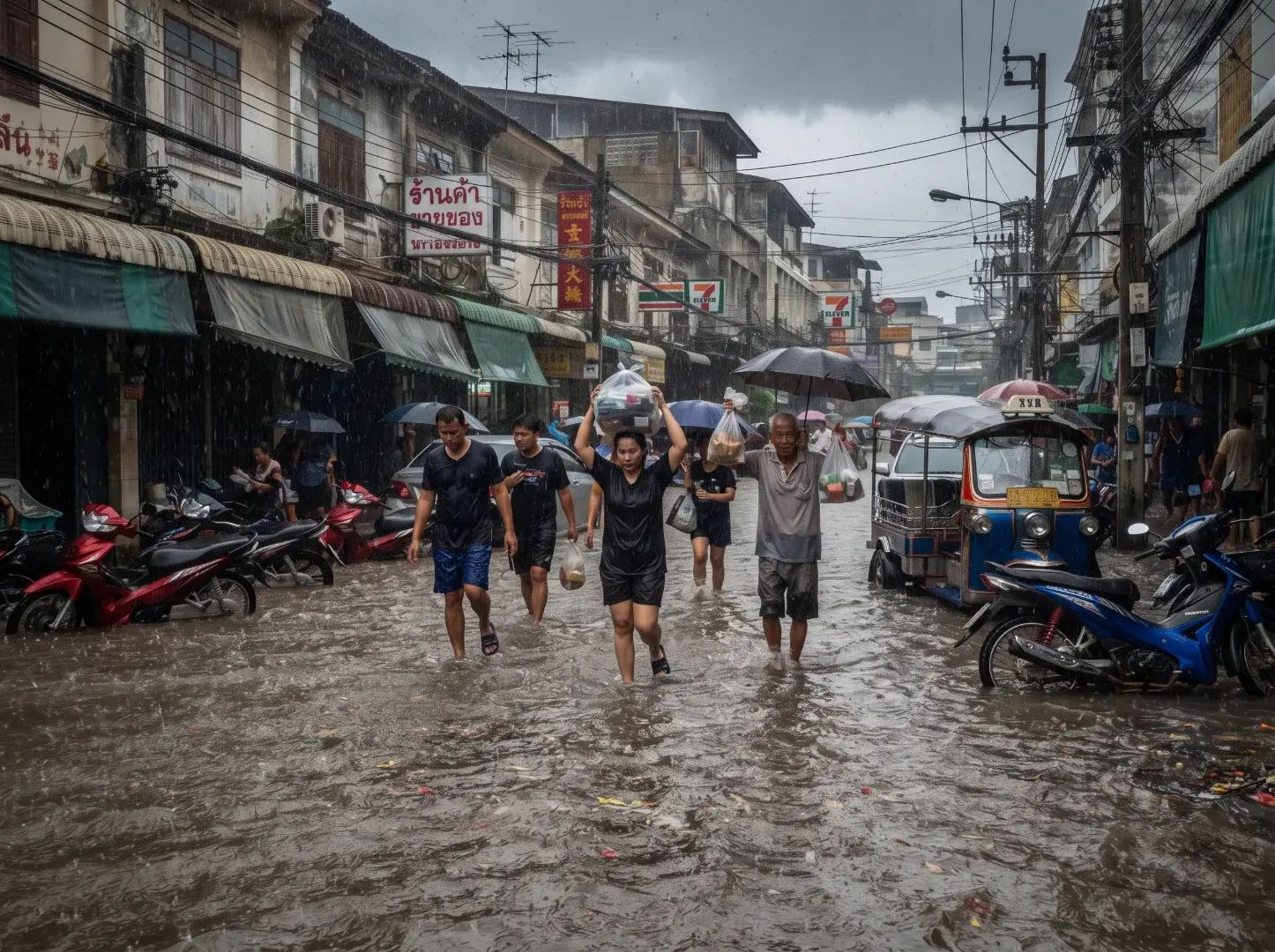
Bangkok - Thai authorities declared a flood disaster across all 50 districts of Bangkok on Saturday, September 26, 2026, after nearly 48 hours of continuous torrential rain brought parts of the capital to a standstill.
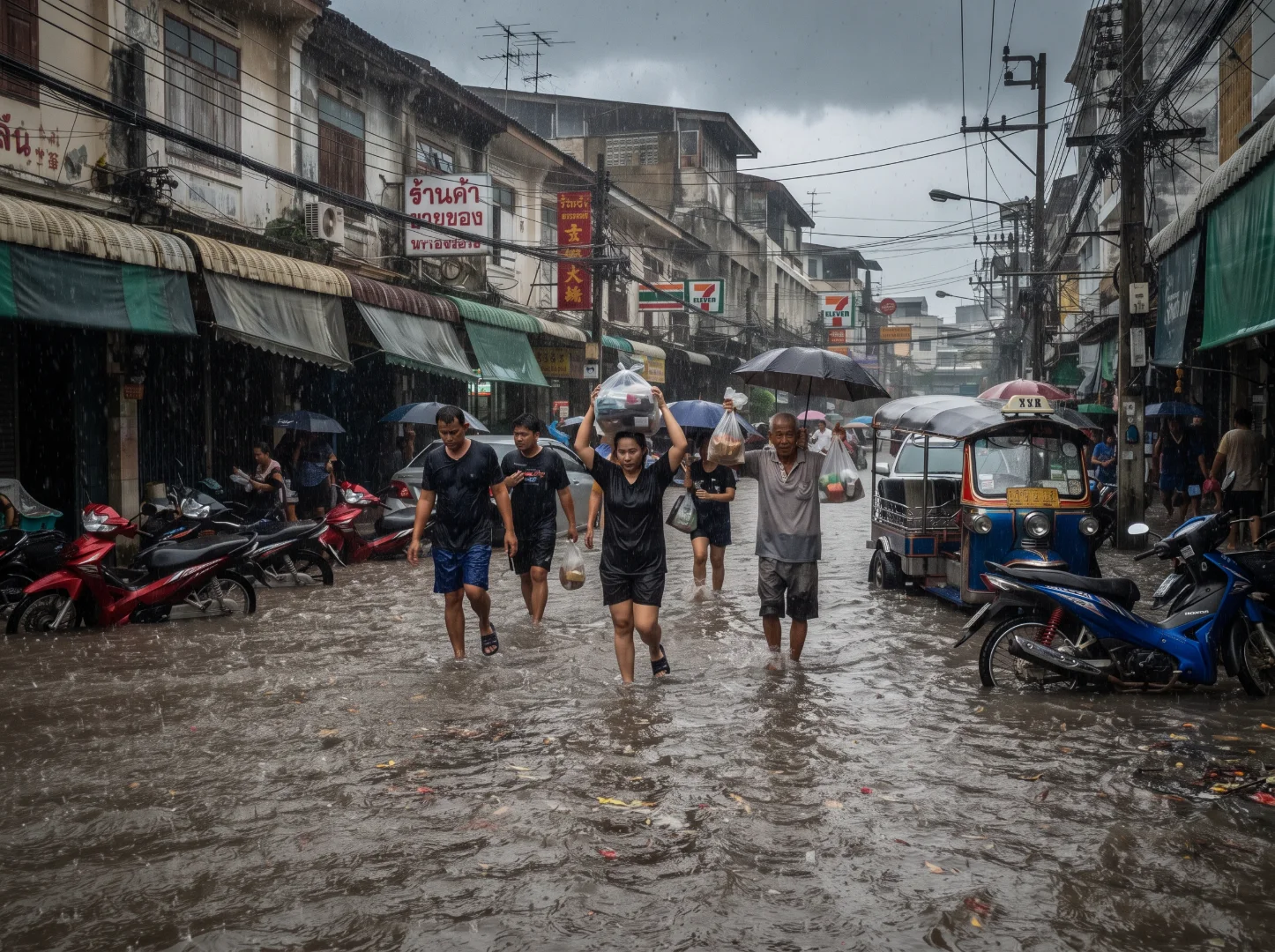
48 Hours of Uninterrupted Rain
Bangkok Governor Chadchart Sittipunt confirmed that nearly 300 millimeters of rain had fallen on the capital since Thursday afternoon, overwhelming the city's drainage network and causing canals to overflow into surrounding neighborhoods.
"I think it's been 10 or 15 years since we've had such heavy rainfall," one resident told the Associated Press. The Bangkok Metropolitan Administration (BMA) reported that between September 1 and 25, the capital recorded 487 millimeters of rain, compared to an average of approximately 269 millimeters for the same period between 1991 and 2020.
The flooding was caused by a strong low-pressure system combined with seasonal monsoon patterns. The Thai Meteorological Department warned that heavy rainfall could continue through September 27.
Eastern Bangkok Hit Hardest
The eastern part of the city was the most severely affected, with districts including Min Buri, Khlong Sam Wa, and Saphan Sung recording nearly 300 millimeters of rainfall. At least 15 major roads were flooded, including Vibhavadi Rangsit, Phahonyothin, Ratchadaphisek, Lat Phrao, and Sukhumvit.
Water levels in major canals, including Saen Saep, Prawet, Lat Phrao, and Prem Prachakorn, reached critical levels, with some sections overflowing their banks. The Rangsit Prayoonsak canal reached 1.66 meters, prompting authorities in Rangsit to raise alert levels to orange and urge residents in low-lying areas to move their belongings to safety.
Residents Struggle as Waters Rise
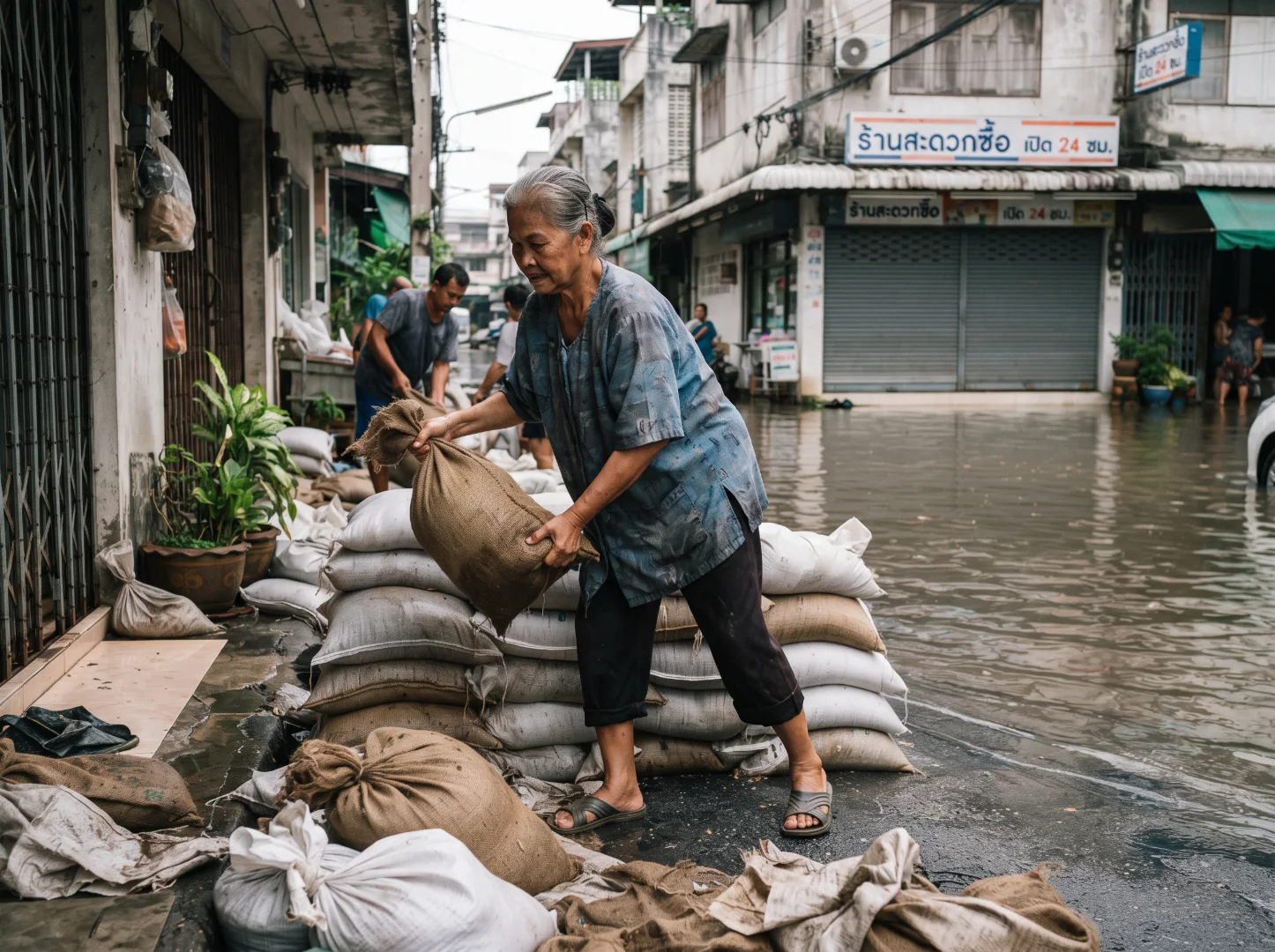
For many Bangkok residents, the flooding brought daily life to a halt. Somkid Pheuk-ngam, a 67-year-old vendor who lives near a canal in the city center, described the situation to AFP.
"The water keeps rising. It's difficult to go out now. It's up to my waist," she said. "I can't go anywhere. I've closed my shop for two days".
She noted that while flooding is common in her area, "I think this time it's worse than the 2011 floods".
In the On Nut community, AFP journalists observed residents piling sandbags to protect their homes and businesses. Approximately 980 people were staying in temporary shelters, while 36 bedridden patients had been moved to hospitals.
The BMA prepared approximately one million sandbags for distribution and opened temporary shelters in schools across the city.
Government Response and Recovery Timeline
Governor Chadchart said on Saturday afternoon that the situation had "stabilized," adding: "If no more rain falls in the area, it will be resolved". He estimated that if the rain stops, it would take two to three days to drain the floodwater.
The city's pumping stations were operating at full capacity, evacuating approximately 1,200 cubic meters per second.
Prime Minister Anutin Charnvirakul shortened a trip to London and returned to Thailand to oversee the response. The Transport Ministry established an emergency flood-response "war room" to coordinate operations nationwide.
Nationwide Impact
The flooding extended beyond Bangkok. Thailand's Department of Disaster Prevention and Mitigation reported that 21 provinces had been affected, with at least one death recorded. Earlier reports indicated two deaths and one missing person, with nearly 12,000 households and over 37,000 people affected across 12 provinces in the north, central, east, and northeast regions.
Suphan Buri and Ayutthaya were among the hardest-hit provinces outside the capital. In Ayutthaya's Bang Ban district, some areas were submerged more than a meter deep, with residents forced to travel entirely by boat.
Airports and Transport
Both Suvarnabhumi Airport (BKK) and Don Mueang International Airport (DMK) remained open and operational, though some flights experienced delays. Water was reported on part of Don Mueang's southern taxiway, but the Transport Ministry said this had not affected overall airport operations.
Authorities advised passengers to allow 2-3 hours of additional travel time to reach the airports due to flooded roads and traffic congestion. The Airport Rail Link and SRT Red Line services continued operating, while MRT Blue, Purple, Yellow, and Pink lines ran normally.
A City Built on Swamp
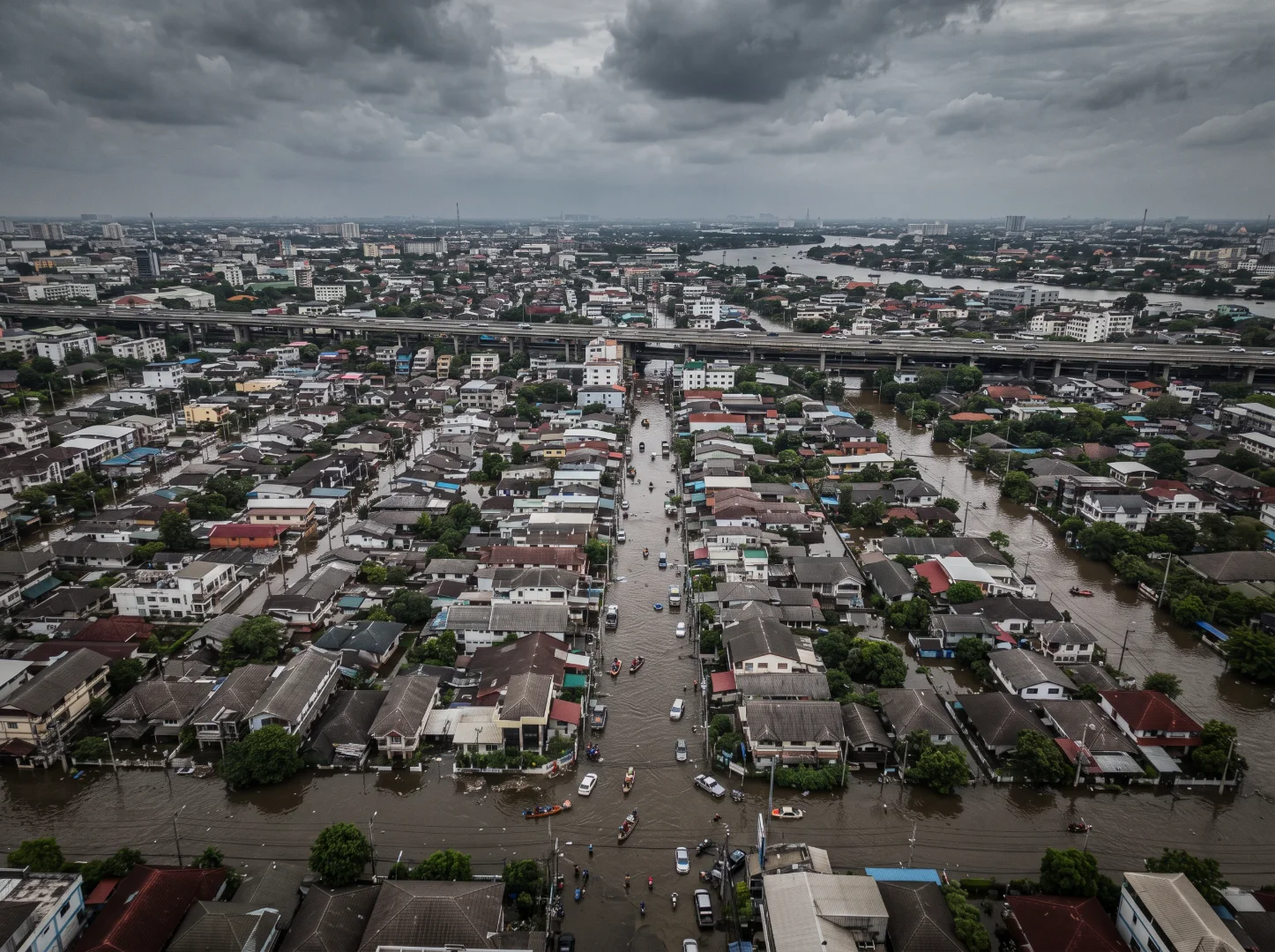
Bangkok, once known as the "Venice of the East," is built on former swamp land and sits just 1.5 meters above sea level. The city has long faced challenges from land subsidence and flooding. In 2011, nationwide floods killed more than 500 people and damaged millions of homes.
The severity of this week's rainfall has renewed questions about the capital's vulnerability to extreme weather and the capacity of its drainage infrastructure to cope with increasingly intense monsoon events.




Join the conversation
Discussion0
Join the conversation. Sign in to leave a response or reply to comments.