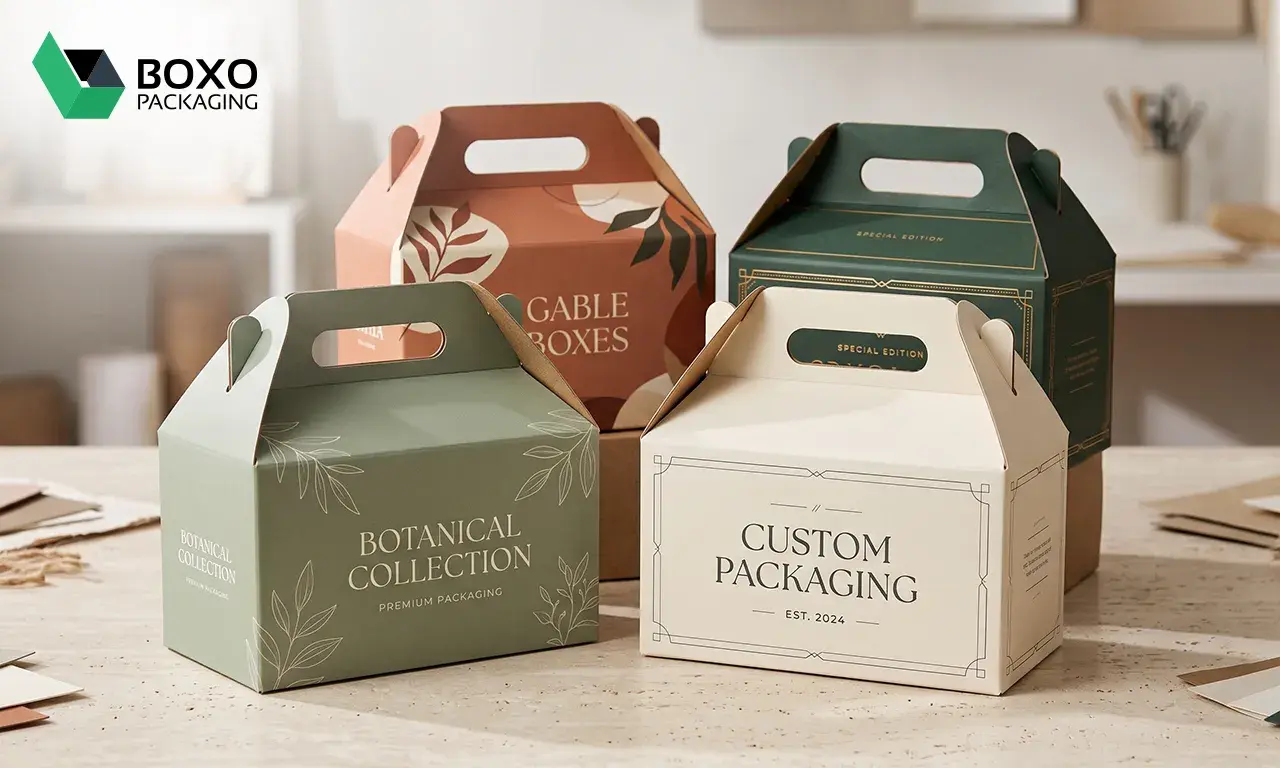
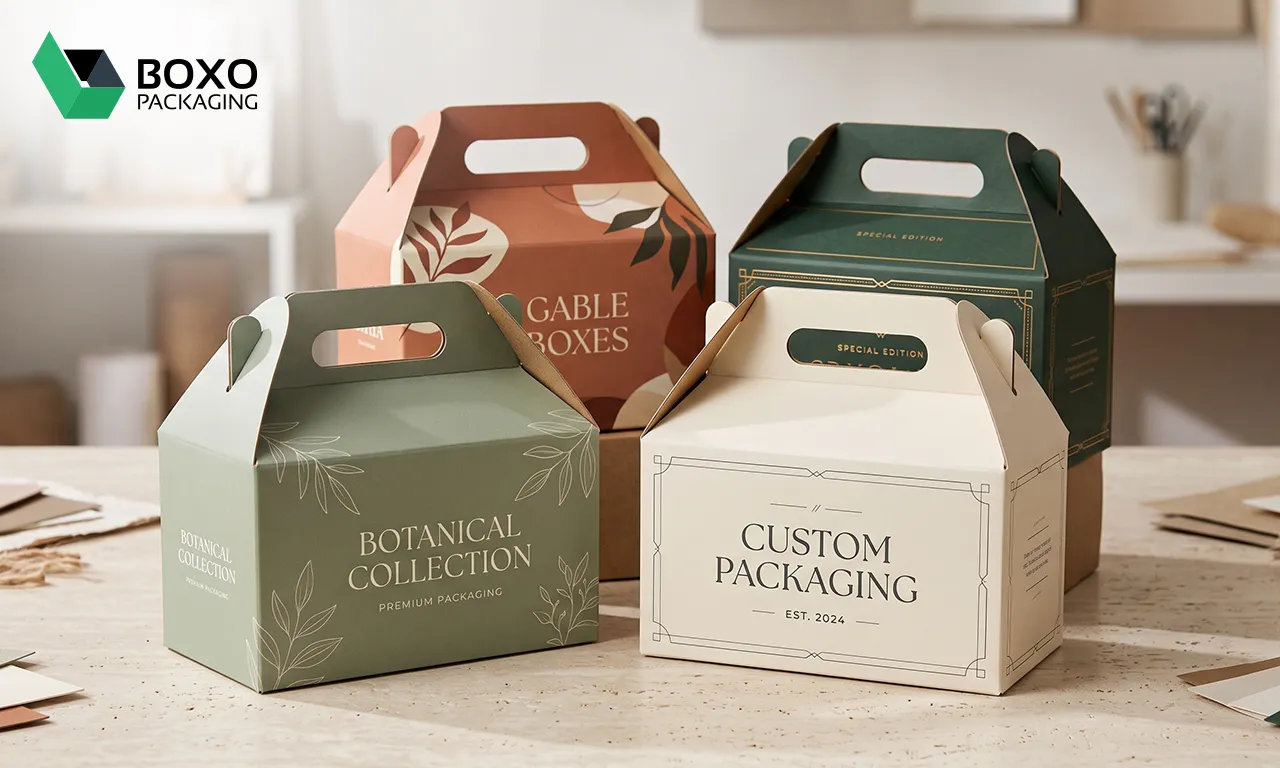
A gable box combines a carton body with a folded top that meets in a peak and forms an integrated handle. That handle is the reason buyers choose the format over a standard folding carton, because it turns a boxed product into something a customer can carry without a separate bag. Custom gable boxes are built around the loaded product, not the box style, since the handle strength and base support both depend on what goes inside.
How Is Handle Strength Determined?
The handle is not an add-on. It is formed from the same board as the top panels, and the load travels from the product through the base and side panels into the folded peak. A single-panel handle with a die-cut hand hole suits light loads such as pastries or small gifts. A double-panel or reinforced handle carries more weight, and a board caliper in the 24-point to 28-point range supports loads in the range of several pounds. Testing a filled box by the handle, rather than an empty one, shows whether the peak holds its shape.
Integrated handles remove the need for a separate bag
Double-panel handles support heavier gift and bakery loads
Reinforced scores keep the peak from collapsing
Flat shipping reduces storage space before assembly
Which Board and Base Options Suit Different Products?
Paperboard handles light retail and gift items, while micro-flute corrugated adds strength for larger or heavier loads. The base closure matters as much as the board. A simple tuck base suits light contents, while a crash-lock or auto-bottom base holds heavier products and assembles faster on a packing line. For food items, a grease-resistant liner or a coated board keeps oil from marking the printed surface, and the liner choice depends on whether the food touches the board directly.
Where Does This Format Fit in a Retail Channel?
Bakery counters, gift shops, farmers markets, and promotional programs all use the handle for grab-and-go convenience. Shelf display rewards upright stability and a front panel that reads at shopping distance, so the handle should not hide the brand when the box is closed. Event favors place more weight on presentation, where a ribbon, a window, or an internal message panel adds value. The same gable shape can serve both jobs with different board and finishing choices.
Which Formats Pair With a Handled Carton?
Sleeve boxes wrap the gable for a second print surface, and folding cartons hold individual items inside the carry box. Pillow boxes work as an inner package for small gifts, and display trays hold several gable boxes on a counter. Keeping the board and print consistent across those formats lets a range share one visual identity.
Custom Pillow Packaging for Curved Gift Presentation
The curved sides of the format give it a soft silhouette that reads as a gift rather than a shipping carton. Custom pillow packaging closes with tucked end flaps, so it needs no tape or glue, and it assembles from flat in seconds. That speed matters when dozens of favors are packed by hand for an event. The size range runs from mini boxes for a single chocolate to larger versions for scarves or small candles.
How Should Board Weight Be Chosen?
The board has to hold the curve without creasing at the ends. A medium-weight stock folds cleanly and keeps its shape, while a stock that is too thin dents in a bag or a shipping carton. A stock that is too thick makes the end flaps difficult to tuck and can crack along the fold line. Coated board takes printing and foil stamping well, and an uncoated surface accepts handwriting for gift tags.
Tucked end flaps close without adhesive or tape
Medium board weight holds the curve without cracking
Matte finishes support foil stamping and embossing
Uncoated surfaces accept handwritten notes
How Does Printing Behave on a Curved Surface?
Large flat graphics can distort as they wrap around the curve, so designs with centered motifs or repeating patterns tend to hold up better. Text placed on the flattest part of the panel stays legible, while text that runs across the curve can appear stretched. Checking a printed sample on the assembled box, rather than on a flat sheet, catches distortion before a full run. Digital printing suits short seasonal runs, while offset printing handles larger volumes with fine detail.
Where Do Inserts and Windows Fit?
A window cutout shows the product without opening the box, which suits jewelry and confectionery. An inner insert holds the item in place and stops it from sliding toward the curved ends, where the tucked flaps offer less support. For food items, a food-safe liner or a coated board supports direct contact, and a grease-resistant layer protects the printed surface from oil.
Which Formats Complement a Pillow Box?
A gable box can hold several pillow boxes as a bundled gift set, and a sleeve box adds a second branding surface around the curve. Boxo Packaging produces these formats with board weight and print matched to the gift or retail range.
Join the conversation
Discussion0
Join the conversation. Sign in to leave a response or reply to comments.