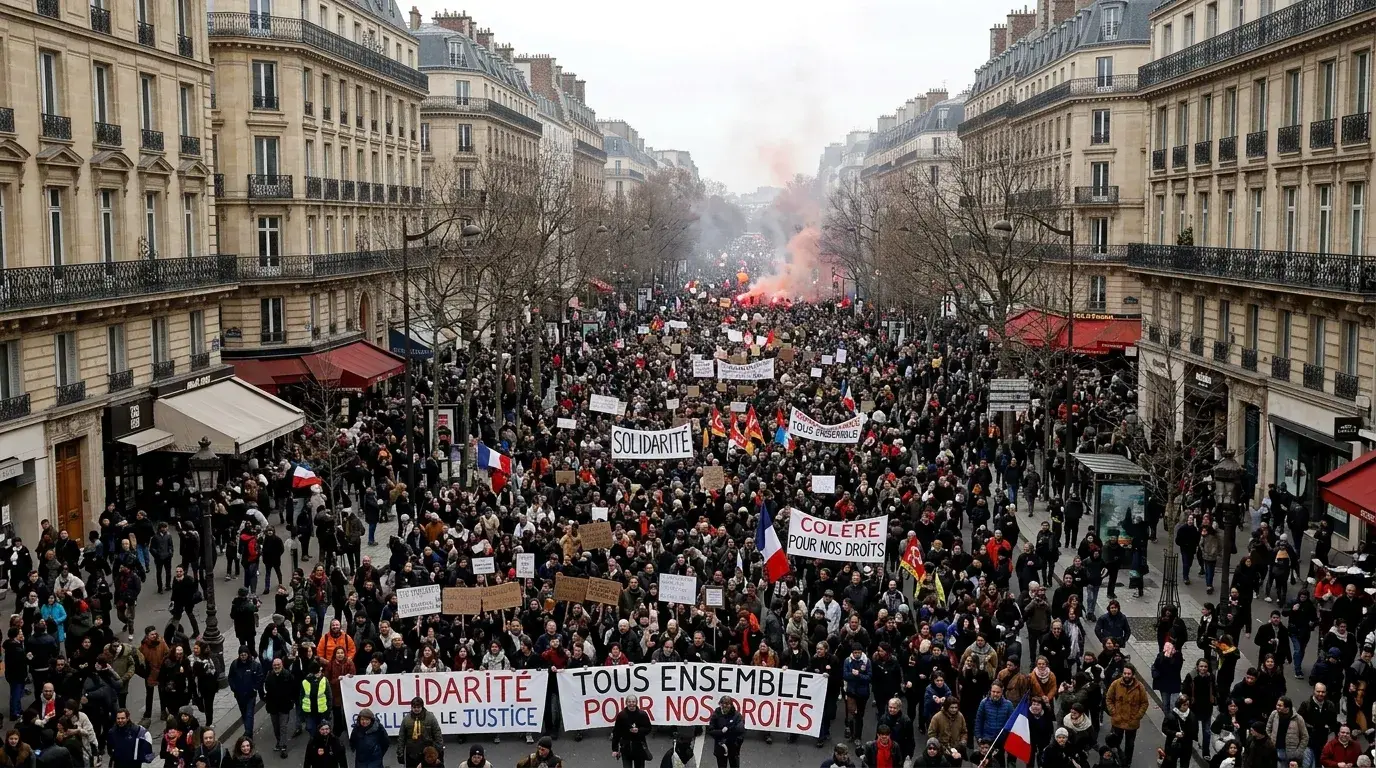
Paris: France witnessed one of its most intense days of civil unrest in recent memory on Saturday, October 24, 2026. An estimated 410,000 people took to the streets across the country to protest against the soaring cost of living and economic hardship, leading to violent clashes with police, nearly a thousand arrests, and the temporary closure of some of the world's most famous cultural landmarks.
The protests, which were organized by trade unions and grassroots movements, highlighted the growing frustration of ordinary French citizens who are struggling to make ends meet amid rising inflation and stagnant wages. What started as a peaceful demonstration quickly escalated into chaos in major cities like Paris, Lyon, and Marseille.
The Numbers Behind the Chaos
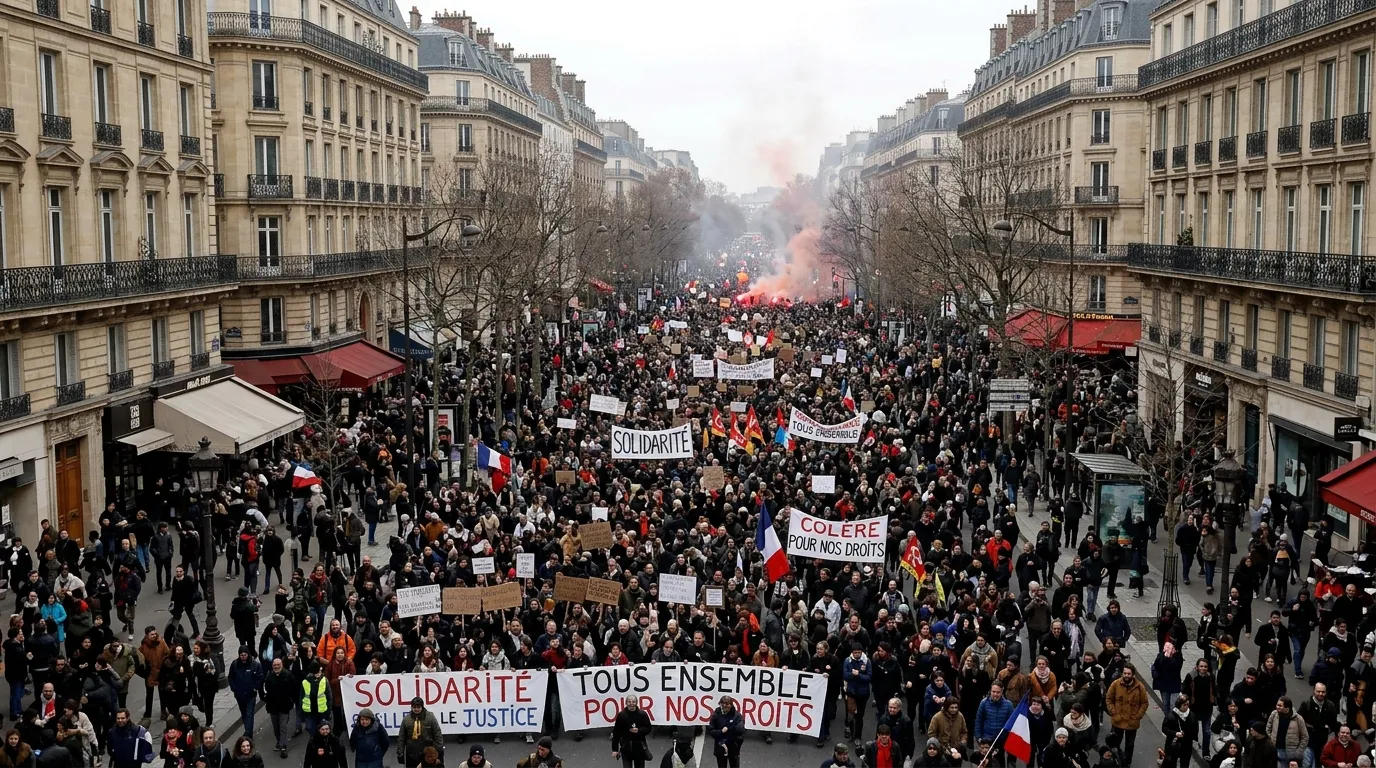
The scale of the protests was staggering. According to the French Interior Ministry, 410,000 people participated in demonstrations nationwide. In Paris alone, the police reported that around 110,000 people joined the main march, which eventually descended into violence.
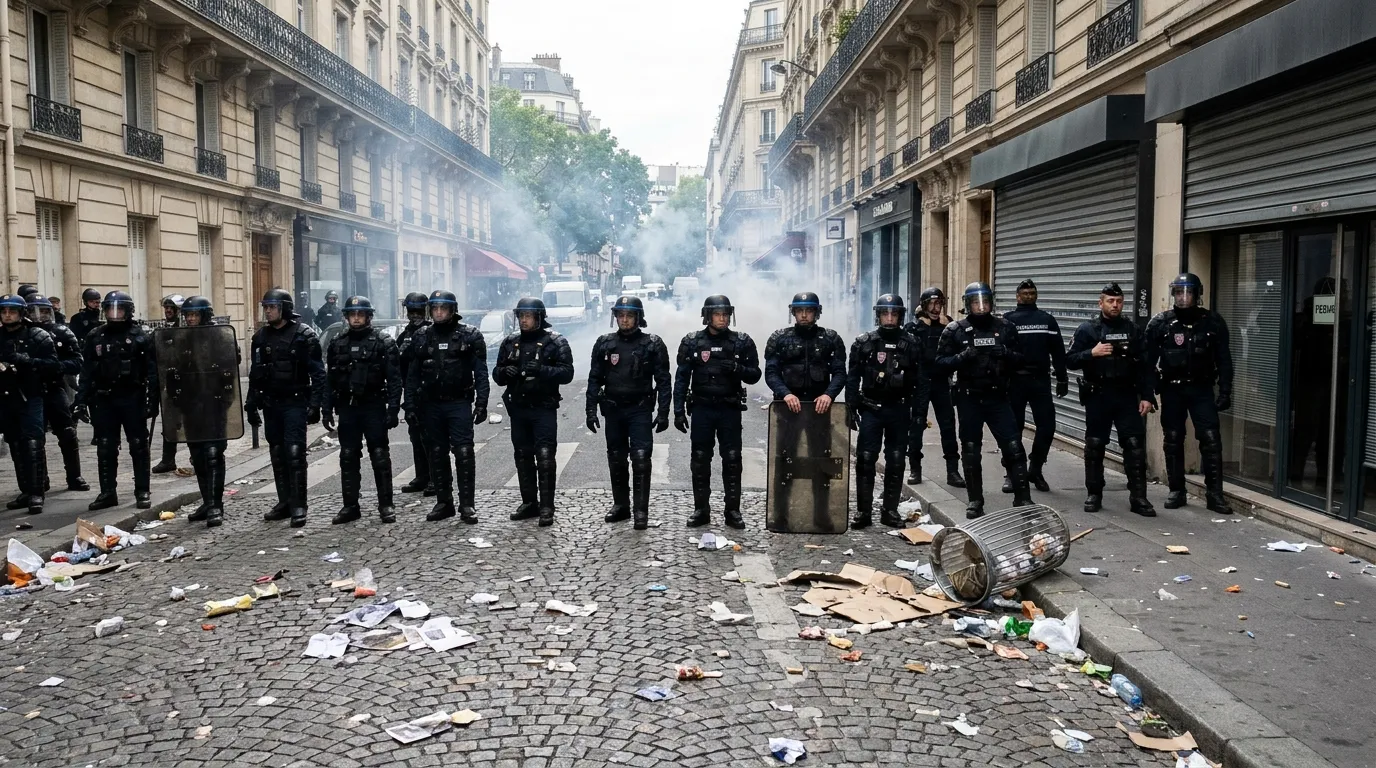
Interior Minister Laurent Nuñez stated on Saturday evening that police had arrested nearly 1,000 people across the country. In Paris, security forces deployed tear gas and water cannons to disperse crowds after clashes broke out. Videos circulating on social media showed groups of masked individuals throwing projectiles at police lines, burning debris in the streets, and smashing shop windows.
The government's response was swift and heavy-handed. Prime Minister Sébastien Lecornu convened an emergency meeting to address the situation, while the Interior Ministry mobilized thousands of additional officers to maintain order.
The Louvre and Orsay Close Their Doors
The unrest had an immediate impact on France's cultural life. The iconic Louvre Museum and the Musée d'Orsay in Paris announced they would be closed on Saturday due to the protests and security concerns. This was a precautionary measure to protect both visitors and the priceless artworks housed within these institutions.
Other cultural sites across the country also shut their doors temporarily. The closures served as a stark reminder that the protests were not confined to the fringes of society; they had paralyzed the heart of the capital and disrupted daily life for millions.
A Broader European Trend?
The protests in France were not an isolated incident. Across Europe, citizens are expressing their anger over the cost of living crisis. Reports indicated that demonstrations also took place in Italy, Albania, and Belgium on the same day, though the scale in France was the largest.
President Emmanuel Macron, who has faced immense pressure throughout his second term, has yet to issue a direct statement addressing the violence. However, his government has signaled that it will not tolerate lawlessness while acknowledging the legitimate concerns of the protesters.
Global Context: A World on Edge
The French protests occurred against the backdrop of a deeply unstable global landscape. In the Middle East, tensions continued to escalate. US President Donald Trump hinted at the possibility of a military strike on Iran, stating that a strike could happen "tomorrow," while also not ruling out a major agreement . Meanwhile, Yemen's Houthi movement claimed responsibility for a series of attacks on Saudi Arabian airports and oil facilities, further destabilizing the region .
In Eastern Europe, Russia and Ukraine agreed to a localized ceasefire in the Kherson region to facilitate a humanitarian operation, a rare moment of coordination amid the ongoing war . The situation in the Middle East also affected global shipping, with foreign ministers from eight countries, including Turkey, Egypt, Pakistan, and the UK, calling for the immediate reopening of the Strait of Hormuz .
For France, the domestic crisis is compounded by these international pressures. The government must now balance the need to restore order at home with its commitments on the global stage.
What Happens Next?
The coming days will be critical for France. The government must find a way to address the legitimate economic grievances of its citizens while preventing further violence. If the protests continue to escalate, they could pose a significant challenge to President Macron's authority and his ability to govern effectively.
For now, the streets of Paris are quieter, but the anger remains. The world is watching to see how France navigates this precarious moment.
What do you think about the protests in France? Should governments prioritize economic relief over law and order, or vice versa? Share your thoughts in the comments.




Join the conversation
Discussion0
Join the conversation. Sign in to leave a response or reply to comments.