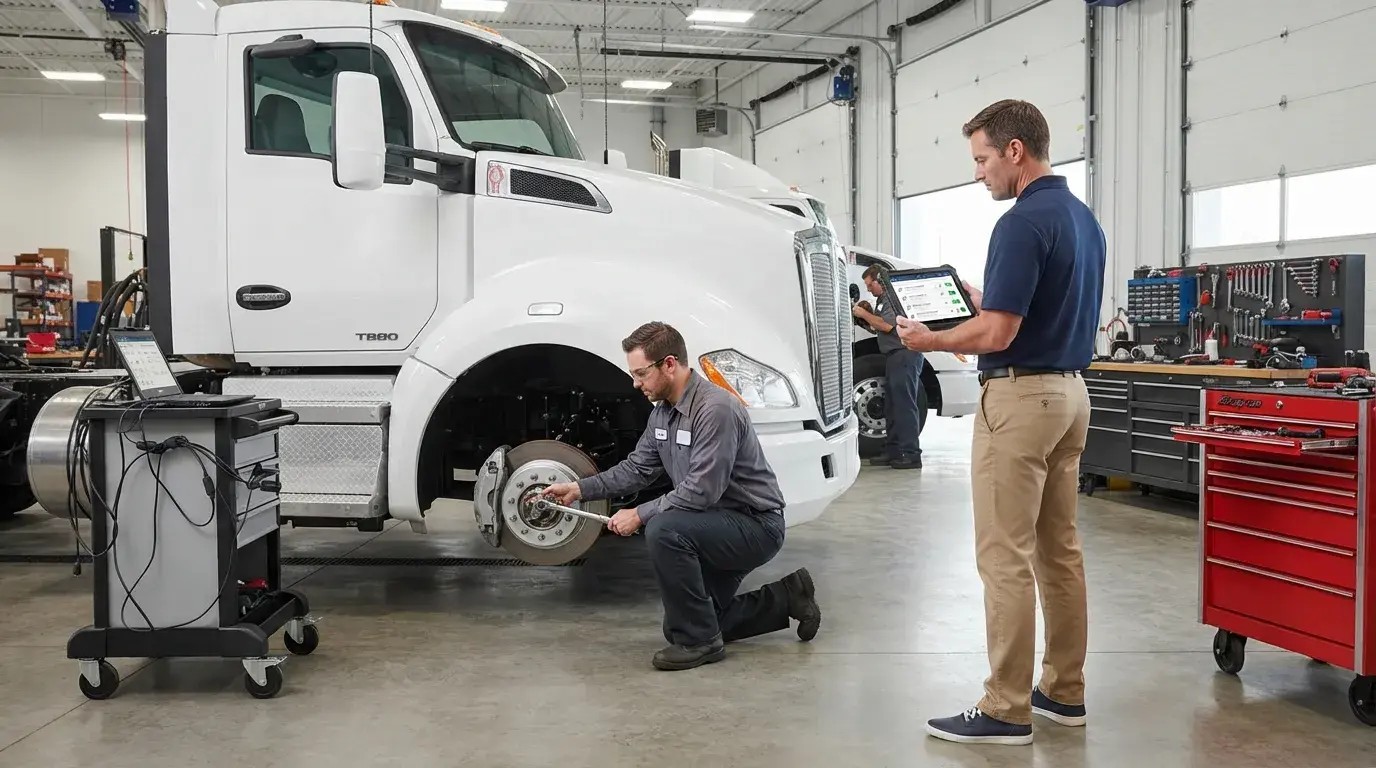
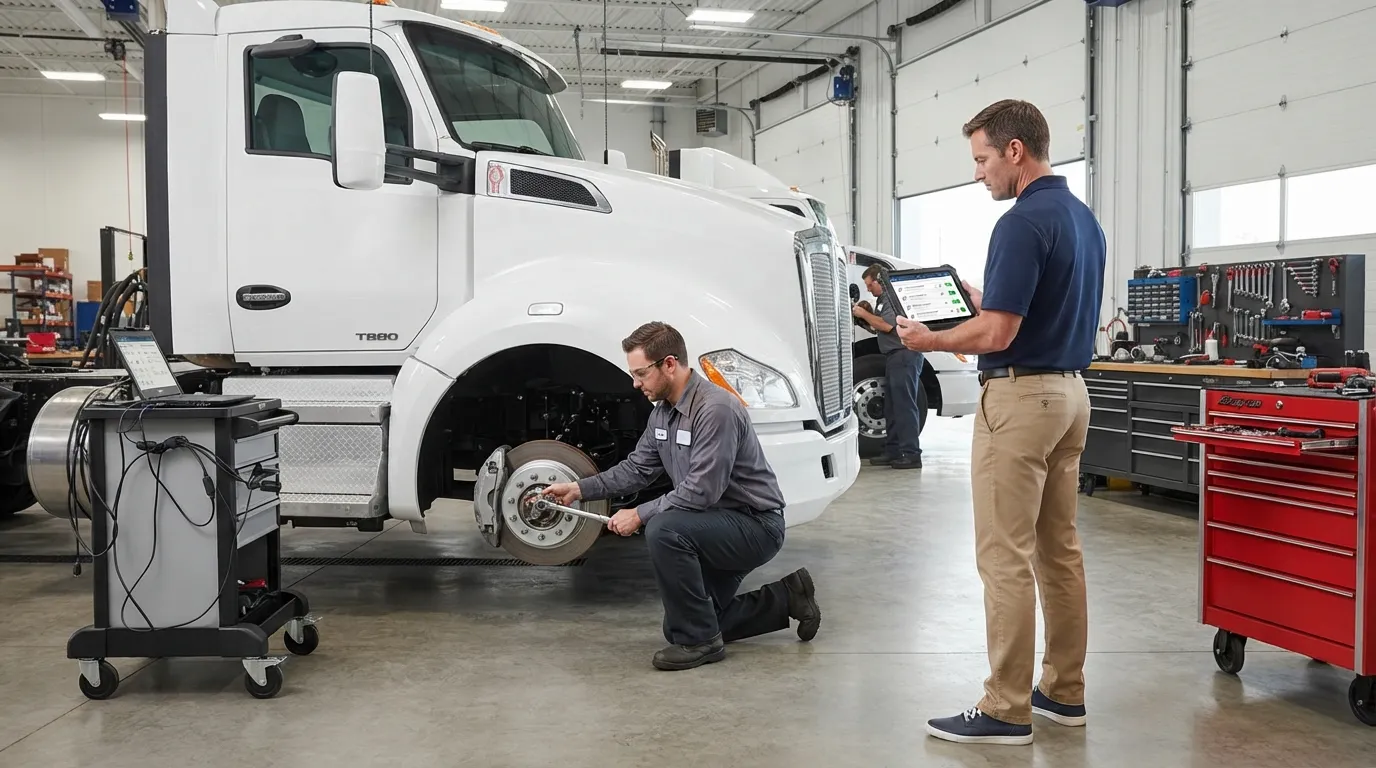
Vehicle inspections are an important part of maintaining commercial trucks, but identifying a problem is only the beginning of the maintenance process. When a driver notices a damaged tire, unusual engine noise, brake issue, or warning light, that information must reach the maintenance team and lead to appropriate action. Without a clear process, reported defects can be overlooked, repairs may be delayed, and minor problems can develop into expensive breakdowns.
For fleet operators and heavy-duty repair shops, the goal should be to connect every inspection report with a documented repair process. This requires effective communication, accurate defect information, proper work order management, technician coordination, and a final review before a vehicle returns to service.
Understanding how maintenance teams turn inspection findings into completed repairs can help businesses improve vehicle reliability, organize workshop operations, and maintain more accurate service records.
Why Is It Important to Connect Vehicle Inspections With Repairs?
A vehicle inspection provides information about a truck's condition at a particular point in time. However, an inspection report alone does not resolve the problem. A reported defect must be reviewed, assigned to the appropriate person, and addressed through a repair process.
For example, a driver may notice that a truck's brake system is not performing normally during a pre-trip inspection. If the concern is recorded but never communicated to the maintenance department, the vehicle could continue operating with a potentially serious issue.
Connecting inspections with repairs helps prevent this gap between identifying a problem and resolving it. It also gives fleet managers and technicians a clearer understanding of which defects are outstanding, which repairs are underway, and which vehicles are ready to return to service.
A connected process supports several important goals:
Improved vehicle safety: Reported defects can be reviewed and addressed before they create additional risks.
Better repair coordination: Maintenance teams can prioritize work and assign responsibilities more effectively.
Accurate maintenance documentation: Inspection reports and completed repairs can be associated with the correct vehicle.
Reduced operational disruption: Timely action can help prevent minor mechanical problems from becoming unexpected breakdowns.
The effectiveness of an inspection program depends on what happens after a problem is reported.
How Do Maintenance Teams Review and Verify Reported Defects?
The first step after receiving an inspection report is to understand the reported problem. Maintenance teams should review the information carefully instead of immediately assuming that every reported issue requires the same type of repair.
A useful report should identify the vehicle, describe the problem, include the date and time, and provide supporting information when available. Driver comments, inspection photos, and relevant vehicle details can help technicians understand what needs attention.
Review the Driver's Description
Drivers should describe the issue as clearly as possible. Instead of writing a general comment such as "truck making noise," they should explain when the noise occurs and which area of the vehicle appears to be affected.
For example, a driver might report a grinding sound when applying the brakes or unusual vibration while traveling at highway speeds. These details give technicians a better starting point for their investigation.
Check Supporting Photos and Notes
Photographs can provide useful visual evidence of visible problems, including damaged tires, fluid leaks, broken lights, and worn components.
Maintenance teams should review available photos alongside written comments. However, photographs cannot replace a proper mechanical inspection. A technician may still need to examine the vehicle to determine the actual cause and severity of the problem.
Confirm the Vehicle and Its History
Before arranging repairs, the maintenance team should verify that the report is associated with the correct truck or equipment unit.
Reviewing previous service records can also help technicians identify recurring issues. If a similar problem has been reported several times, the team may need to investigate the underlying cause rather than simply addressing the visible symptom again.
How Should Teams Prioritize Repairs After an Inspection?
Not every reported defect requires the same response. Some issues may affect vehicle safety and require immediate attention, while others can be addressed during a planned maintenance appointment.
Maintenance teams should evaluate each issue based on its severity, potential consequences, and effect on vehicle operation. Safety-related concerns should receive particular attention, and vehicles should not be operated when a defect makes them unsafe or violates applicable requirements.
A practical repair-priority system can help teams organize their workload.
High-Priority Issues
Problems involving brakes, steering, damaged tires, or other essential safety systems may require immediate evaluation. Maintenance personnel should determine whether the vehicle must remain out of service until the problem is resolved.
Medium-Priority Issues
Some mechanical problems may not immediately prevent a truck from operating but can become more serious if ignored. Examples may include developing fluid leaks, unusual engine performance, or worn components that require timely attention.
Routine Maintenance Issues
Minor concerns and routine service requirements can often be included in planned maintenance, provided they do not create a safety risk or violate applicable requirements.
A clear priority system helps managers allocate technicians, parts, and workshop resources according to the actual needs of the fleet.
How Are Inspection Reports Converted Into Repair Work Orders?
Once a defect has been reviewed and its repair requirements have been established, the next step is to create a work order. A work order gives the maintenance team a structured record of the job and helps move the issue from reporting to action.
Instead of relying on informal conversations or separate notes, teams can use work orders to organize the information needed to complete repairs.
A useful work order generally includes:
Vehicle identification: The unit number, vehicle details, and relevant identification information.
Reported defect: A clear description of the problem recorded during the inspection.
Repair requirements: The work that needs to be performed after the issue has been evaluated.
Assigned technician: The person or team responsible for completing the repair.
Parts and labor details: Information about the resources required to perform the work.
Repair status: Whether the job is awaiting review, in progress, completed, or requires additional attention.
Creating a work order also helps establish accountability. Maintenance managers can see which jobs have been assigned and follow their progress until the repair is finished.
What Information Helps Technicians Complete Repairs Efficiently?
Technicians need accurate information before they begin working on a vehicle. Incomplete reports can create unnecessary delays because employees may need to contact drivers, search through previous records, or repeat initial checks.
Providing useful information at the beginning of the repair process helps technicians understand the problem and prepare for the job.
Information | Why It Matters |
|---|---|
Vehicle identification | Ensures the correct unit is inspected and repaired |
Driver description | Explains the symptoms noticed during operation |
Inspection photos | Provides visual context for visible defects |
Previous repair history | Helps identify recurring mechanical issues |
Diagnostic information | Supports further investigation when available |
Parts requirements | Helps the shop prepare necessary components |
Work order details | Clarifies repair responsibilities and job status |
Not every defect will require all these details. The information needed depends on the type of problem and the repair involved.
Maintenance teams should also encourage technicians to record additional findings discovered during the repair. This creates a more complete service history and can help managers understand whether related components need attention.
How Can Maintenance Teams Coordinate Technicians, Parts, and Repairs?
After a work order is created, the shop must organize the resources needed to complete the job. Poor coordination can delay repairs even when the defect has already been identified.
Managers should consider technician availability, required skills, parts inventory, equipment, and the expected time needed to complete the work.
Assign the Right Technician
Different repair jobs require different levels of experience and technical knowledge. Assigning work according to technician skills can improve efficiency and reduce the likelihood of unnecessary delays.
Check Parts Availability
Some repairs cannot begin until the required replacement parts are available. Maintenance teams should review parts requirements early and coordinate purchasing or inventory preparation when necessary.
Monitor Repair Progress
Managers should keep track of active work orders and communicate with technicians when additional information or resources are needed.
If a repair takes longer than expected, the team should update the job status and communicate any effect on vehicle availability.
Good coordination allows maintenance teams to manage multiple repair jobs without losing track of individual vehicle requirements.
How Should Completed Repairs Be Inspected and Documented?
Completing the physical repair is not necessarily the final step. Maintenance teams should verify that the reported issue has been addressed and that the vehicle is suitable to return to service.
The level of verification depends on the type of repair. For example, a brake-related repair may require appropriate inspection and testing by qualified personnel, while a lighting issue may require confirmation that the affected lights operate correctly.
Technicians should record the work performed, parts replaced, labor details, and any relevant inspection or testing results.
The final documentation should also identify who completed or approved the work and when the repair was closed.
This information creates a connection between the original inspection report and the action taken by the maintenance team. If questions arise later, managers can review the vehicle's service history instead of searching through disconnected paperwork.
How Does Digital DVIR Software Support the Inspection-to-Repair Process?
Paper-based inspection reports and separate maintenance records can make it difficult to follow a defect from the initial report through final repair. Information may need to be entered more than once, and important details can be missed when responsibilities are not clearly defined.
Digital Driver Vehicle Inspection Reports (DVIRs) help organize inspection information and make it easier for drivers to report problems. Depending on the software and integrations being used, reports may include defect descriptions, photos, notes, vehicle details, and other relevant information.
For fleet maintenance teams, connecting inspection tools with repair management systems can make the handoff between drivers and technicians more efficient.
Fullbay's DVIR and defect tracking solution focuses on connecting reported defects with repair workflows. Its page explains how connected platforms such as Whip Around and Pitstop can move reported issues into Fullbay, where they can become work orders and be tracked through repair completion.
This type of connected workflow can help maintenance teams:
Reduce duplicate data entry between inspection and repair systems.
Keep vehicle and defect information connected to the relevant work order.
Make supporting notes and photos available to technicians.
Review completed repair history by vehicle.
Identify recurring issues and maintain more complete service records.
Digital tools can improve visibility, but their effectiveness still depends on accurate reporting and consistent use by drivers, technicians, and managers.
What Common Problems Can Delay Repairs After Inspections?
Even when a business conducts regular inspections, problems can occur if the information is not handled properly. A defect may be reported but remain unresolved because of communication gaps, incomplete records, or unclear responsibilities.
Common challenges include:
Incomplete inspection reports: Vague descriptions and missing photos can make it harder for technicians to understand the issue.
Delayed communication: Reports that do not reach the maintenance team promptly may result in slower repairs.
Unclear responsibility: Without an assigned person, a work order may remain unattended.
Parts shortages: Missing components can prevent technicians from completing repairs on schedule.
Disconnected records: Separate inspection and repair systems can make it difficult to confirm whether a reported defect was resolved.
Missing repair verification: Closing a job without appropriate checks and documentation can leave uncertainty about the work completed.
Fleet managers should regularly review their repair processes to identify these gaps. Clear reporting procedures, defined responsibilities, and organized records can help prevent many avoidable delays.
Building a Complete Process From Inspection to Repair
An effective inspection program should create a clear path from the moment a driver reports a problem to the moment the maintenance team verifies and documents the completed repair.
The process begins with accurate driver reporting, followed by defect review, repair prioritization, work order creation, technician assignment, and the completion of necessary repairs. Final verification and documentation ensure that the vehicle's service history reflects what was reported and what action was taken.
When inspection findings are connected to repair workflows, fleet managers gain better visibility into outstanding issues and completed work. Combining consistent procedures with digital tools can help reduce missed defects, improve communication, and support more reliable commercial vehicle operations.
Frequently Asked Questions
1. What Happens After a Driver Submits a DVIR?
After a driver submits a Driver Vehicle Inspection Report, the maintenance team reviews the reported defects, evaluates their severity, and determines what action is required. Issues needing repair can then be assigned to technicians through an organized work order process.
2. Why Should Inspection Reports Be Connected to Work Orders?
Connecting reports with work orders helps maintenance teams track a defect from its initial discovery through repair completion. It also keeps important vehicle information, repair details, and job status organized in one workflow.
3. Who Is Responsible for Reviewing Reported Vehicle Defects?
Fleet managers, maintenance supervisors, or designated maintenance personnel generally review reported defects and determine the appropriate next steps. Technicians may then inspect the vehicle and perform the required repairs according to their responsibilities and qualifications.
4. How Do Digital DVIRs Help Maintenance Teams?
Digital DVIRs can make it easier for drivers to submit inspection reports with vehicle details, photos, and written notes. When connected with repair management software, this information can help reduce manual data entry and support a more organized repair process.
5. What Should Be Included in a Completed Repair Record?
A completed repair record should generally include vehicle identification, the original reported defect, work performed, parts replaced, labor details, relevant testing or inspection results, and completion information. Accurate documentation helps maintain a useful vehicle service history.

Join the conversation
Discussion0
Join the conversation. Sign in to leave a response or reply to comments.