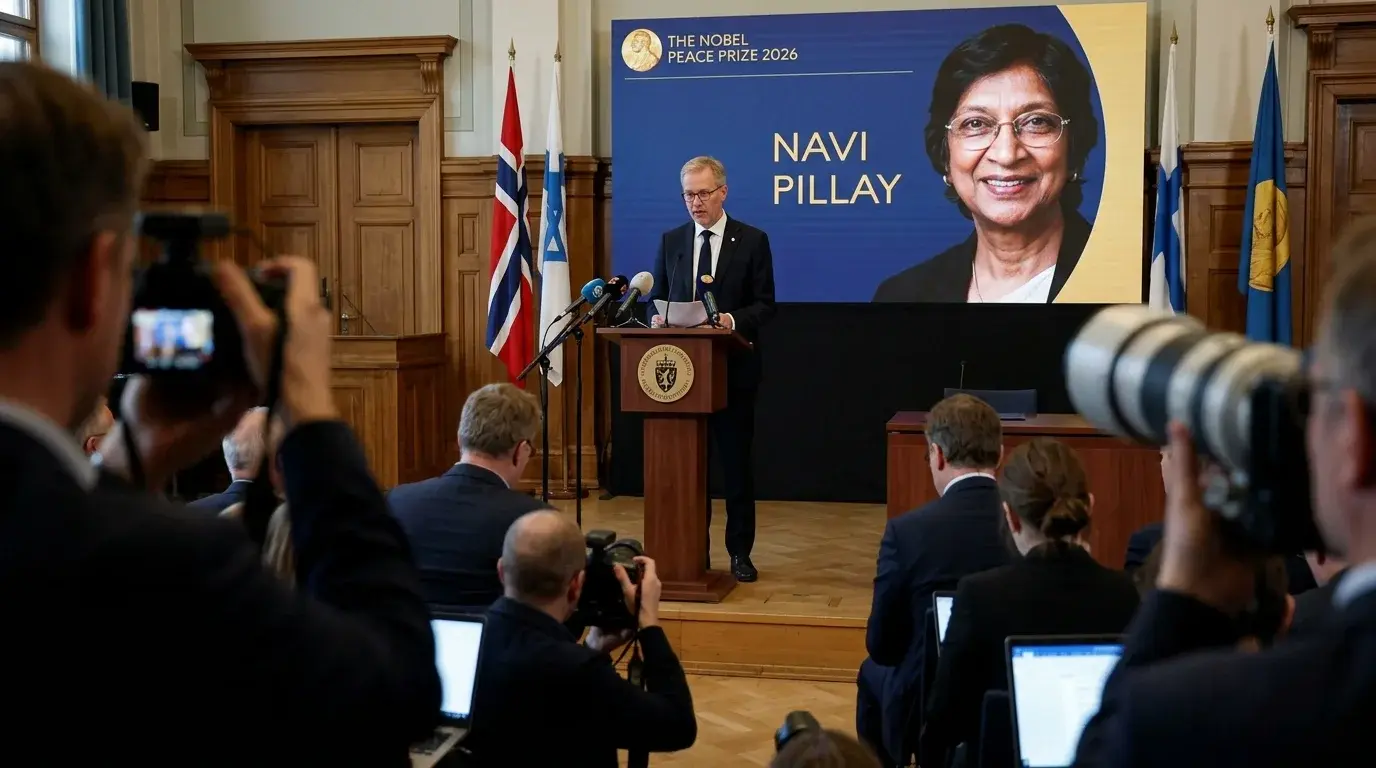
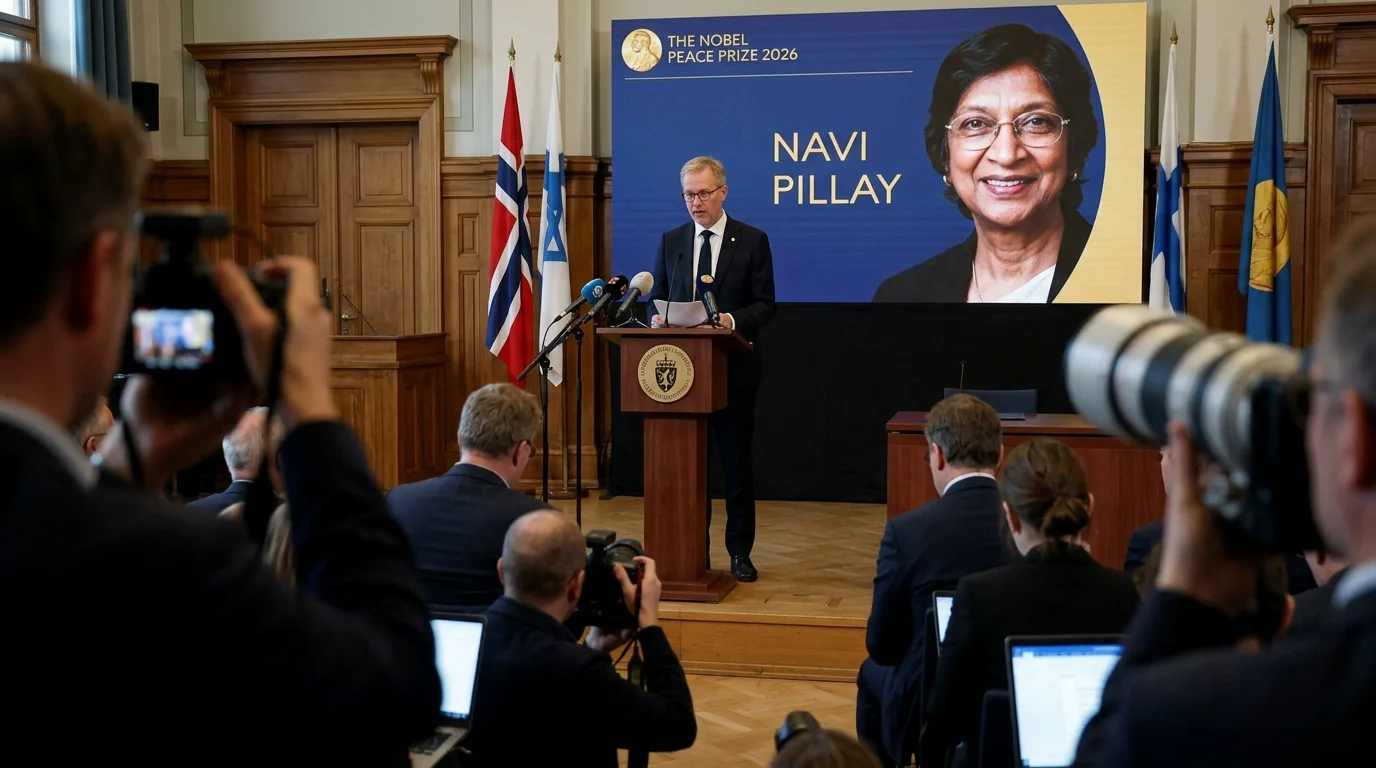
Oslo - The Norwegian Nobel Committee announced on Friday, October 9, 2026, that Navanethem "Navi" Pillay, a former United Nations human rights chief and judge at the International Court of Justice, has been awarded the 2026 Nobel Peace Prize. The committee honoured her "for her efforts to promote peace and international law".
The announcement was made at the Nobel Institute in Oslo by Joergen Watne Frydnes, Chair of the Norwegian Nobel Committee. At 85 years old, Pillay becomes one of the oldest recipients of the prestigious award, capping a legal career that spans more than five decades and three continents.
Who Is Navi Pillay?
Navanethem Pillay was born in 1941 in Durban, South Africa, to a family of Indian Tamil descent. She grew up in a country where racial segregation was enforced by law. The apartheid system would shape her entire career.
Despite facing discrimination as a woman of colour, Pillay earned a law degree from the University of Natal and later a doctorate from Harvard Law School. She began her legal career as the first woman of colour to open a law practice in Natal Province.
Her early work focused on defending anti-apartheid activists and victims of state repression. She represented prisoners on Robben Island, where Nelson Mandela was incarcerated, and fought against laws that restricted the rights of Black South Africans.
A Career in International Justice
Pillay's work on the global stage began in 1995, when she was appointed as a judge on the International Criminal Tribunal for Rwanda (ICTR). This tribunal was established to prosecute those responsible for the 1994 Rwandan genocide, which claimed the lives of an estimated 800,000 people.
At the ICTR, Pillay played a critical role in landmark cases. She served as the presiding judge in the trial of Jean-Paul Akayesu, a case that resulted in the first-ever conviction for genocide by an international tribunal. It was also the first time an international court recognised rape as a crime of genocide.
In 1999, she became the first woman to serve as President of the ICTR. Under her leadership, the tribunal expedited trials, protected witnesses, and expanded the definition of sexual violence in war crimes.
UN Human Rights Commissioner
In 2008, Pillay was appointed as the United Nations High Commissioner for Human Rights, a role she held until 2014. During her tenure, she was a vocal advocate for victims of human rights abuses around the world.
She raised concerns about violations in Sri Lanka during the final stages of the civil war, criticised the Israeli blockade of Gaza, and called for accountability for war crimes in Syria. Her willingness to speak out against powerful governments often put her at odds with member states, but she remained steadfast.
Her work at the UN included strengthening the office's field presence in conflict zones and supporting the establishment of commissions of inquiry in countries such as Syria, North Korea, and Eritrea.
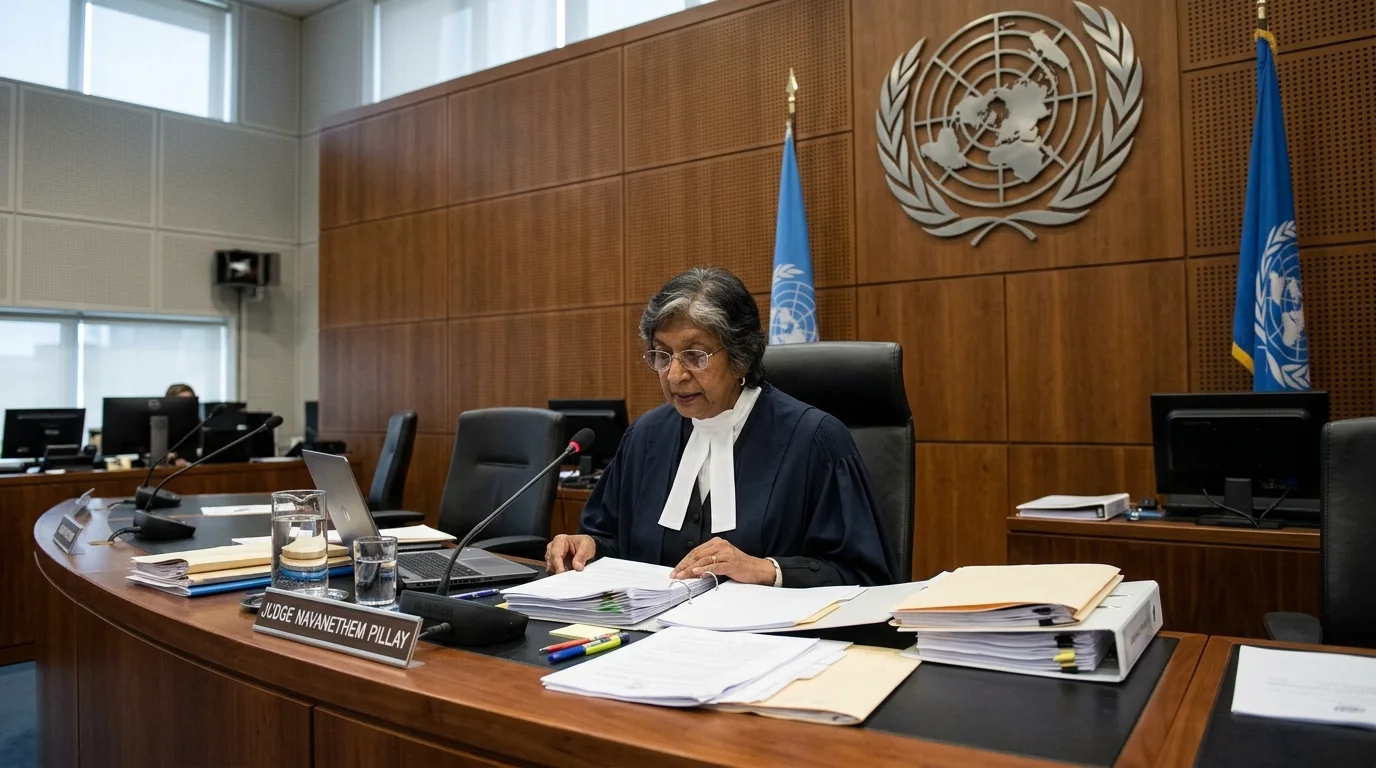
After leaving the UN, Pillay continued to serve in international legal roles. In 2015, she was appointed as a judge on the International Court of Justice (ICJ), the principal judicial organ of the United Nations. She has also served as a commissioner on the International Commission of Jurists.
The 2026 Nobel Peace Prize
The Norwegian Nobel Committee cited Pillay's lifelong commitment to international law and peace. Her work, the committee said, has contributed to a more just world by holding perpetrators of atrocities accountable and by giving voice to victims.
The prize was announced amid a global landscape marked by ongoing conflicts, rising authoritarianism, and challenges to the multilateral order. The committee's decision to honour a jurist rather than a politician or activist signals a reaffirmation of international law as a foundation for peace.
SIPRI, the Stockholm International Peace Research Institute, issued a statement congratulating Pillay, noting that her career "reflects the essential role of international law in building peace".
Global Reactions
Reactions poured in from across the world following the announcement. Human rights organisations, legal scholars, and world leaders praised the committee's choice.
The United Nations High Commissioner for Human Rights, Volker Türk, described Pillay as "a tireless defender of the rights of the most vulnerable." He noted that her legacy includes not only her rulings but also her work to strengthen the institutions that deliver justice.
South African President Cyril Ramaphosa congratulated Pillay, calling her a "daughter of the soil who carried the values of our liberation struggle to the world stage." He said the award was a proud moment for South Africa and for all who believe in justice.
Amnesty International called the award "a recognition of the often unsung work of judges and lawyers who hold power to account." The organisation said Pillay's career demonstrated that international law is not an abstract concept but a living tool for protecting human dignity.
Why International Law Matters
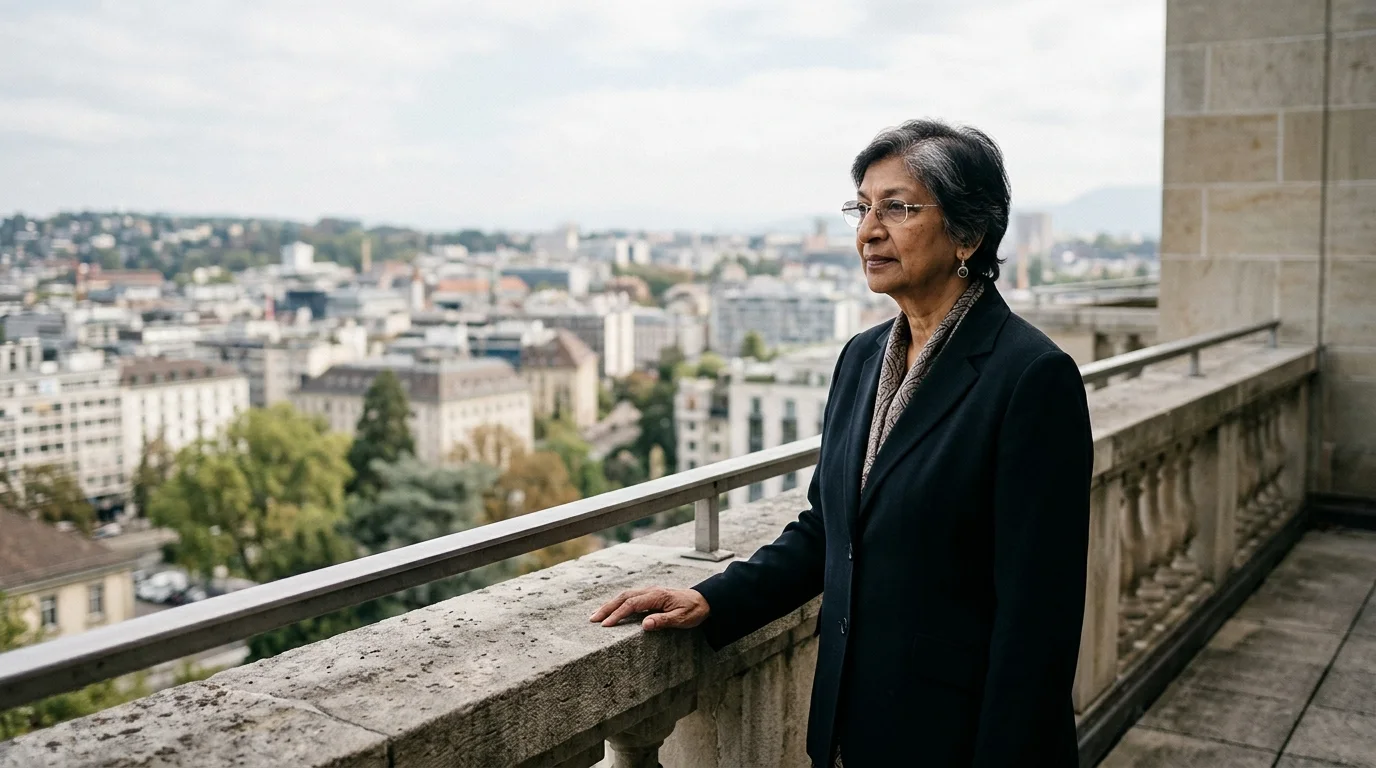
The Nobel Committee's decision to honour Pillay comes at a time when international law faces significant challenges. Several conflicts around the world have seen widespread violations of humanitarian law, with civilians bearing the brunt of violence.
Critics argue that international courts are too slow, too political, or too weak to enforce their rulings. Supporters counter that without these institutions, there would be no mechanism at all to hold perpetrators accountable.
Pillay's career embodies the belief that law can be a force for peace. Her rulings established precedents that have been cited in subsequent trials. Her advocacy at the UN brought attention to abuses that might otherwise have been ignored. Her presence on the ICJ continues to shape the development of international jurisprudence.
In a world where power often determines outcomes, international law offers a framework for justice that is not based on might alone. It is imperfect, but it is indispensable.
A Legacy of Courage
Throughout her career, Pillay has been known for her courage. She has faced criticism from governments, threats to her safety, and the frustration of seeing perpetrators escape justice. Yet she has never wavered in her commitment to the rule of law.
Her own life story is a testament to the power of perseverance. Born into a system designed to exclude her, she rose to the highest levels of international justice. She has said that her experience of apartheid shaped her understanding of injustice and her determination to fight it.
As she accepts the Nobel Peace Prize, Pillay joins a distinguished list of recipients who have worked to build a more peaceful world. But her work is not finished. International law continues to face challenges, and the fight for justice is ongoing.
Conclusion
The 2026 Nobel Peace Prize awarded to Navi Pillay is a recognition of a life dedicated to justice. From the courtrooms of apartheid South Africa to the international tribunals of The Hague, she has fought for the principle that no one is above the law.
Her award serves as a reminder that peace is not merely the absence of war. It is the presence of justice. And justice, as Pillay has shown throughout her career, requires courage, persistence, and a steadfast belief in the dignity of every human being.
What do you think about Navi Pillay winning the 2026 Nobel Peace Prize? Share your thoughts in the comments.




Join the conversation
Discussion0
Join the conversation. Sign in to leave a response or reply to comments.