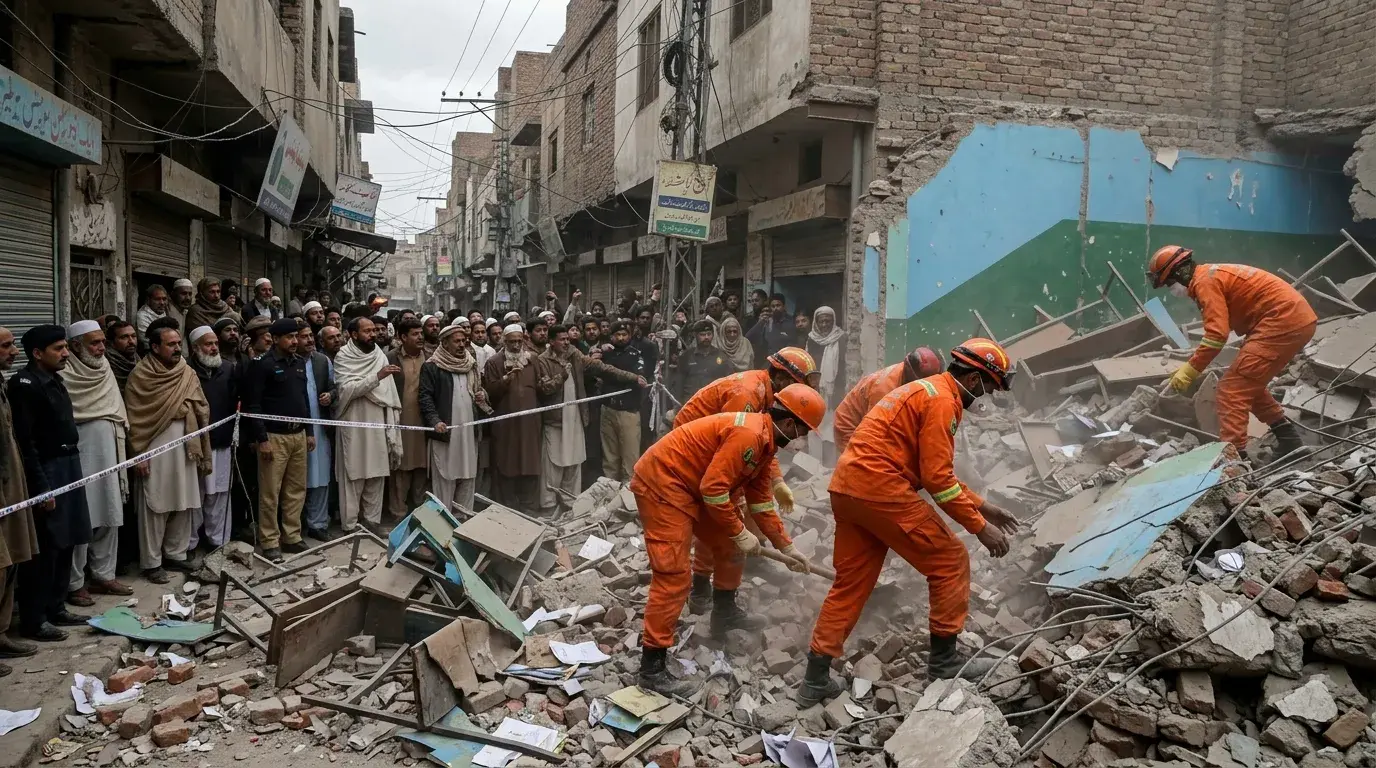
Peshawar At least 34 schoolchildren and a female teacher were killed when the roof of a private school collapsed during morning classes in Peshawar, northwestern Pakistan, on Thursday, October 15, 2026. More than 50 people were injured, including several children in critical condition. It is being described as the deadliest incident of its kind in the country.
The incident occurred at the Al-Khair Education System School in the Dir Colony neighborhood of Peshawar, the capital of Khyber Pakhtunkhwa province. The children who died were between six and 14 years old, according to officials at Lady Reading Hospital, where the victims were taken.
What Happened
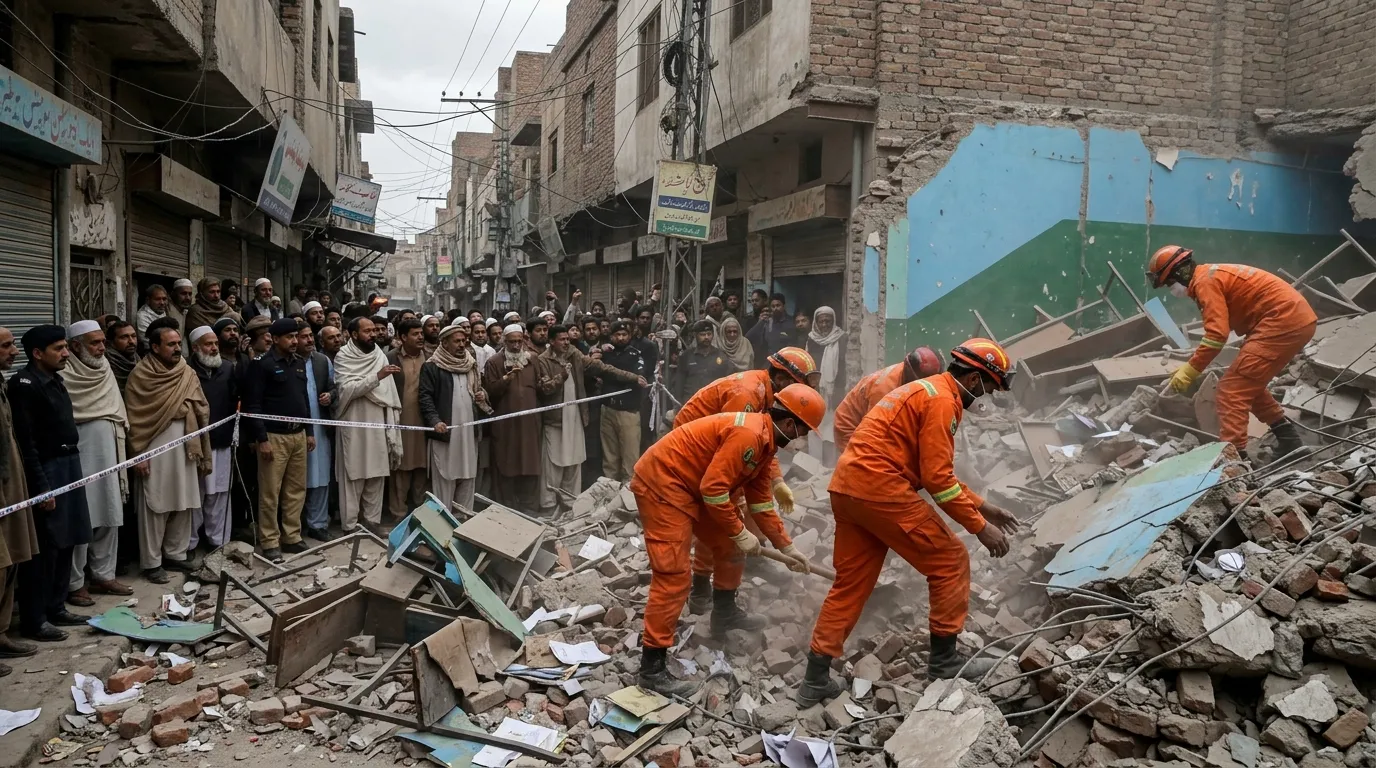
The incident took place at 8:48 a.m. local time, shortly after morning classes had begun. A total of 110 students were attending lessons in three classrooms when the roof caved in. A higher-floor roof collapsed onto the classrooms below, crumpling two storeys of the building.
Rescue operations lasted for four to five hours. Television footage showed rescuers clawing through debris with their bare hands and carrying bloodied children to waiting ambulances as residents crowded the narrow alley where the school stood.
Lady Reading Hospital spokesman Mohammad Asim confirmed that the fatalities included 12 girl students and a female teacher. Three children remained in critical condition with head injuries, while most of the injured had been treated and discharged.
Cause of the Collapse
Peshawar police chief Mian Saeed stated that the building had a weak structure. "Its roof was overloaded with construction on a weak structure, which caused the collapse," he said. The school's owner has been arrested, and an investigation has been launched.
Deputy Commissioner Peshawar Afaq Wazir noted that the building appeared to be in a dilapidated condition and that heavy rainfall in the preceding days may have further weakened the structure. However, he added that the exact cause would be determined by the investigation.
A Community in Mourning
On Thursday, thousands of mourners participated in funeral prayers in Peshawar for the young victims. Distraught relatives accused the school of ignoring concerns about the building's condition and demanded accountability.
"Make an example of them, a lesson for all, so that no one dares open a school just to make money without providing facilities," said Mohammad Zaman, who lost two nephews in the collapse.
Jawad Ahmad, whose son and daughter attended the school and survived, described his shock: "It felt as if someone had shot me in the chest when I learned that the school building had collapsed".
Government Response
Pakistan's President Asif Ali Zardari described the incident as a "heart-wrenching tragedy" and called for a comprehensive investigation into the cause of the collapse. Prime Minister Shehbaz Sharif expressed his condolences to the families of the victims and directed authorities to ensure that the injured receive the best possible medical care. He said no parent should have to endure such pain and vowed to take necessary steps to protect schoolchildren.
Faisal Karim Kundi, the governor of Khyber Pakhtunkhwa province, announced that he had ordered a safety audit of schools across the province to identify potential risks and ensure corrective measures are taken.
The provincial government has also announced compensation for the families of the victims and free medical treatment for the injured.
A Pattern of Tragedy
The Peshawar school collapse is not an isolated incident. It comes after other deadly incidents involving children in Pakistan in recent months.
In July 2026, a roof collapse at a tutoring center under construction in Lahore killed at least 14 schoolchildren. In August 2026, a fire in the nursery of a hospital in Islamabad killed 14 newborn babies, prompting an inquiry that found the nursery lacked a fire alarm and sprinkler system.
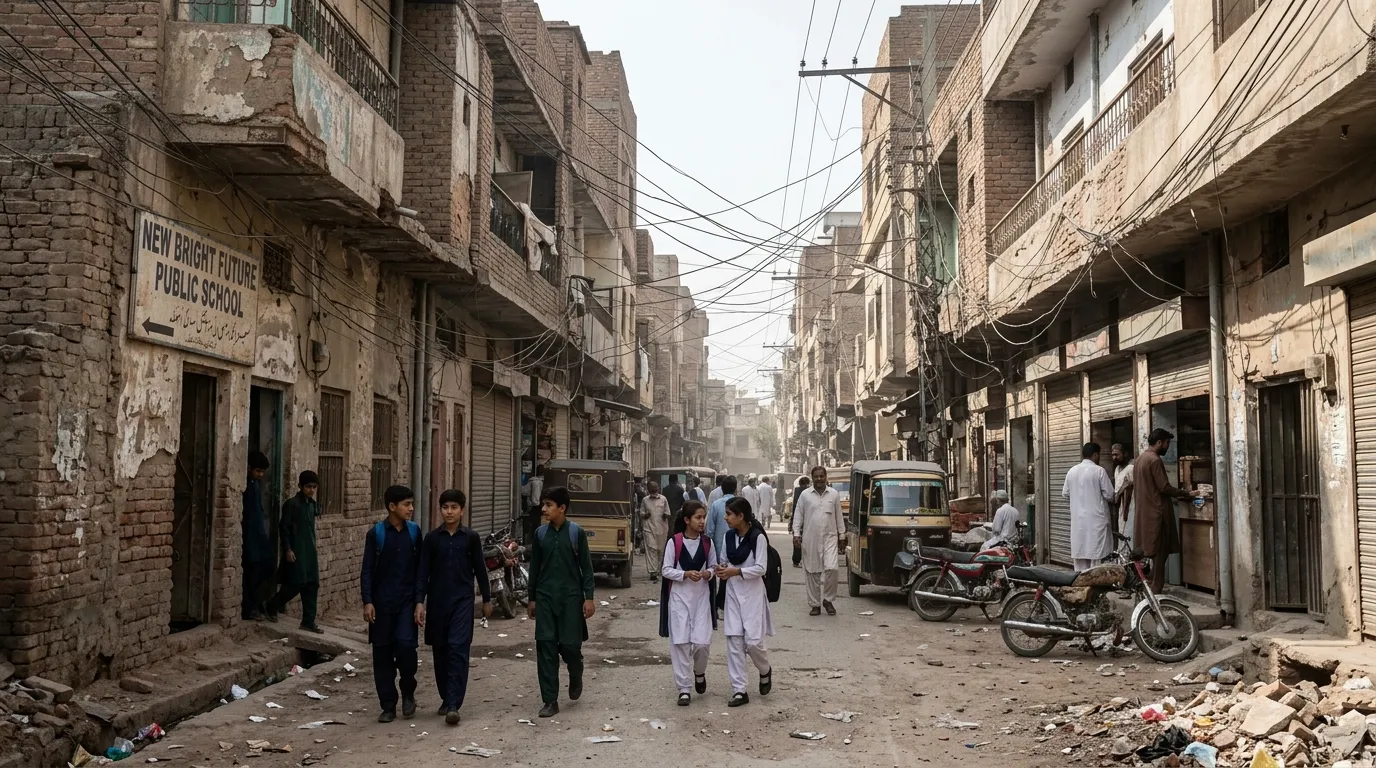
These incidents have drawn attention to building safety concerns in Pakistan, where collapses are often linked to weak regulatory oversight and the use of substandard construction materials. Private schools have expanded rapidly in low-income neighborhoods, where many institutions operate on limited budgets and may lack adequate safety measures.
Pakistan spends less than one percent of its nearly $450 billion GDP on education, leaving many families dependent on low-cost private schools. Many of these schools operate from poorly maintained rented buildings with limited oversight, contributing to recurring safety concerns.
Political Context
The tragedy occurred amid heightened political tensions in Khyber Pakhtunkhwa. On Sunday, October 11, President Asif Ali Zardari imposed a state of emergency in the province, claiming the provincial government had failed to tackle Islamist militancy from neighboring Afghanistan. The provincial government has denied the allegation. President Zardari also imposed a new governor on the province, sharpening tensions with the provincial administration, which is governed by the party of jailed former Prime Minister Imran Khan.
What Comes Next
The arrest of the school owner and the launch of an investigation are the first steps toward accountability. The provincial government's safety audit of schools across Khyber Pakhtunkhwa will determine how many other institutions are operating in dangerous conditions.
For the families of the 34 children who lost their lives, no investigation or compensation can bring them back. Their grief is a reminder that the safety of children in schools must be a priority, not an afterthought.
What do you think about the safety of schools in Pakistan? Share your thoughts in the comments.




Join the conversation
Discussion0
Join the conversation. Sign in to leave a response or reply to comments.