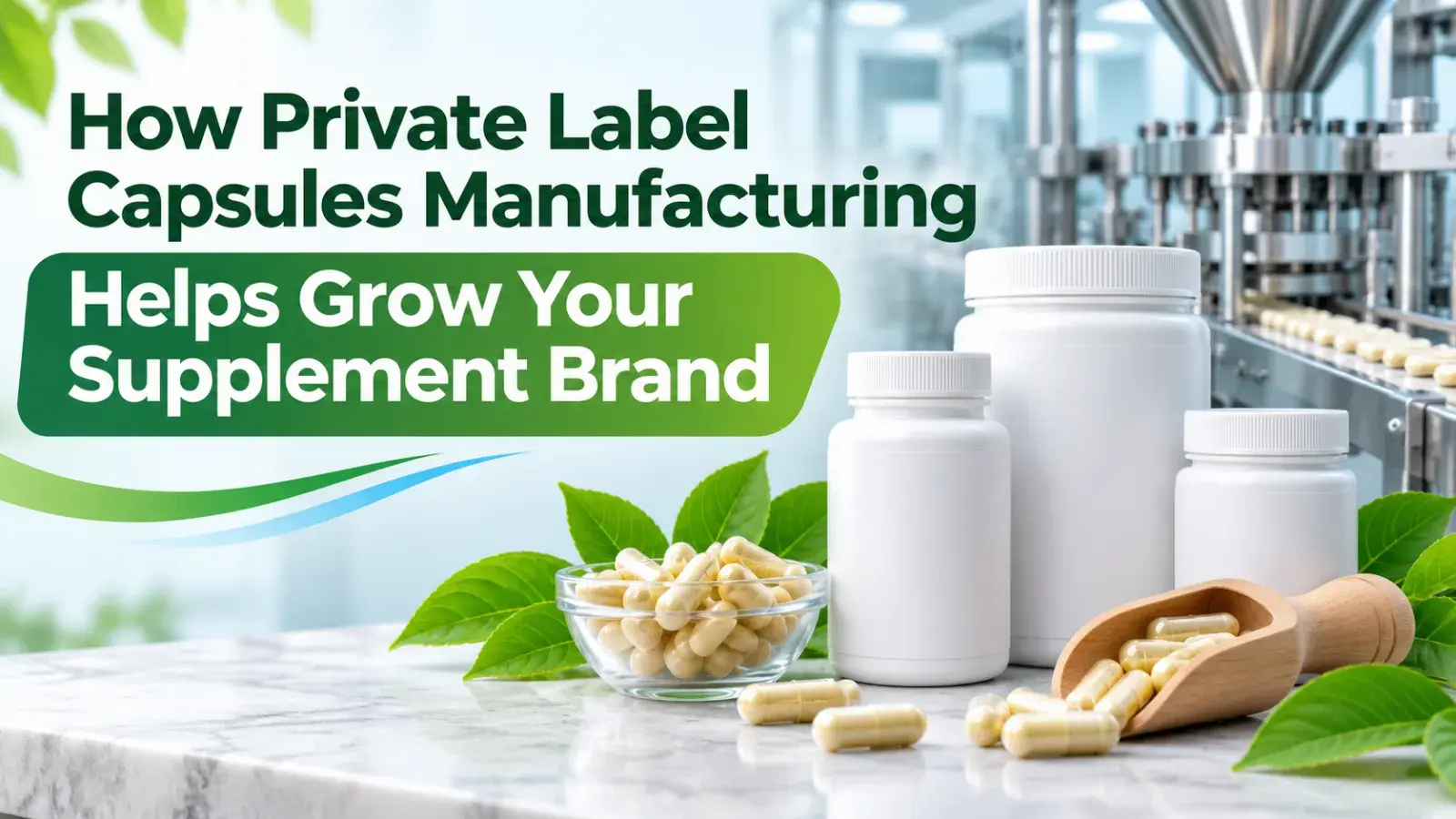
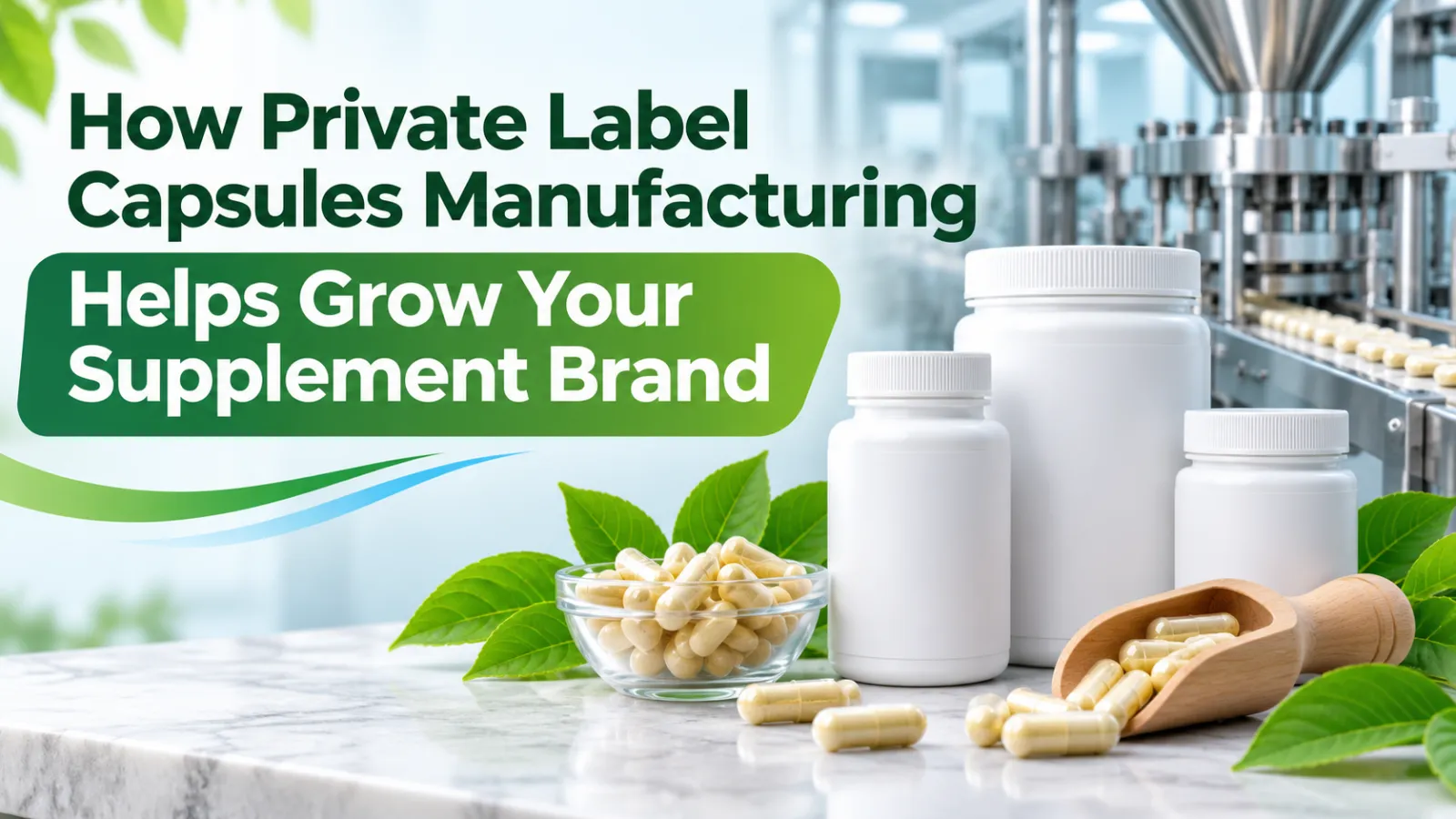
Building a successful supplement brand requires more than an appealing logo or a promising product idea. Customers expect consistent quality, convenient formats, transparent labeling, and a brand they can trust. However, developing capsules independently demands specialized equipment, technical expertise, and significant operational investment. Private label capsules manufacturing offers another path. By partnering with an experienced manufacturer, supplement businesses can concentrate on branding, marketing, and customer relationships while specialists manage production. This approach can help emerging companies enter the market efficiently and give established brands room to expand without building their own factories.
What Is Private Label Capsules Manufacturing?
Private label capsules manufacturing involves working with a third party to produce capsule supplements sold under your brand name. Depending on the manufacturer, businesses may choose from existing formulas or collaborate on customized ingredients, capsule shells, strengths, and packaging. ThF manufacturing partner typically handles ingredient sourcing, blending, encapsulation, testing, and packing according to agreed specifications.
This model differs from manufacturing everything internally. Instead of purchasing machinery and staffing a production facility, brand owners pay for contracted services. Responsibilities vary by agreement, so it is important to clarify who controls formulations, artwork, documentation, and finished inventory before production begins.
1. Launch Products With Less Upfront Investment
Establishing an in house capsule production line can involve expensive equipment, facility preparation, maintenance, training, and quality systems. These commitments may be unrealistic for a new supplement company still testing demand.
A private label partner provides access to existing manufacturing infrastructure. This can reduce the initial capital required to launch and allow resources to support customer research, website development, product photography, and promotion. Minimum order quantities still apply, but comparing several manufacturers can reveal options aligned with your budget and expected sales.
2. Bring Your Brand to Market Faster
Speed matters when consumer preferences change and competitors introduce new products. Developing a production operation from scratch can delay a promising launch. Established manufacturing partners already have equipment, trained personnel, and repeatable workflows, potentially shortening the journey from product brief to finished capsules.
Ready to use formulations may offer a quicker starting point, while custom products generally require additional development and validation. Agree on realistic timelines for samples, label reviews, testing, production, and shipping. A reliable launch plan is more valuable than an unrealistic delivery promise.
3. Create Products That Reflect Your Identity
Brand differentiation helps customers recognize why your supplements deserve consideration. Private label capsules manufacturing can support choices involving ingredient combinations, capsule materials, serving sizes, bottle designs, and label presentation.
For example, a wellness brand might prioritize plant based capsule shells and simple ingredient lists, while a sports nutrition brand may focus on convenient serving formats. Customization depends on technical feasibility, regulatory requirements, ingredient availability, and minimum orders. Clear product positioning, supported by appropriate evidence, creates stronger differentiation than unsupported claims or complicated formulas.
4. Build Confidence Through Quality Standards
Supplement customers want reassurance that products contain the ingredients listed on their labels. Reputable manufacturing partners follow documented production procedures and appropriate quality controls. Ask prospective partners about applicable good manufacturing practices, ingredient verification, batch traceability, contamination prevention, and finished product testing.
Request relevant certificates of analysis and understand which tests are performed for each batch. Certifications are useful signals, but they do not replace due diligence. Your brand remains responsible for ensuring that products and marketing comply with the rules in the markets where they are sold. Clear quality expectations protect customers and support long term credibility.
5. Expand Your Product Range Strategically
Once a brand gains traction, customers may request additional supplement options. Working with a manufacturing partner can make it easier to explore new capsule products without investing in another production line. Brands can evaluate complementary formulas, different capsule counts, or specialized packaging that matches specific audience needs.
However, expanding too quickly can tie up cash in unsold stock. Use customer feedback, sales performance, and market research to prioritize launches. Start with a focused product portfolio, monitor repeat purchases, and introduce new items when demand and operational capacity justify the investment.
6. Focus on Marketing and Customer Relationships
Outsourcing capsule production gives brand teams more time to strengthen the activities that customers experience directly. These include educational content, clear product descriptions, responsive support, reliable ordering, and thoughtful post purchase communication.
Strong marketing should explain what each supplement contains, whom it is intended for, and how to use it according to the label. Avoid exaggerated health promises. Consistent messaging across your website, packaging, and customer service channels helps establish recognition and encourages informed purchasing decisions.
7. Support Growth With Flexible Operations
As order volumes increase, a capable manufacturing partner may help scale output while maintaining consistent specifications. Discuss production capacity, ingredient lead times, reorder schedules, shipping arrangements, and contingency plans before demand rises.
Forecasting is equally important. Share realistic projections, monitor inventory, and maintain sufficient stock without overordering. A manufacturer that communicates clearly about delays and capacity constraints is often more valuable than one that simply promises unlimited flexibility. Operational discipline helps your brand deliver dependable customer experiences during growth.
How to Choose the Right Manufacturing Partner
Selecting a manufacturer is a strategic decision, not just a price comparison. Assess relevant experience, quality documentation, customization capabilities, transparent quotations, and responsiveness. Ask about sample development, testing procedures, minimum orders, packaging options, lead times, and complaint handling. Confirm ownership of formulas and branding assets in writing.
Before signing, compare total costs, including development, testing, packaging, storage, and shipping. Review agreements carefully and consider a smaller initial order where feasible. The right partner should understand your goals while setting honest expectations about what can be delivered.
Final Thoughts
Private label capsules manufacturing can help supplement brands launch efficiently, differentiate their products, maintain quality oversight, and prepare for sustainable expansion. Success still depends on responsible claims, strong customer relationships, realistic planning, and careful partner selection. Treat your manufacturer as a long term operational collaborator, and build your brand around value customers can recognize and trust over the years.


Join the conversation
Discussion0
Join the conversation. Sign in to leave a response or reply to comments.