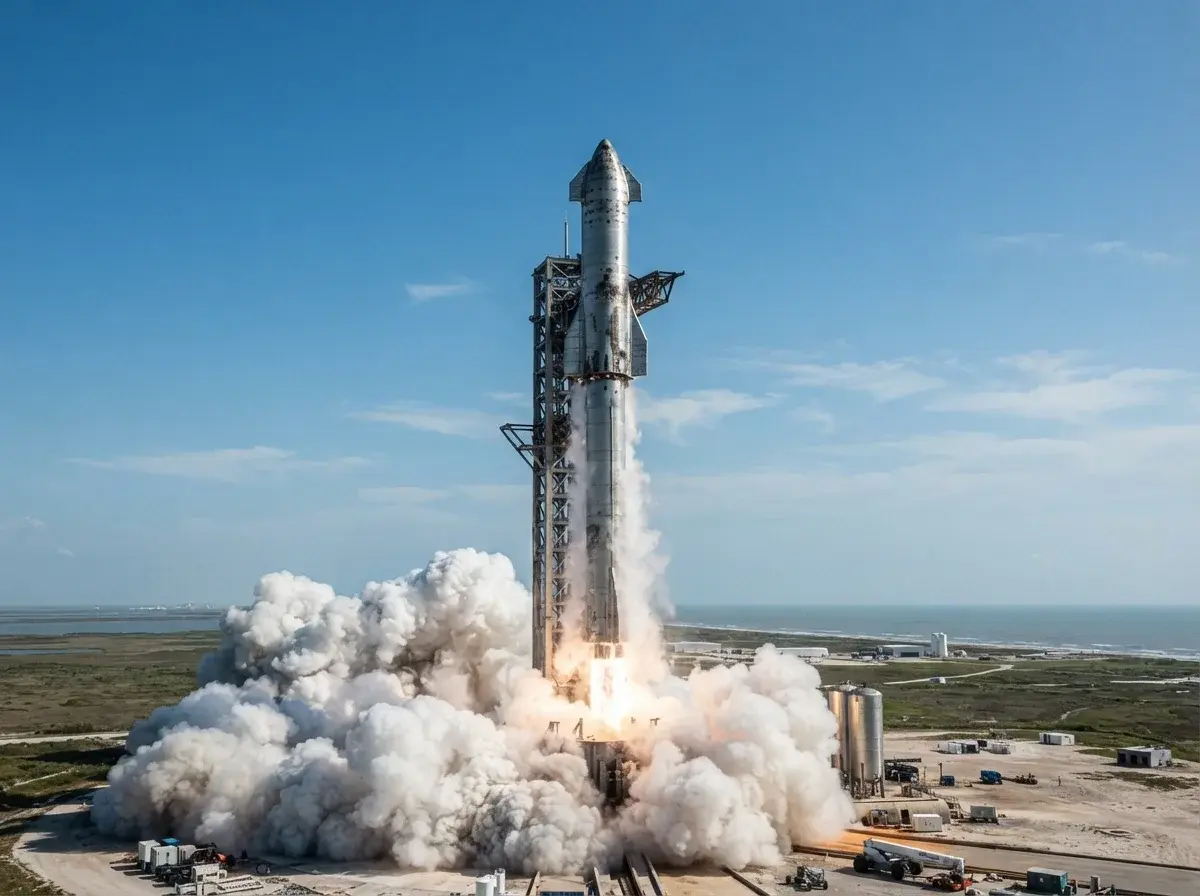
Los Angeles - SpaceX achieved a historic milestone on Monday, successfully launching its Starship rocket into orbit for the first time. The uncrewed flight deployed 26 next-generation Starlink V3 satellites before ending its test mission earlier than planned due to an engine issue during ascent.
Launch and Ascent
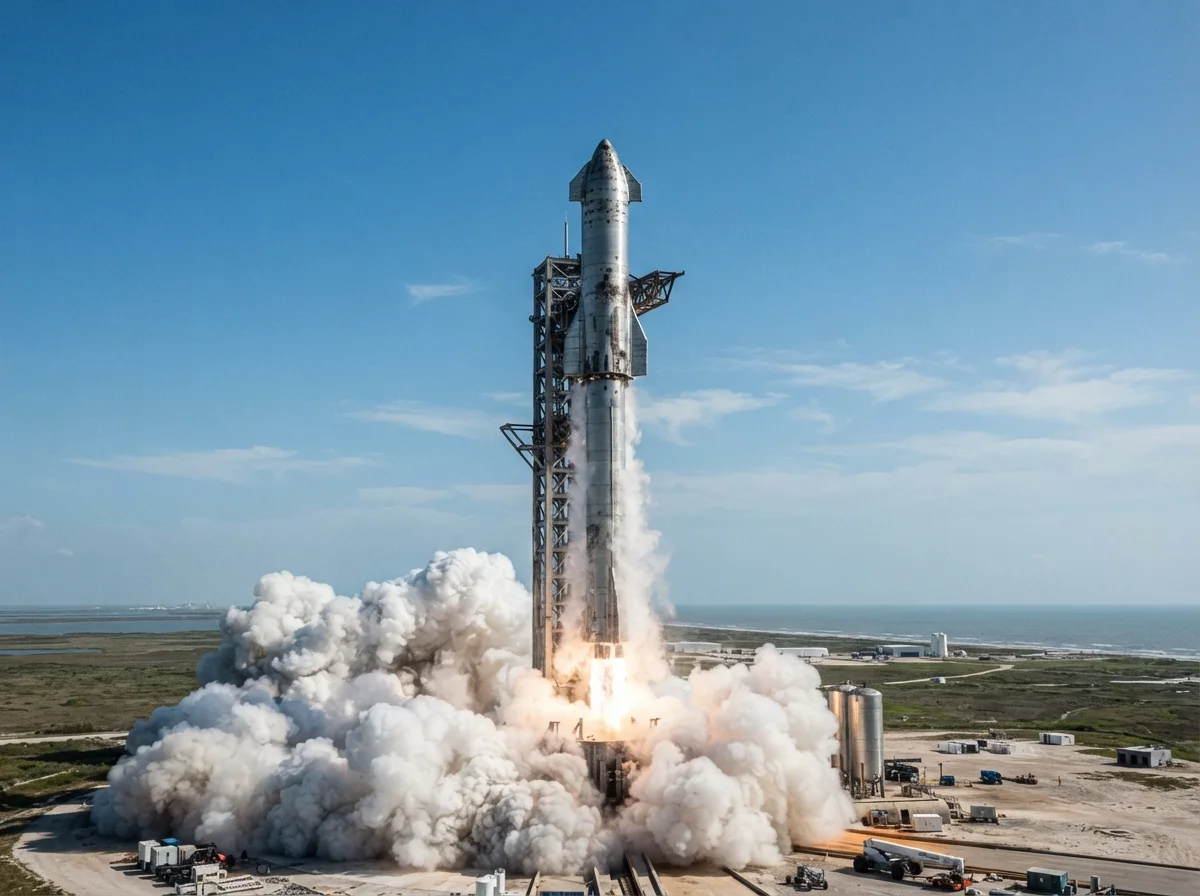
The massive 124-meter-tall vehicle lifted off from SpaceX's Starbase facility in Boca Chica, Texas, at approximately 7:48 a.m. Central Time (1248 GMT) on September 28, 2026. The launch marked the 14th integrated flight test of the Starship system. All 33 Raptor engines on the Super Heavy booster ignited, pushing the rocket off the launch pad.
About two and a half minutes after liftoff, the Super Heavy booster separated from the Starship upper stage and began its return to the Gulf of Mexico. Approximately seven minutes after launch, the booster completed a controlled splashdown in the Gulf.
Engine Anomaly and Critical Orbital Decision
Shortly after separation, one of Starship's Raptor engines shut down prematurely during the ascent burn. SpaceX spokesperson Dan Huot initially announced on the company's livestream that the team had "decided not to commit to orbit."
However, engineers reassessed the vehicle's health and determined it could still proceed. The flight control team gave a "go for orbit" command. Starship subsequently performed the orbit-insertion burn, with one engine firing for about 19 seconds, placing the vehicle into a low Earth orbit at approximately 276 kilometers (171 miles) altitude.
"Starship is in orbit," mission control announced, prompting cheers from SpaceX ground crew.
Starlink V3 Satellite Deployment
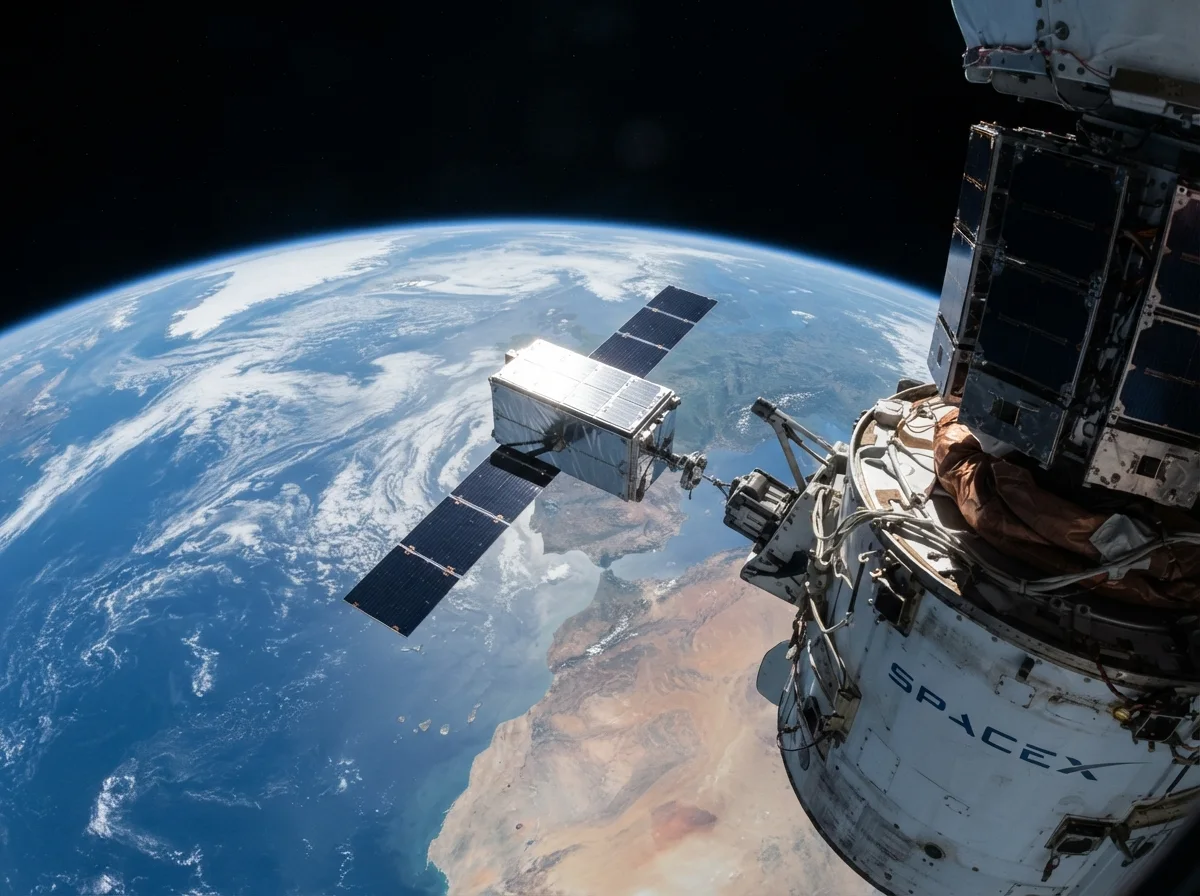
Once in orbit, Starship deployed all 26 Starlink V3 satellites one by one at an altitude of approximately 269 kilometers (161 miles). This marked the first time Starship has delivered functional next-generation satellites to orbit. SpaceX soon established contact with all satellites through laser links, ground stations, and Starlink user terminals.
The Starlink V3 satellites are the most advanced models to date. Each satellite weighs approximately 2 tons, offers downlink capacity of up to 1 Tbps (terabit per second), uplink capacity of 160 Gbps, and handles about ten times more data than the previous V2 satellites. This single deployment added approximately 26 Tbps of capacity to the Starlink network. Due to their size and weight, V3 satellites cannot be launched by Falcon 9 and require Starship.
Elon Musk confirmed on X: "All 26 Starlink V3 operational satellites have deployed and are nominal."
Early Mission Termination and Dramatic Splashdown
The flight was originally planned to last approximately 10 hours, completing six orbits of Earth before splashing down in the Pacific Ocean west of Chile. However, given the engine issue experienced during ascent, the flight control team decided "out of an abundance of caution" to limit time spent in orbit.
SpaceX proceeded with the vehicle's deorbit burn after roughly three hours. Starship successfully reentered the atmosphere and splashed down in the northern Pacific Ocean, west of Hawaii. Video footage showed the ship performing a landing flip before vertical touchdown, though it appeared to be engulfed by a fireball upon impact with the water. SpaceX did not plan to recover the vehicle from the ocean.
Booster Performance Improvements
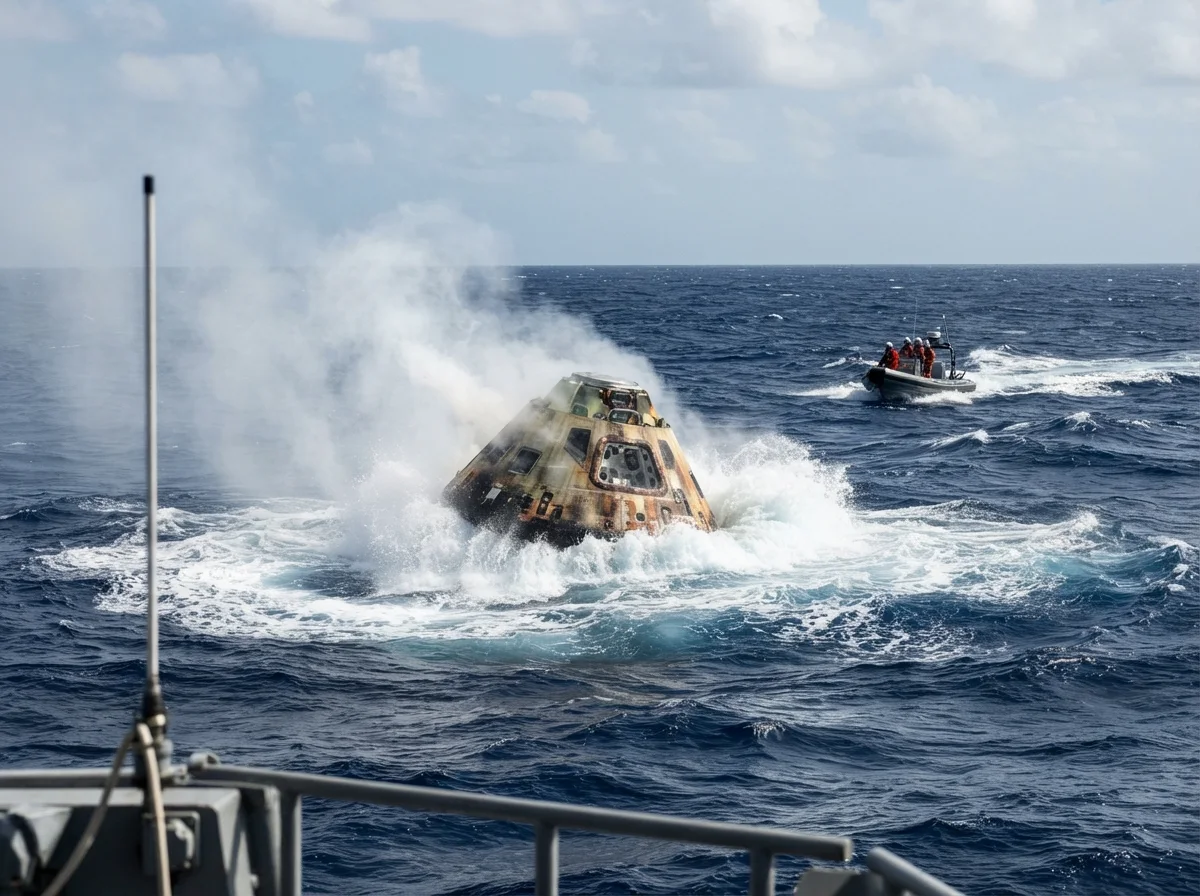
The Super Heavy booster performed better than in the previous two flights. In those missions, the booster failed to ignite all planned engines during the landing phase. This time, the booster completed a "fairly smooth splashdown" in the Gulf of Mexico, according to SpaceX.
Commercial and Strategic Significance
This flight was not just a technical test. It was Starship's first commercial mission, generating direct revenue for SpaceX. The ability to deploy Starlink V3 satellites is critical to SpaceX's revenue growth. In its IPO filing, the company disclosed that cumulative investment in the Starship program has exceeded $15 billion.
NASA Administrator Jared Isaacman congratulated SpaceX on X for "getting the ship to orbit and managing every step of the way in a safe, responsible, and inspiring manner."
Starship is designed as a fully reusable transportation system. Its lunar lander variant (Starship HLS) is intended for NASA's Artemis program. NASA's Artemis III mission has been adjusted to a low Earth orbit docking test, with the actual lunar landing pushed to Artemis IV in 2028.
Musk said on X: "Starship is 2 to 3 years away from hourly flights."




Join the conversation
Discussion0
Join the conversation. Sign in to leave a response or reply to comments.