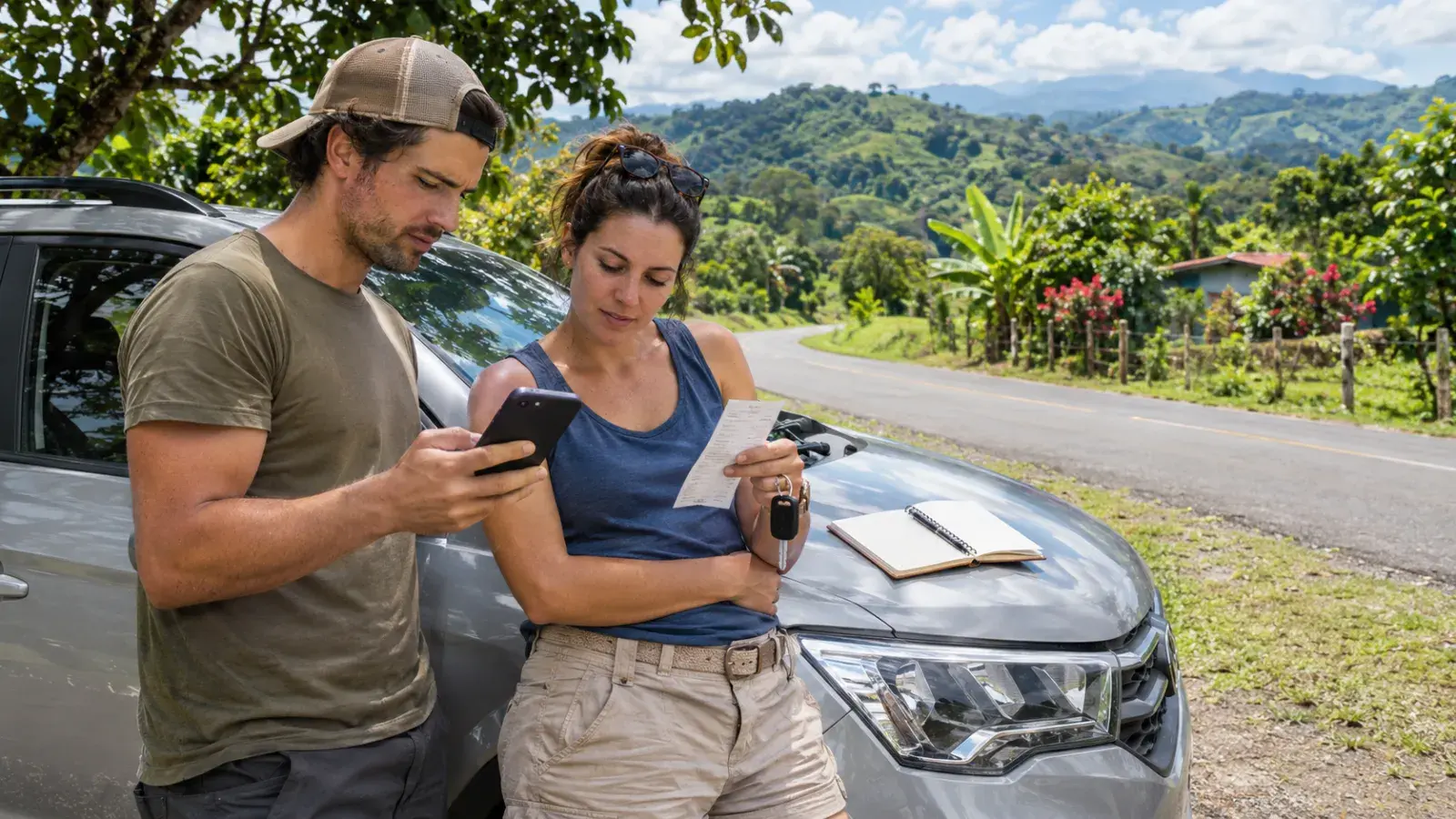
A self-drive trip through western Panama can be one of the most rewarding ways to see Chiriquí, Boquete, Volcán, the Pacific beaches, and the highland coffee country. But the advertised rental rate is only the starting point. Fuel, mandatory insurance, deposits, tolls, parking, mountain-road wear, and the cost of choosing the wrong vehicle can change the real budget substantially.
For many visitors, arranging a car rental in David City, Panama is the practical first step: David is the main transport and commercial hub of Chiriquí, with road connections toward Boquete, Volcán, Cerro Punta, Boca Chica, and the Pan-American Highway. A marketplace such as YalaRide lets travellers compare rental options and terms before committing, which matters in a market where the cheapest headline rate may not include the coverage you actually need.
What “Western Panama” Includes
In practical travel terms, western Panama usually means Chiriquí Province and its neighbouring areas: David, Boquete, Volcán, Cerro Punta, the Golfo de Chiriquí coast, and routes toward Bocas del Toro. It is a varied driving region rather than one single destination.
The Interamericana, also called the Pan-American Highway, is the main artery through the region and connects David with the rest of the country. From David, drivers commonly branch north into the highlands or west and south toward coastal communities. The main routes to Boquete and other major destinations are paved, but conditions can change quickly outside principal roads.
This distinction matters because vehicle choice is not just about comfort. A compact car may be ideal for David, Boquete town, and paved highway driving, while a higher-clearance vehicle can be more sensible for rural roads, steep driveways, or routes affected by heavy rain.
The Rental Rate Is Not the Full Price
The most common budgeting mistake is treating the online daily rate as the total cost. In Panama, rental pricing often separates the base vehicle charge from local charges, insurance, deposits, fuel arrangements, and optional extras.
Cost item | What it usually covers | Why it affects the budget |
Base rental rate | The vehicle for the agreed period | May exclude taxes, airport or location fees, and mandatory coverage |
Third-party liability | legally required protection for damage or injury caused to others | |
Collision/theft protection | Damage, theft, or loss related to the rental vehicle | Often optional, but a major cost if purchased at the counter |
Security deposit | A hold placed on the driver’s payment card | Can restrict available credit even if it is later released |
Fuel | Petrol used during the trip | Distances in Chiriquí can be longer than they appear on a map |
Tolls, parking, and cleaning | Road charges, town parking, and return-condition charges | Usually modest individually, but relevant over a week-long trip |
Additional driver or young-driver fee | Extra authorised drivers or drivers below the supplier’s age threshold | Can materially change a multi-driver itinerary |
Before booking, read the supplier’s rate details rather than relying on a single “total” figure. Some rates include mandatory liability coverage; others add it at pickup. Sixt, for example, states that third-party liability insurance is mandatory in Panama and may be charged separately unless the rate expressly includes it. Enterprise likewise says that its Panama locations require collision and theft protection unless the renter provides qualifying written proof of credit-card coverage valid in Panama car rental.
Insurance: Separate Legal Rules from Rental Policy
Panama requires third-party liability insurance for drivers. The U.S. Department of State specifically notes that this coverage is mandatory, while also warning that many drivers on Panamanian roads are uninsured. That makes liability coverage more than a formality: it is the baseline protection for damage or injury caused to other people or property.
Collision damage waiver, theft protection, roadside assistance, tyre and glass coverage, and excess reduction are different matters. These are commonly rental-company products or conditions, not universally identical legal requirements. A credit card may offer collision or theft protection, but card benefits vary widely and may exclude Panama, certain vehicle classes, or certain road types. Obtain written confirmation from the card issuer before relying on it.
A sensible approach is to decide, before pickup, which risks you are willing to retain:
Liability coverage: Treat this as non-negotiable and confirm that it is included or clearly priced.
Collision and theft protection: Check whether your credit card covers Panama and whether the rental company accepts that proof.
Excess or deductible: Ask what amount you would owe after a covered incident.
Tyres, glass, underbody, and roadside assistance: These are frequent gaps in standard coverage, particularly relevant on rural or mountain roads.
Deposit and card requirements: Confirm whether the supplier places a hold and whether it accepts debit cards.
YalaRide’s own guidance notes that operators generally ask for a valid licence in the main driver’s name, photo identification, and a card for the security deposit, which is handled by the operator. That reinforces an important point: the rental agreement and pickup terms, not a generic online estimate, determine what you will actually pay and what protection applies.
Documents and Driving Rules
Visitors can drive in Panama using a valid foreign driver’s licence for up to 90 days, according to the U.S. Department of State. Carry your licence and passport together, since identification may be requested at police checkpoints. Seat belts are required by law, mobile-phone use while driving is illegal, and driving after drinking alcohol is illegal.
For many U.S. visitors, an International Driving Permit is not automatically required, but it can be useful documentation alongside the home licence. The more important preparation is ensuring that the licence is valid, legible, and in the main driver’s name. Rental suppliers may impose their own requirements beyond Panamanian law, including minimum age, licence tenure, additional-driver approval, and card requirements.
Road Conditions Change the Real Cost
Western Panama’s roads are not uniformly difficult, but they are not uniformly predictable either. The main highway network is generally the easiest part of a trip. Once you leave it for highland communities, beaches, rural lodges, or smaller towns, expect narrower lanes, sharp curves, steep gradients, potholes, speed bumps, and occasional unlit sections.
The U.S. Department of State warns that roads outside Panama City may be poorly maintained and lack street lighting, with potholes common. It also notes that flooding during the April-to-December rainy season can make driving more dangerous, wash out roads, and block streets. Western Panama is specifically identified as an area that can experience heavy rain and flooding during that season.
Those conditions have a direct financial effect. Heavy rain can delay a crossing, force a detour, make a low-clearance car unsuitable, or turn a minor scrape into an insurance claim. Night driving adds another layer of risk because visibility, road markings, pedestrians, cyclists, animals, and unlit hazards can be harder to judge.
Practical route examples
David to Boquete: A common highland route, generally paved but with winding sections and elevation change. Allow more time than a straight-line distance suggests, particularly in rain or fog.
David to Volcán or Cerro Punta: Mountain roads can be narrow and demanding. A vehicle with adequate clearance and good visibility is often preferable to the smallest available rental.
David to Boca Chica or the Golfo de Chiriquí coast: Paved access may be available on principal routes, but final approaches to lodges, docks, or rural accommodation can vary considerably.
David toward Bocas del Toro: This is a longer, more logistically complex journey involving a mainland-to-island transfer; a rental car does not travel across to the archipelago.
Fuel, Distance, and Vehicle Choice
Fuel is usually not the largest cost, but it is easy to underestimate when an itinerary combines highland climbs, coastal detours, and repeated trips between towns. A small, fuel-efficient car can be economical for two travellers staying mainly on paved roads. A larger SUV may be justified for passengers, luggage, wet-weather confidence, or routes with rough final access, but it typically costs more to rent and to fuel.
Before confirming a booking, check:
Whether the vehicle has automatic or manual transmission, if that matters to you.
Luggage capacity for airport transfers, hiking gear, surfboards, or family luggage.
Whether the supplier permits travel on unpaved roads, and what exclusions apply.
The fuel policy, especially whether the car must be returned full.
The mileage allowance, if any.
Whether roadside assistance is included and how it is contacted.
These details are especially important in western Panama, where a vehicle that is technically drivable may still be poorly matched to a particular lodge road or weather condition.
Where to Base the Rental
David is often the most convenient pickup point for a western-Panama road trip because it sits close to the region’s main road network. Travellers flying into Enrique Malek International Airport can often begin their itinerary without first travelling to Panama City, saving a long cross-country drive.
When comparing a car rental david city in panama, look beyond the daily rate. Compare the full pickup terms, insurance structure, deposit amount, mileage policy, cancellation terms, and whether the supplier’s office hours match your arrival time. A marketplace such as YalaRide is useful here because it allows travellers to search by location, dates, and vehicle type, then review operator-specific conditions rather than assuming every rental follows the same rules.
For a short Boquete-focused stay, pickup in David can make sense. For a trip that begins in Panama City and includes the Azuero Peninsula or other central regions, it may be more efficient to rent in Panama City and drive west, depending on flight times, accommodation plans, and how many days you have.
A Realistic Budgeting Method
Rather than trying to predict an exact total, build a range and identify the variables that could move it.
Start with the rental quote. Record the daily rate, taxes, mandatory coverage, pickup fees, and mileage allowance.
Add likely insurance costs. Include liability if it is not included, plus collision and theft protection if you are not relying on verified card coverage.
Estimate fuel from your route. Use realistic driving distances, not straight-line map distances, and allow extra for detours.
Include the deposit. Confirm whether it is a hold or a charge, and ensure your card has sufficient available credit.
Add local expenses. Budget for parking, tolls where applicable, cleaning, additional drivers, and child seats if needed.
Keep a contingency. Weather delays, route changes, a higher vehicle class, or an insurance upgrade can alter the final bill.
The key is to distinguish between costs you can control before booking and costs that emerge at the counter. The former includes vehicle class, insurance decisions, pickup location, and itinerary design. The latter includes fuel consumption, weather-related changes, and any damage or administrative charge.
When Self-Driving Is Worth It
A rental car is most valuable when your itinerary includes multiple destinations, early starts, rural accommodation, or stops that public transport does not serve conveniently. Boquete, Volcán, Cerro Punta, and coastal areas around the Golfo de Chiriquí are easier to explore with your own vehicle if you value flexibility.
It is less compelling if you plan to remain in one town, use guided tours for remote excursions, or travel during a period of persistent heavy rain. In those cases, a combination of shuttle transfers, local taxis, and organised tours can reduce both driving risk and total cost.
Frequently Asked Questions
Do I need an International Driving Permit to drive in Panama?
Foreign visitors may drive with a valid foreign licence for up to 90 days, according to the U.S. Department of State. An International Driving Permit is not necessarily legally required for every visitor, but rental companies can impose their own documentation requirements, so confirm directly with the operator before booking.
Is third-party liability insurance mandatory for a rental car in Panama?
Yes. Third-party liability insurance is mandatory in Panama, and the U.S. Department of State identifies it as a legal requirement. Whether it is included in the quoted rate or charged separately depends on the rental agreement.
Is a 4x4 necessary in western Panama?
Not always. A standard car can be appropriate for David, Boquete town, and main paved routes. A higher-clearance vehicle may be more suitable for rural roads, steep access routes, or travel during periods of heavy rain. Check the rental company’s restrictions before planning unpaved driving.
Can I drive from David to Bocas del Toro with a rental car?
You can drive the mainland portion of the journey, but Bocas del Toro is an archipelago, so the vehicle does not travel to the islands. Plan for a boat transfer and confirm where the rental company permits the car to be left or returned.
What is the biggest hidden cost in a Panama car rental?
Often it is the gap between the advertised rate and the final pickup terms: mandatory liability coverage, collision or theft protection, deposits, card requirements, and optional extras. Read the supplier’s terms before booking rather than assuming the lowest displayed price is complete.
Join the conversation
Discussion0
Join the conversation. Sign in to leave a response or reply to comments.