Collecting user consent was once a fairly simple exercise. A business could add a checkbox to a form or display a cookie banner on its website and move on. That approach is no longer enough. Businesses today collect personal information through websites, mobile applications, customer portals, forms, CRM systems, call centres and offline interactions. They need a structured way to capture user choices, maintain records, manage preferences and process consent withdrawals.
This is where a Consent Management Platform (CMP) becomes useful. It helps businesses collect consent, manage user preferences, record changes and maintain evidence of consent activities. Depending on the solution, these capabilities may extend beyond website cookies to include purpose-based consent, preference management, privacy workflows and audit records.
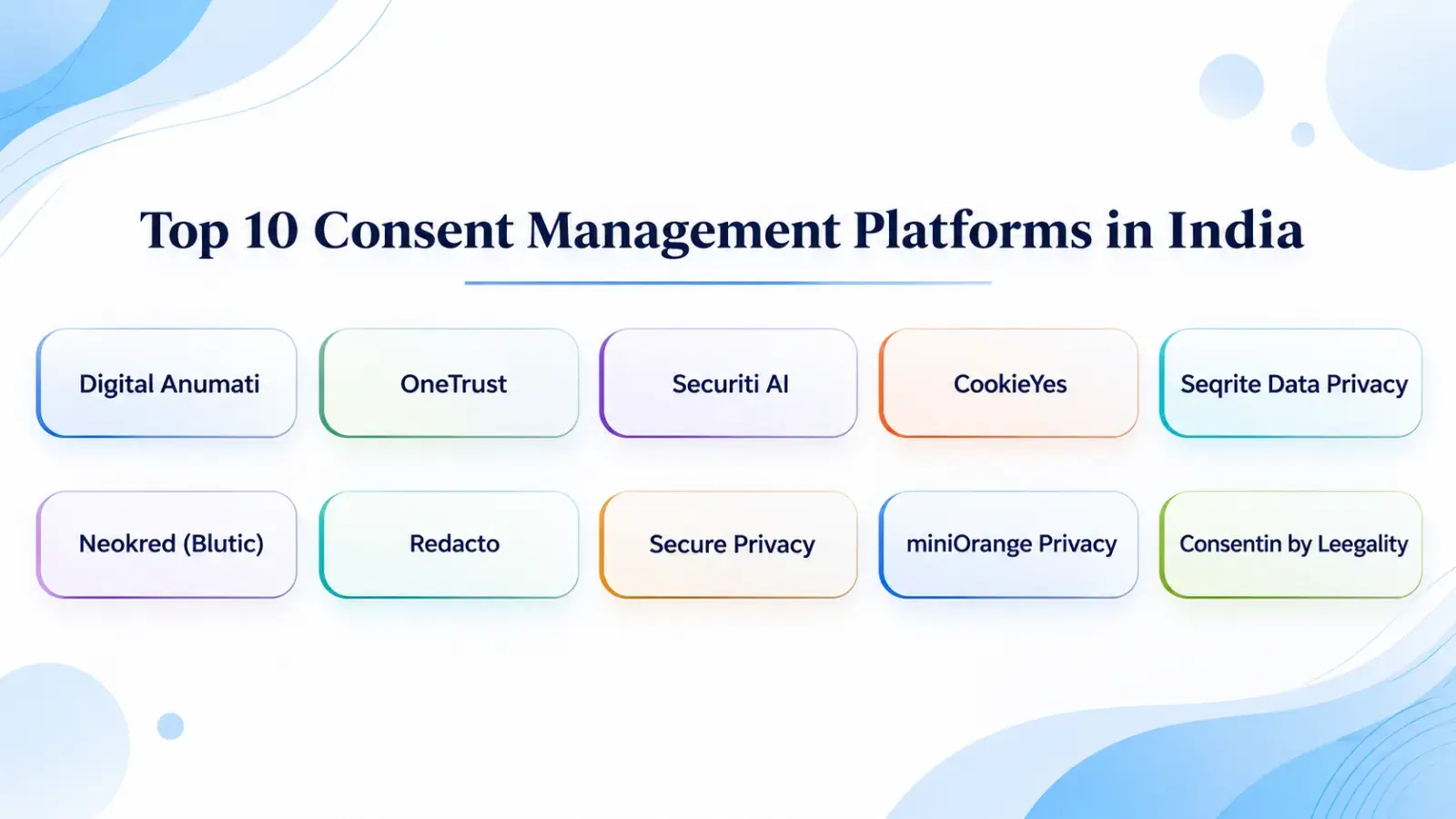
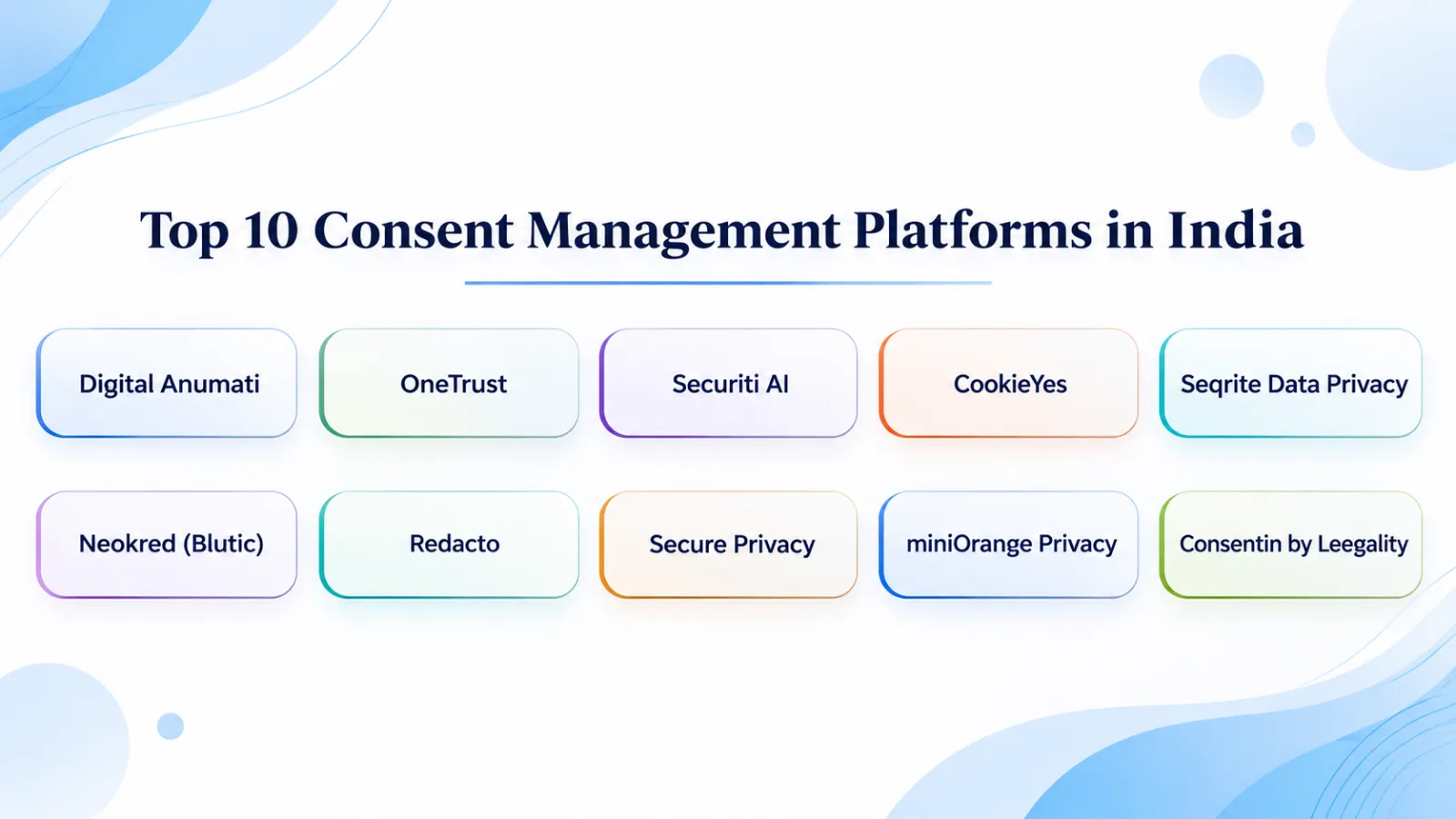
Not every platform offers the same functionality. Some are designed mainly for cookie consent, while others support broader consent management requirements across applications, customer interactions and enterprise systems. Here are 10 consent management platforms worth considering for businesses operating in India in 2026.
1. Digital Anumati
Digital Anumati is an India-focused consent management platform designed to help organisations manage user consent across websites, mobile applications, customer portals, business processes and offline interactions.
The platform supports the complete consent lifecycle, including consent collection, purpose-based consent, preference management, consent updates and withdrawal. Businesses can configure separate consent choices for activities such as marketing communications, analytics and third-party data sharing, giving users greater control over how their information is used.
Digital Anumati supports multilingual consent experiences across 22+ Indian languages and multiple channels, including websites, applications, APIs, QR-based journeys, assisted interactions and offline environments. It also provides capabilities for digitising paper-based consent records and managing consent through different customer touchpoints.
Another key capability is its consent ledger, which maintains timestamped records of consent grants, updates and withdrawals. These records help organisations preserve historical consent information and maintain audit-ready evidence of user preferences and consent activities.
For technology integration, Digital Anumati provides REST APIs, web SDKs and mobile SDKs, allowing businesses to connect consent workflows with their existing applications and systems. It also offers ready-to-use plugins for WordPress and Shopify, along with SaaS and on-premises deployment options.
The platform also brings together related privacy functions, including Data Principal rights workflows, grievance management, cookie and tracker governance, and audit records. These capabilities can help organisations connect consent management with their wider privacy operations.
Digital Anumati is particularly relevant for organisations across BFSI, healthcare, manufacturing, education and other sectors that need structured consent management across multiple customer channels.
Developed by AbyM Technology Pvt. Ltd., Digital Anumati is backed by a technology company holding ISO 27001 and ISO 9001 certifications.
Best for: Indian enterprises, SMEs and regulated organisations looking for purpose-based consent management, multilingual experiences, centralised consent records, easy withdrawal, audit trails and flexible integrations.
2. OneTrust
OneTrust is a recognised name in the global privacy management market. Its platform brings together consent management, data mapping, privacy assessments and risk management, allowing organisations to handle several privacy activities through a common system.
Its consent and preference management capabilities support multiple digital channels and help businesses manage user choices across websites, mobile applications and other customer touchpoints.
OneTrust also provides integrations with enterprise technologies such as Salesforce, Adobe, Snowflake, Databricks and other business platforms. Its broader ecosystem can be useful for organisations that need to connect consent information with existing marketing, advertising and data environments.
For large companies operating across different regions, OneTrust offers a broad set of privacy and preference management capabilities. However, businesses with smaller teams may want to assess implementation effort, licensing costs and ongoing operational requirements before choosing it.
Best for: Large enterprises and multinational organisations managing complex privacy and consent programmes.
3. Securiti AI
Securiti AI takes a broader approach to data privacy by combining data intelligence, privacy automation and information security capabilities. Its platform helps organisations discover and classify personal data across different systems and environments.
Consent management forms part of its wider privacy and data governance offering. This makes it worth considering for enterprises that need to understand where their data resides while managing related privacy activities.
For organisations dealing with large and distributed data environments, connecting data intelligence with privacy workflows can be useful. Smaller businesses with basic consent requirements may not need such a broad platform.
Best for: Enterprises with complex data environments and wider data privacy and governance requirements.
4. CookieYes
CookieYes is primarily known for website cookie consent management. It helps website owners display cookie banners, manage visitor preferences and configure consent according to applicable privacy requirements.
Its relatively straightforward setup and WordPress integration make it accessible to small businesses, website administrators and marketing teams. For organisations that mainly need to manage cookies and website trackers, it can be a practical option.
Businesses can use its cookie scanning and categorisation capabilities to understand which cookies are active on their websites and configure consent experiences accordingly.
However, organisations looking for consent management across mobile applications, offline interactions and wider business processes should check whether additional tools are needed.
Best for: Small and medium-sized businesses that primarily need website cookie consent management.
5. Seqrite Data Privacy
Seqrite is an Indian cybersecurity brand with offerings that extend into data privacy. Its privacy-related capabilities address areas such as privacy management, data protection and compliance requirements.
For businesses already evaluating cybersecurity solutions, Seqrite's presence in the security market may make its privacy offerings worth exploring. Organisations should assess the specific consent management features available and how well they fit their existing processes.
Businesses should also evaluate how the solution connects with their current applications, data environments and privacy workflows before making a selection.
Best for: Businesses looking to evaluate data privacy capabilities alongside cybersecurity solutions.
6. Neokred (Blutic)
Blutic by Neokred is focused on privacy and consent management in the context of India's DPDP Act. Its capabilities include cookie classification, branded consent banners and broader governance, risk and compliance monitoring.
This makes it relevant to businesses that want to address consent and privacy requirements while also looking at their wider compliance processes. Its India-focused positioning may be particularly interesting to fintech and other compliance-led organisations.
Organisations evaluating Blutic should consider its available consent management features, integration capabilities and suitability for their specific business requirements.
Best for: Fintech businesses and organisations evaluating DPDP-oriented privacy and compliance solutions.
7. Redacto
Redacto approaches consent management as one part of a wider data privacy programme. Along with consent-related workflows, its offering includes data discovery, privacy assessments and Data Principal rights management.
This broader scope can be useful for organisations that want to bring different privacy activities together instead of managing each requirement through a separate tool.
Businesses evaluating Redacto should consider how its available modules align with their specific privacy, consent management and operational needs.
Best for: Organisations looking for a broader privacy management and compliance framework.
8. Secure Privacy
Secure Privacy focuses on website cookie consent and preference management. It helps businesses display cookie notices, manage visitor choices and configure consent settings for their websites.
The platform is not exclusively designed for the Indian market. This can make it worth considering for businesses that also serve customers in other countries and need to manage cookie consent across different privacy jurisdictions.
Organisations with requirements extending beyond website cookies should evaluate its capabilities against their wider consent management needs.
Best for: Businesses managing website cookie consent for audiences across multiple countries.
9. miniOrange Privacy
miniOrange is widely associated with identity and access management solutions. Its privacy-related offerings can complement existing authentication and application infrastructure by connecting privacy workflows with identity and access systems.
This can be relevant for organisations that already use identity management tools and want their privacy processes to work alongside existing application infrastructure.
The suitability of the solution will depend on the privacy features required and the integrations available for the organisation's technology environment.
Best for: Organisations looking to connect privacy workflows with existing identity and application infrastructure.
10. Consentin by Leegality
Consentin by Leegality is connected with Leegality's digital documentation and e-signature ecosystem. Its positioning is relevant to organisations where consent processes are closely linked with digital documents, agreements and signed records.
Businesses already using digital agreement workflows may find this connection useful when evaluating their consent management requirements.
As with other platforms, organisations should review the available features to determine whether they cover their complete consent lifecycle or only specific documentation-related requirements.
Best for: Businesses looking to connect consent processes with digital documentation and signing workflows.
How to Choose the Right Consent Management Platform
Selecting a Consent Management Platform is not simply about finding the solution with the most features. A platform may look impressive during a demonstration but still fall short when it comes to integration, everyday operations or the organisation's requirements.
Before making a decision, consider the following aspects:
Purpose-Based Consent: Can users provide consent separately for different data processing purposes? The platform should allow businesses to communicate why information is being collected and manage consent accordingly.
Consent Withdrawal: Can users change or withdraw their consent without going through a complicated process? Withdrawal should be as accessible as the original consent mechanism.
Audit Trails: Does the system maintain timestamped and versioned records? Businesses should be able to retrieve relevant consent evidence when required.
Notice Management: Can different versions of privacy notices be maintained? Keeping track of which notice was presented during a particular consent interaction can be important.
Language Support: Does the platform support the languages spoken by your customers? This is particularly relevant for organisations operating across multiple Indian states.
Integration Capabilities: Are REST APIs, SDKs and plugins available? Check whether the platform can connect with your websites, mobile applications, CRM systems and other business applications.
User Preference Management: Can users review and update their preferences through a centralised interface?
Security and Hosting: Review encryption, access controls, hosting arrangements and other security capabilities before selecting a vendor.
Scalability: Will the platform continue to meet your requirements as the number of users, applications and consent records increases?
Business Channel Support: Can the platform manage consent across websites, mobile apps, physical branches, call centres and offline interactions?
It is worth discussing these points during product demonstrations rather than relying entirely on feature lists or marketing claims. Asking vendors to demonstrate actual workflows can give a much clearer picture of what their platforms can deliver.
Conclusion
The way businesses manage user consent has changed. A cookie banner may be sufficient for a basic website requirement, but organisations handling personal data across multiple applications, departments and customer channels often need a more structured solution.
The right choice depends on the nature of the business. Global privacy suites may be suitable for multinational organisations, specialised cookie consent tools can work well for website-focused requirements, and broader privacy platforms may appeal to businesses managing several governance activities.
For Indian organisations looking to streamline consent management, Digital Anumati offers a consent management platform that brings together purpose-based consent, multilingual experiences, centralised consent records, audit trails and flexible integration capabilities. The platform enables businesses to manage the complete consent lifecycle, from consent collection and preference management to consent updates and withdrawal across multiple customer touchpoints. With API-led integration and support for web, mobile and offline channels, Digital Anumati helps organisations build a consistent, transparent and structured approach to consent management.
Ultimately, businesses should evaluate platforms based on their actual consent workflows, integration requirements, user experience, security needs and long-term operational plans.
FAQs
Q1. What is a Consent Management Platform (CMP)?
A Consent Management Platform is software that helps businesses collect, store, manage and update user consent. It also supports consent withdrawal and maintains records that organisations can use as evidence of consent activities. Depending on the solution, it can work across websites, mobile applications, forms and other customer interaction channels.
Q2. Why is consent management important for businesses?
Consent management helps businesses maintain transparency about how user information is collected and used. It provides a structured way to capture user choices, manage preferences, process withdrawals and maintain records of consent activities.
Q3. Which is the best consent management platform in India?
There is no single platform that suits every organisation. The right choice depends on business size, industry, technology infrastructure and privacy requirements. Digital Anumati is an India-focused option for organisations looking for purpose-based consent management, multilingual experiences, audit-ready records and flexible integrations.
Q4. Is a cookie banner the same as a Consent Management Platform?
No. A cookie banner is primarily used to communicate cookie-related information and collect visitor preferences. A broader Consent Management Platform can manage consent across different purposes, applications, customer interactions and business processes.
Q5. Does Digital Anumati support Indian languages?
Yes. Digital Anumati supports more than 22 Indian languages. This helps organisations provide consent notices and related experiences in languages their users are comfortable with.
Q6. Can users withdraw consent through a Consent Management Platform?
Yes. Consent management platforms can provide preference centres or similar interfaces where users can review, modify or withdraw their previously provided consent. Depending on the integration, these changes can also be communicated to connected systems.
Q7. Can a Consent Management Platform integrate with websites and mobile applications?
Many platforms offer APIs, SDKs and plugins to connect with existing applications. Digital Anumati, for example, provides REST APIs, SDKs and ready-to-use plugins for WordPress and Shopify.
Q8. Which industries need consent management solutions?
Consent management is relevant to any organisation that collects and processes personal data. However, BFSI, healthcare, education, insurance, e-commerce, fintech and telecommunications often have extensive consent-related requirements because of the nature and scale of their customer interactions.
Q9. What features should businesses look for in a Consent Management Platform?
Businesses should look for purpose-based consent collection, clear notices, easy withdrawal, versioned consent records, audit trails, preference management, multilingual support, integration capabilities and appropriate security controls. The platform should also fit the organisation's specific operational and regulatory requirements.
Q10. Are newer consent management platforms suitable for enterprise organisations?
Yes. A newer platform can be suitable for enterprise use if it meets the organisation's requirements for security, scalability, integration, availability and technical support. Before selecting a vendor, businesses should review its certifications, technical architecture, hosting arrangements, implementation capabilities and customer references.


Join the conversation
Discussion0
Join the conversation. Sign in to leave a response or reply to comments.