Most websites use cookies and tracking technologies to understand visitor behaviour, measure website performance, run advertising campaigns, and improve the browsing experience. These technologies often come from different sources, including analytics tools, marketing platforms, plugins, and third-party integrations.
Managing all of them manually can become difficult, particularly when a website grows or regularly introduces new technologies.
This is where a Cookie Consent Management Platform (CMP) becomes useful. It helps businesses identify cookies and trackers, understand their purposes, display cookie consent banners, collect visitor preferences, and prevent non-essential tracking from running without the required consent.
For businesses in India, choosing a suitable platform means looking beyond the appearance of a consent banner. Cookie discovery, script control, integrations, preference management, scalability, and wider privacy requirements all deserve attention.
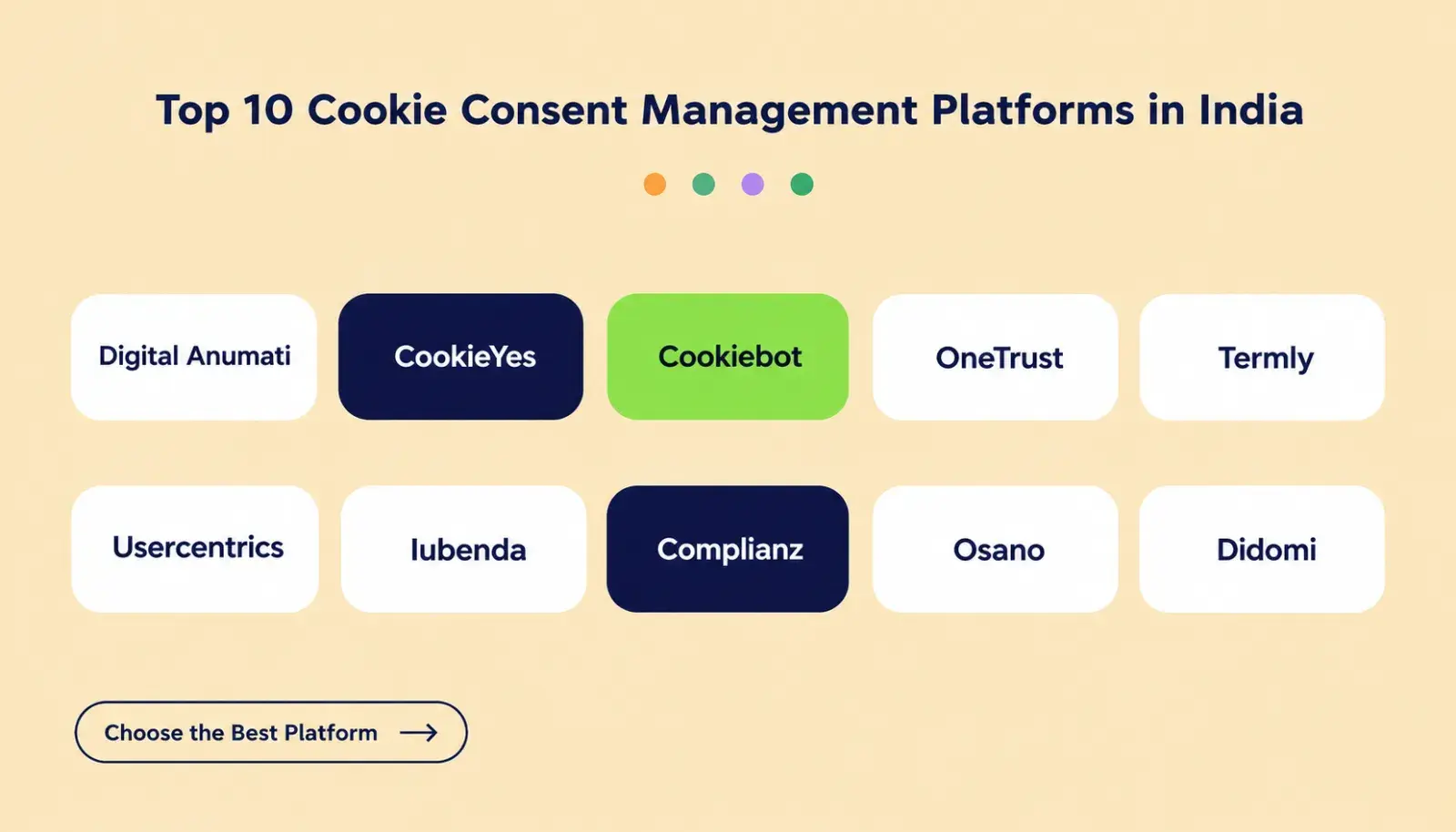
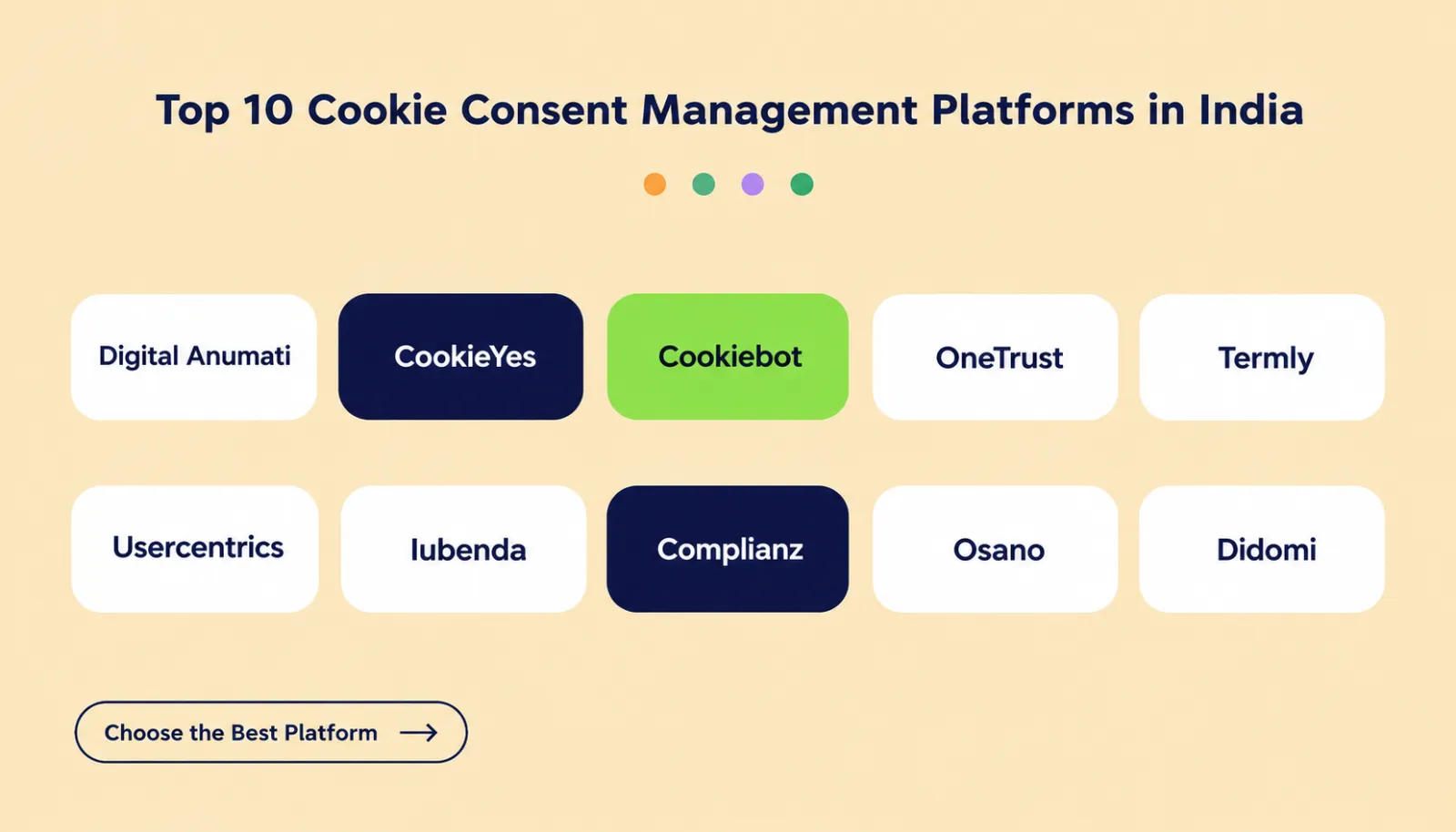
If you are evaluating cookie consent solutions, here are 10 platforms worth exploring in 2026.
1. Digital Anumati
Digital Anumati, developed by AbyM Technology Pvt. Ltd., is an India-focused Cookie Consent Management Platform and DPDP Privacy Compliance Suite. It helps organisations manage website cookies and tracking technologies while connecting these activities with their broader consent and privacy management processes.
The platform brings together automated website scanning, cookie identification, purpose-based categorisation, configurable consent banners, visitor preference management, and consent-based script controls.
What makes Digital Anumati different from a standalone cookie banner solution is its wider approach to consent management. Instead of handling website cookie preferences in isolation, organisations can connect them with consent workflows across websites, applications, and other digital or offline touchpoints.
Key Capabilities
Automated Cookie Scanning: Scan websites to identify cookies and tracking technologies.
Cookie Categorisation: Organise discovered cookies and trackers according to their purposes.
Customisable Consent Banners: Configure banners to explain cookie usage and collect visitor preferences.
Consent-Based Script Blocking: Control non-essential scripts according to applicable consent choices.
Preference Management: Give visitors the ability to review and update their cookie preferences.
Consent Records: Maintain records and supporting audit evidence of consent-related activities.
Website Integrations: Support deployment and integration with different website environments.
Multilingual Support: Deliver consent experiences in multiple Indian languages.
Why Consider Digital Anumati?
For many organisations, cookie management starts with a simple requirement: display a banner and collect visitor preferences. The challenge becomes more complicated when different analytics tools, advertising scripts, plugins, and third-party services operate across multiple websites.
Digital Anumati provides a more connected approach by bringing cookie discovery, categorisation, consent collection, preference management, and script controls into the wider consent management framework.
This can be particularly useful for Indian enterprises, NBFCs, healthcare providers, educational institutions, manufacturers, and other organisations building their privacy operations around the Digital Personal Data Protection Act, 2023 (DPDP Act).
Businesses looking for more than a standalone cookie banner can consider Digital Anumati when evaluating solutions that combine website cookie management with broader DPDP consent and privacy workflows.
2. CookieYes
CookieYes is designed for businesses that need a straightforward way to manage website cookies and visitor consent.
The platform provides cookie scanning, automatic categorisation, customisable consent banners, and preference management. These features help website owners understand which cookies are being used and give visitors options to manage their preferences.
It is worth considering for small and medium-sized businesses, website administrators, and digital agencies that need dedicated cookie consent functionality without developing their own solution.
Before selecting a plan, businesses should check the available integrations, customisation options, scanning limits, and pricing.
3. Cookiebot
Cookiebot focuses on automated cookie discovery and website consent management.
Its scanning capabilities help identify cookies and tracking technologies operating on a website. The platform also provides cookie categorisation, consent banners, and preference management.
This can be helpful for websites that rely on several analytics services, advertising platforms, embedded content, and third-party integrations.
One area businesses should pay attention to is the accuracy of cookie classification. New plugins and website updates can introduce additional trackers, so regular scans and configuration reviews remain necessary.
4. OneTrust
OneTrust offers a broad range of enterprise privacy, consent management, and data governance solutions.
Its cookie consent functionality sits within a larger privacy management ecosystem. This makes it relevant for organisations managing multiple websites, applications, business units, and privacy requirements across different operations.
Large enterprises may find this approach useful when they want to connect website consent with wider privacy governance activities rather than manage everything through separate tools.
However, its extensive product portfolio means businesses should carefully assess licensing, required modules, implementation effort, integrations, and overall costs before making a decision.
5. Termly
Termly brings cookie consent management together with website privacy documentation and related compliance tools.
Its features include cookie scanning, consent banners, privacy policy generation, and other website privacy resources.
This combination may suit startups, smaller businesses, and website owners who want to manage cookie consent and supporting privacy documentation through one platform.
However, automatically generated policies should not be treated as a substitute for reviewing actual business practices. Organisations should ensure that their privacy documentation accurately describes how they collect and use personal data.
6. Usercentrics
Usercentrics provides consent management solutions for websites and digital platforms.
Its capabilities include configurable consent interfaces, preference management, and integrations with different website technologies. These features help businesses manage visitor choices and connect consent preferences with relevant analytics and advertising services.
It can be a suitable option for organisations operating multiple digital properties or looking for a structured way to manage consent across different platforms.
Before implementation, businesses should check compatibility with their existing website architecture, marketing tools, analytics services, and script management requirements.
7. iubenda
iubenda offers a collection of website privacy and compliance tools, including cookie consent management and privacy documentation.
Its platform combines cookie consent banners, cookie management, privacy policies, and related website compliance features.
For businesses managing several website privacy requirements, having these tools within one ecosystem can simplify administration and reduce the need to manage different services separately.
It is worth exploring for small and medium-sized businesses, website owners, and digital agencies looking for accessible privacy management capabilities.
As with other automated solutions, organisations should review cookie descriptions, consent configurations, and privacy documents to ensure they reflect their actual data practices.
8. Complianz
Complianz is a cookie consent and privacy management solution primarily designed for WordPress websites.
Its plugin-based approach allows website administrators to configure consent banners, manage visitor preferences, and apply privacy-related controls directly from the WordPress dashboard.
This makes it a practical option for blogs, business websites, publishers, and ecommerce stores running on WordPress.
Before installing it, businesses should check how it works with their existing plugins, caching systems, analytics tools, advertising scripts, and marketing integrations. Compatibility testing is particularly important for websites with complex configurations.
9. Osano
Osano provides cookie consent management alongside a wider set of privacy management capabilities.
Rather than focusing exclusively on website banners, its solutions help organisations incorporate consent management into their broader privacy programmes.
This approach may appeal to businesses that want to connect website consent activities with other privacy-related processes.
When evaluating Osano, organisations should compare its consent functionality, integrations, reporting, governance capabilities, and implementation requirements with their existing technology environment.
10. Didomi
Didomi provides consent and preference management solutions for websites, applications, and other digital environments.
The platform supports configurable consent experiences and integrations with advertising, analytics, and other technologies used across digital properties.
It may be particularly relevant for publishers, media companies, and organisations operating complex advertising environments where visitor preferences need to be communicated across multiple systems.
Businesses should evaluate its integration options, consent configuration capabilities, reporting features, and technical deployment requirements before selecting it.
What to Look for in a Cookie Consent Management Platform?
A cookie consent solution should do more than display an Accept button. The real question is whether it can identify tracking technologies correctly, collect meaningful visitor choices, and ensure that the website follows those choices.
Here are some features worth checking before selecting a platform:
Automated Cookie Scanning: The platform should identify cookies and third-party trackers across website pages.
Cookie Categorisation: It should classify cookies according to their purpose and functionality.
Granular Consent: Visitors should be able to make choices across different cookie categories.
Consent-Based Script Blocking: Non-essential tracking technologies should remain inactive until the required consent has been obtained.
Preference Management: Visitors should be able to review, change, and withdraw their preferences.
Consent Records: The platform should maintain appropriate records of consent-related activities.
Website Integrations: Check compatibility with WordPress, Shopify, custom-built websites, and other technologies used by your organisation.
Banner Customisation: Consent banners should fit the website's design and provide a clear user experience.
Multilingual Support: Consider whether consent notices can be presented in languages relevant to your visitors.
Reporting and Monitoring: Look for visibility into cookie usage, consent activity, and configuration changes.
Scalability: The solution should be able to support additional websites, applications, and business requirements as the organisation grows.
Implementation Flexibility: Review available APIs, deployment options, technical support, and integration requirements.
Indian businesses should also consider how cookie management fits into their wider obligations under the DPDP Act, applicable rules, and other relevant legal requirements.
A consent management platform can provide useful technical controls and supporting records. However, purchasing or installing a CMP does not automatically make an organisation compliant with applicable privacy laws.
Cookie Consent Management vs. Broader Privacy Management
There is a difference between managing cookies on a website and managing personal data across an entire organisation.
For a business operating a relatively simple website, a dedicated cookie consent solution may meet its immediate requirements. However, larger organisations often collect and process personal data through multiple applications, internal systems, vendors, customer channels, and business operations.
In such cases, a standalone cookie banner may not address the wider privacy management requirements.
A broader privacy management platform can bring several activities together, including:
Consent lifecycle management
Privacy notices and policy management
Data Principal rights management
Data discovery and classification
Records of Processing Activities (RoPA)
Data retention and deletion management
Third-party risk management
Privacy impact assessments
Data breach management
Audit trails and compliance monitoring
This is worth considering when deciding whether your organisation needs only website cookie consent or a more comprehensive consent and privacy management solution.
Conclusion
Managing website cookies is not simply about placing a consent banner on a page. Businesses need to understand which cookies and tracking technologies are active, why they are being used, and whether their website respects visitor preferences.
The platforms covered in this list offer different ways to address these requirements. Some concentrate on cookie scanning and website consent, while others connect cookie management with wider privacy and governance capabilities.
Digital Anumati is worth considering for Indian organisations looking to manage cookie scanning, categorisation, consent banners, script controls, visitor preferences, and consent records alongside broader consent management workflows.
The right platform will ultimately depend on the organisation's website setup, technology integrations, operational requirements, privacy objectives, and long-term plans.
FAQs:
Q1. What is a Cookie Consent Management Platform?
A Cookie Consent Management Platform is software that helps websites identify cookies and tracking technologies, categorise them according to their purpose, display consent notices, collect visitor preferences, and control non-essential tracking based on those preferences.
Q2. Which are the top Cookie Consent Management Platforms in India in 2026?
Some platforms Indian businesses can evaluate include Digital Anumati, CookieYes, Cookiebot, OneTrust, Termly, Usercentrics, iubenda, Complianz, Osano, and Didomi.
Each offers a different combination of cookie management and privacy capabilities. The right choice depends on website complexity, integrations, budget, scalability, and organisational requirements.
Q3. Which Cookie Consent Management Platform is suitable for Indian businesses?
Digital Anumati is one option for Indian businesses looking to manage website cookies alongside broader DPDP consent and privacy management activities.
Other platforms may also be suitable, depending on the organisation's website architecture, technical requirements, privacy objectives, and implementation preferences.
Q4. Can a Cookie Consent Management Platform automatically detect cookies?
Yes. Several cookie consent platforms offer automated website scanning to identify cookies and tracking technologies.
These scans can help discover cookies introduced through analytics tools, advertising services, website plugins, embedded content, and third-party integrations.
However, automated detection is not a substitute for periodic reviews. Businesses should verify that cookies are correctly identified and categorised, particularly after website changes or new integrations.
Q5. Can cookie consent platforms block tracking scripts?
Yes. Platforms that support consent-based script blocking can prevent configured non-essential tracking scripts from executing until the required visitor consent has been obtained.
The effectiveness of this feature depends on the website implementation and script configuration. Businesses should test their websites to confirm that tracking technologies behave according to visitor preferences.
Q6. Is a cookie consent banner sufficient for DPDP compliance?
No. A cookie consent banner addresses only a limited part of an organisation's privacy management requirements.
Depending on their activities and applicable legal obligations, organisations may also need to manage privacy notices, consent, Data Principal rights, personal data processing, security safeguards, retention, vendor management, and breach response.
Cookie consent management should therefore be treated as one component of a wider data protection and privacy management programme.


Join the conversation
Discussion0
Join the conversation. Sign in to leave a response or reply to comments.