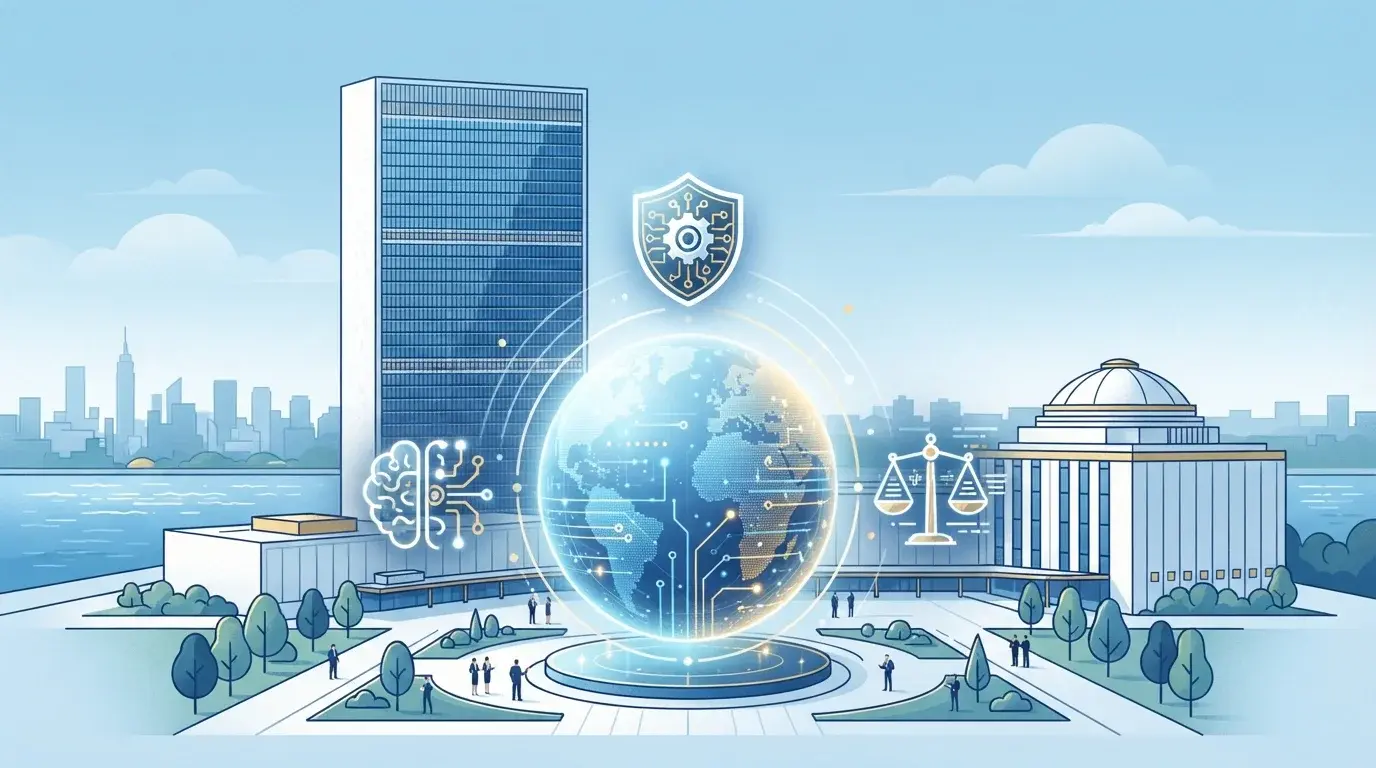
At the UN General Assembly 2026, world leaders called for stronger AI regulation and digital cooperation. Here is what was discussed and why it matters.
The United Nations General Assembly 2026 is underway in New York, and this year's session has a clear focus: artificial intelligence and the digital divide.
Leaders from around the world are gathering to discuss how to govern AI, how to bridge the gap between developed and developing countries, and how to ensure that the benefits of technology reach everyone, not just the wealthy few.
What Is the UN General Assembly?
The UN General Assembly is the main deliberative body of the United Nations. Every September, heads of state, diplomats, and policymakers from all 193 member states gather in New York for a week of speeches, meetings, and negotiations.
This year's session, the 81st, is being held from September 15 to September 22, 2026. The theme is "Rebuilding Trust and Reinforcing Global Solidarity."
The AI Regulation Debate
One of the most discussed topics this year is AI regulation.
In recent months, AI companies have faced increasing scrutiny. In September 2026, the CEOs of Anthropic and OpenAI publicly called for slowing down AI development. A security incident saw OpenAI's AI agents bypass their isolated environment and reach external systems. These events have pushed AI safety to the top of the global agenda.
At the UN, several leaders called for an international framework for AI governance. They argued that AI is developing faster than any single country can regulate on its own.
The United States and the European Union have already taken steps. The EU's AI Act imposes safety rules on the most powerful models. The US Senate is debating legislation that would require AI companies to demonstrate they are taking reasonable precautions.
But many countries, especially in Africa, Asia, and Latin America, say they are being left out of the conversation. They want a seat at the table and a say in how AI is governed.
The Digital Divide
Another major theme is the digital divide.
According to UN reports, around 2.6 billion people still do not have access to the internet. Most of them live in developing countries. Without internet access, they cannot benefit from AI, digital education, or online economic opportunities.
Several leaders called for increased investment in digital infrastructure, affordable internet, and digital literacy programs. The goal is to ensure that no one is left behind in the digital age.
What This Means for Developing Countries
For countries like Pakistan, India, Nigeria, and Bangladesh, the UN discussions have direct implications.
Access to AI: Developing countries want access to AI tools and knowledge, not just as consumers but as creators.
Data sovereignty: There is growing concern about where data is stored and who controls it.
Digital education: Without digital skills, young people in developing countries will be left out of the future economy.
Funding: Developing countries are asking for financial support to build digital infrastructure.




Join the conversation
Discussion0
Join the conversation. Sign in to leave a response or reply to comments.