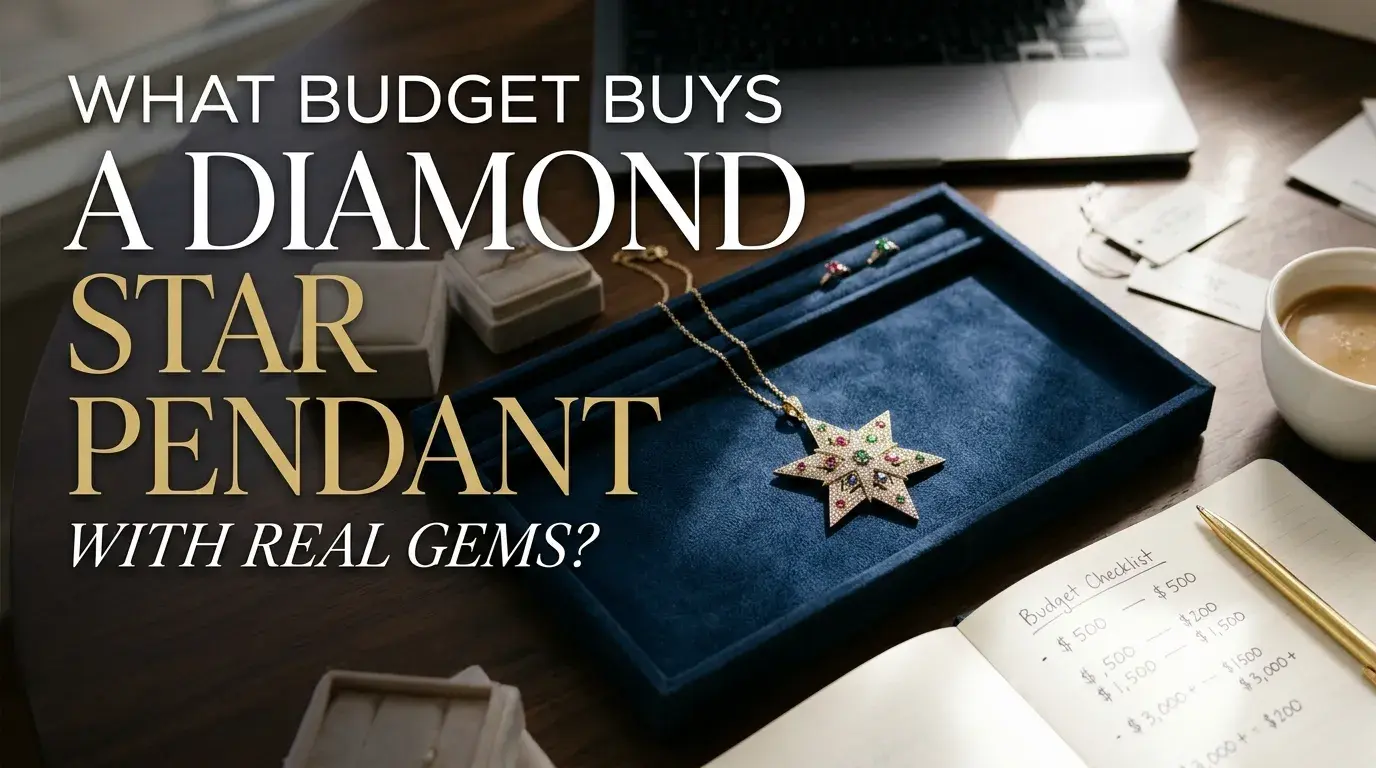
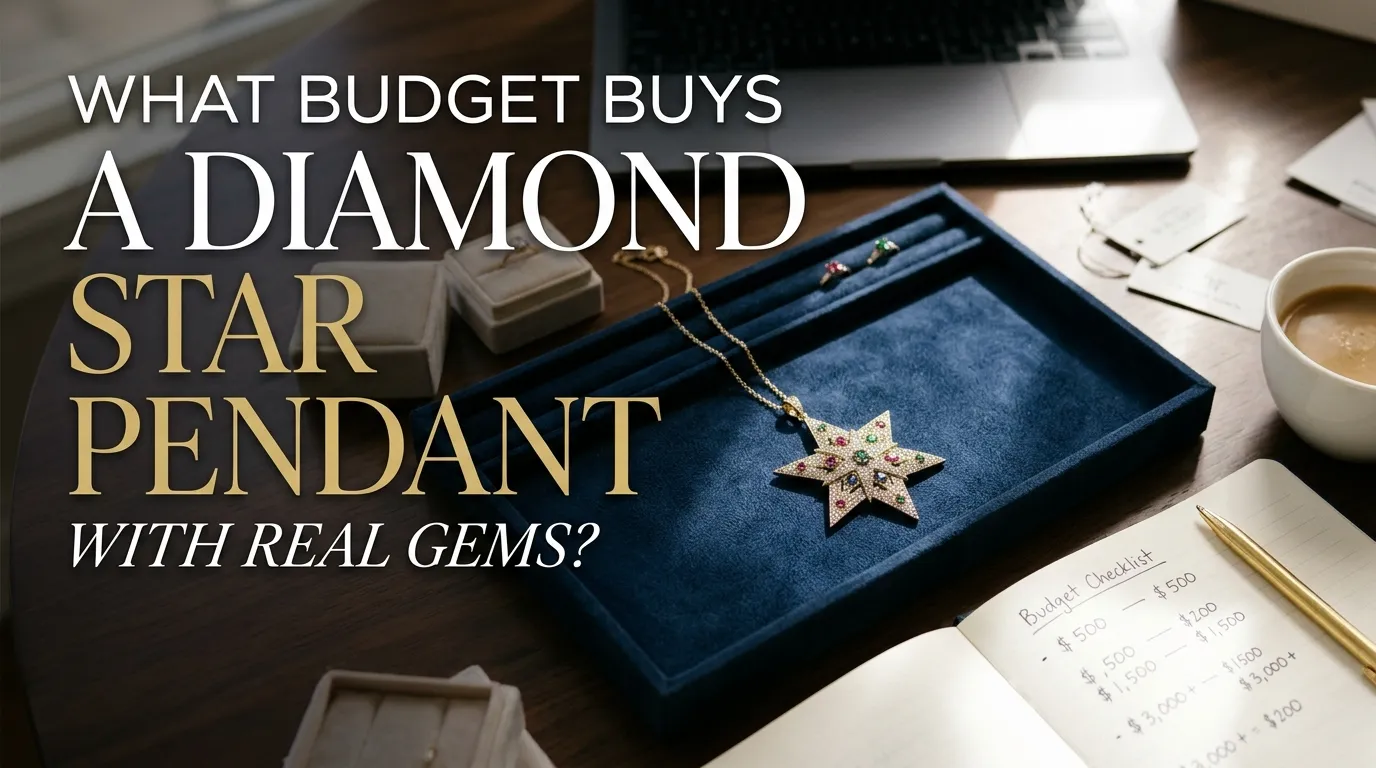
Star-shaped jewelry has never really gone out of fashion, and it's not hard to see why—there's a reason people keep reaching for it. It suggests something a little dreamy without being overdone, which puts it in that rare category of pieces you can wear to a dinner or just around the house without feeling silly. If you've started shopping for a diamond star pendant and found yourself staring at price tags that seem to have no logic, you're not imagining it. The range is wide, and the same star shape can cost $80 or $8,000 depending on choices that aren't always obvious from the product listing. What actually determines the price—and what can your money get you at different levels?
What Pushes the Price of a Diamond Star Pendant Up or Down
Two pendants that look almost identical on a website can land in completely different price brackets. Four things are doing most of that work.
The diamond itself is the biggest driver. Jewelers grade stones on the 4Cs—cut, color, clarity, and carat weight—and each of those can shift the price substantially. A 0.10-carat accent diamond is a very different financial proposition from a 0.50-carat center stone with VS clarity and a G color rating.
The metal matters more than most shoppers expect. White gold, yellow gold, rose gold, and platinum are the standard options, and they don't cost the same. A sterling silver setting keeps the price down without sacrificing the stone. A 14K gold setting adds to the bill. Platinum adds to it considerably more.
Certification costs money too. A graded stone with independent documentation costs more than an ungraded one—but that documentation is what tells you what you actually bought.
Then there's origin, which is where most of the real money differences live.
Natural vs. Lab-Grown: The Biggest Price Variable Nobody Talks About Enough
If you're working with a set budget, this one decision reshapes what's possible more than anything else. Lab diamonds typically run a third to a quarter of what an equivalent natural stone costs. Both are made of carbon atoms in a crystal lattice structure, with no chemical difference between the two. Gemologists need specialized equipment to tell them apart. The difference is origin, not quality.
In practice this means a natural diamond star pendant with a 0.10-carat stone in 14K rose gold might run $600 to $900. The same pendant with a lab-grown stone of identical specs could start closer to $150 to $300. Because of its high-tech production process and broader availability, a lab-grown stone runs about one-third to one-fourth the price of its natural equivalent at the same 4Cs specifications. For shoppers who want size and sparkle rather than a certificate of geological origin, lab-grown stones are worth serious consideration.
What Different Budgets Actually Buy You
Under $200: Real diamonds at this price point exist. They're small—accent stones in the 0.05 to 0.10 carat range—but HI-SI quality real diamonds set in 92.5 sterling silver can be found here, often with multiple small stones filling the star shape to maximize visible sparkle. These aren't simulants or fakes. The silver setting is what makes the price work.
$200 to $500: The options open up, and the metal gets better. A natural 0.5-carat round-cut diamond cluster star pendant in 10K gold can be found in this range from reputable online sellers. Lab-grown stones in 14K settings also become accessible here, particularly with accent stone cluster designs. If you're shopping on a fixed budget, this is probably the most competitive bracket in terms of what you get per dollar.
$500 to $1,000: Design quality improves noticeably at this level. Settings are cleaner, prong work is more precise, and stones tend to come certified. A star-shaped diamond pendant in 14K rose gold with approximately 0.10 total carats from established jewelers typically lands here. You're buying a piece meant to last rather than a piece meant to get you through a gift exchange.
$1,000 and above: Fine jewelry territory. Higher clarity grades, better cuts, 14K or 18K gold, and more elaborate designs with pave or halo settings. A star pendant in 14K yellow gold with 0.60 carats of VS clarity, G color diamonds comfortably sits at $2,000 or more at retail. At this budget, natural diamonds start to make more sense as a long-term investment, though lab-grown stones at this price range are genuinely spectacular.
Tips That Will Save You Money and Regret
Prioritize cut quality above anything else. A well-cut small diamond outshines a larger stone with a mediocre cut every time. In a star design, especially—where multiple small stones usually fill the shape together—how those stones handle light is what makes the pendant pop or fall flat.
Pay attention to the metal choice before you pay attention to anything else. Platinum and white gold suit people who prefer a clean, modern look. Yellow gold suits people who like something warmer or more vintage. Rose gold has been having a long moment for good reason—it photographs beautifully and complements most skin tones.
Always ask for certification. Independent grading documentation matters more than an in-house certificate from the same seller. Any reputable jeweler will have it available. If a seller can't produce it or discourages you from asking, that's information.
Think about how the setting is built for daily wear. A bezel or prong setting that fully secures each stone holds up better over time than open-back designs where small accent diamonds can loosen. The bail—the small loop connecting the pendant to the chain—should feel substantial, not like an afterthought.
Online retailers consistently offer better pricing than brick-and-mortar stores at the same quality level, primarily because they're not paying for retail floor space. That said, verify their return window and read actual customer reviews before committing.
Summing Up
Finding a diamond star pendant with real gems doesn't require a large budget—it requires knowing what variables to focus on. Shoppers who understand the 4Cs, know the difference between natural and lab-grown stones, and pay attention to metal type and setting quality will consistently get more for their money than those who shop by looks alone. Whether you're spending $175 on a sterling silver piece with accent diamonds or $750 on a 14K gold design with a certified lab-grown stone, genuine options exist at every price point. The key is knowing what you're looking at when you find them.

Join the conversation
Discussion0
Join the conversation. Sign in to leave a response or reply to comments.