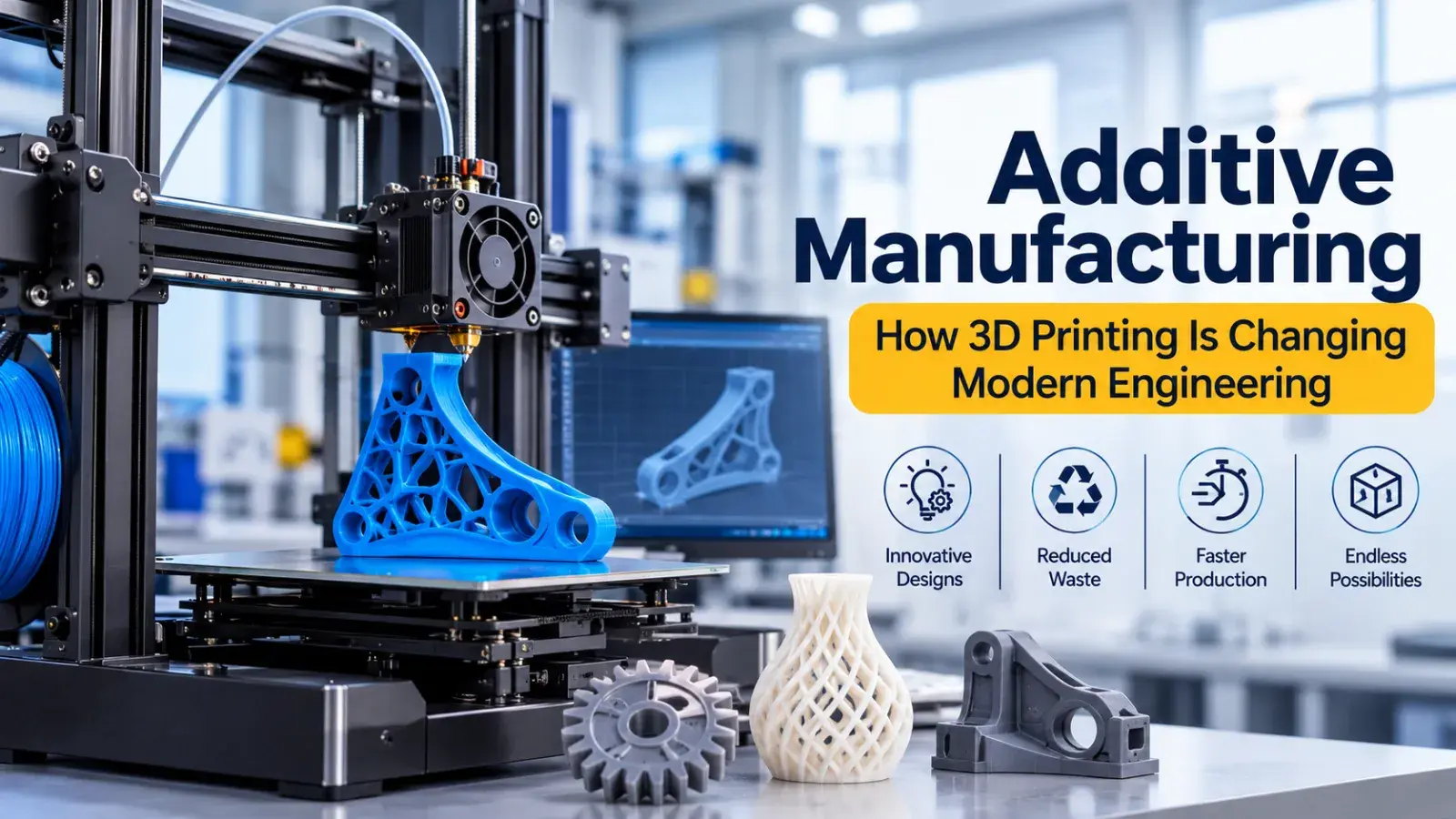
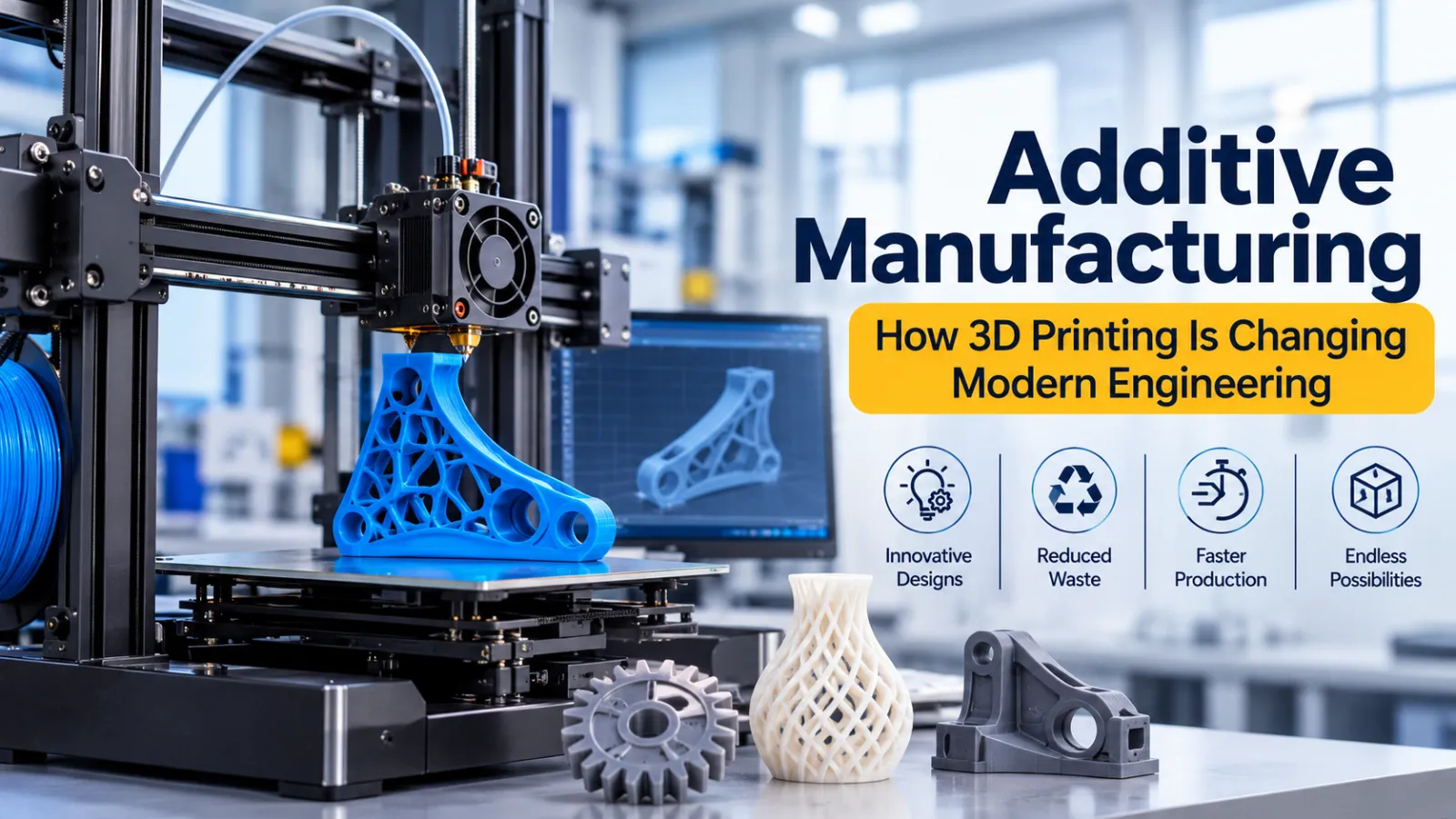
The mechanical engineering industry is experiencing important changes with the introduction of the advanced technologies and modern methods of production. One innovation in this regard is additive manufacturing, also known as 3D printing, which is changing how th engineers design, develop and manufacture the products by making objects in layers, using digital models.
In contrast to traditional manufacturing, which includes cutting, drilling o removal of the material from a solid block, the additive manufacturing builds products by the addition of materials accurately where it is needed. This approach offers great flexibility in design, decreases the wastage of materials and supports personalised production.
In this guide, we will learn about the additive manufacturing in engineering an dhow it is becoming an essential part of modern industrial processes. It helps the manufacturers to develop complex components, improve the efficiency of production and explore possibilities of new design. The industries are consistently adopting advanced solutions and this technology is reshaping the future of engineering.
What is Additive Engineering?
Additive Engineering, a part of the B.Tech engineering programmes is a process of production in which the three-dimensional objects are made by placing materials in consecutive layers that is based on a digital design. The process of production starts with a Computer Aided Design (CAD) model that defines the dimensions, structure and specifications of the product.
The digital model is converted into instructions that lead a 3D printer all through the manufacturing process. Relying n the application, the material such as plastics, metals, ceramics, resins and specialised composites can be used.
One of the biggest benefit of 3D printing in engineering is the ability to produce complex shapes and structures that can be expensive or difficult to manufacture using the traditional techniques. It also makes it easier to transform designs, develop prototypes and manufacture the personalised products.
How Does Additive Manufacturing Work?
The additive manufacturing process includes many stages that changes a digital concept to a physical product.
Digital design: The engineers ca make a three-dimensional model by using CAD software, defining the shape of the product, dimensions and structural needs.
File conversion: The digital model is changed into a compatible file format. Slicing software divides the model into thin layers and produces printing instructions.
Material selection: The suitable materials that include plastics, metal powders, resins or composite materials are selected as per the needs of the product.
Layer-by-Layer printing: The 3D printer follows the digital instructions and solidifies the material layer by layer till the object is complete.
Post-processing: The printed product can need cleaning, polishing, support removal, heat treatment or additional finishing, in order to attain the desired quality.
This process makes the additive manufacturing appropriate for developing the prototypes and functional components.
Additive Manufacturing vs. Traditional Manufacturing.
Both the manufacturing methods supplies essential purposes in engineering, but the different is in their production, techniques, material needs and design capabilities.
Comparison Factor | Additive Manufacturing | Traditional Manufacturing |
Production Process | Builds object in layers | Often removes or reshapes the material |
Material Usage | Uses material where needed | Can produce waste through cutting or machining |
Design Flexibility | Supports the complex geometrics | Some designs need special tools |
Customisation | Allows easy design modification | Customisation may need additional tool |
Prototyping | Supports the faster prototype development | Can include longer preparation |
Production Suitability | Useful for prototypes and specialised or low-volume parts | Often suitable for large-scale production |
Initial Investment | Can be expensive | The costs can be different, depending upon the machines and the tools |
The choice between both depends upon the production volume, material requirements, component complexity and overall project costs. In a number of industries, the manufacturers combine both the methods to achieve a better result in production.
Key Benefits of Additive Manufacturing in Engineering
The increasing adoption of the additive manufacturing in engineering is determined by many advantages that support the modern production needs:
Reduced Material Waste: In contrast to the traditional processes that remove the material from larger blocks, additive manufacturing makes products in layers, helping decrease the unrequired consumption of material.
Greater Design Flexibility: Engineers can experiment with the complex geometries, internal structures and personalised designs without being limited by a number of traditional limitations in manufacturing.
Faster Product Development: The rapid prototyping lets the engineers to create and check the physical models quickly. The design modifications can be made before moving towards production in large-scale.
Personalised Production: The manufacturers may modify the products in accordance with their specific customer or industrial needs without creating new tools.
Reduced Tooling Requirements: A number of additive manufacturing processes do not need the traditional tools, making them useful for prototypes and low-volume production.
Improved Supply Chain Flexibility: The digital design files can be stored an shared, allowing the selected replacement parts to be manufactured closer to where they are needed.
Challenges and Limitations of 3D Printing Technology
There are a number of advantages of 3D printing technology, but there also are certain limitations that the manufacturers must ponder with before incorporating them. Some of the limitation are as follows:
High Initial Investment: The industrial grade printers, the special material s ad the software may need significant investment.
Material Limitations: Not every material is appropriate for additive manufacturing, some application seven require some specific mechanical or thermal properties.
Manufacturing Speed: Producing large quantities can be slower than the traditional mass-producing method.
Quality Control: The components need careful review to ensure the dimensional accuracy, the structural strength and consistently performance.
Post- Processing Requirements: Some products require additional finish, machining or heat treatment before they are ready to be used.
The understanding of these limitations helps the manufacturers to find out where additive manufacturing offers the greatest value and where the traditional production method is more applicable.
Future of Additive Manufacturing in Engineering
The future of additive manufacturing looks flourishing as the industries continue to invest in the automation, advanced materials and digital production technologies.
One essential area of development id metal 3D printing, which is growing the possibilities of producing strong and complex industrial components. The development in printing materials are also letting the engineers to explore the applications that need improved durability, flexibility and heat resistance.
Another flourishing trend is the incorporation of AI and automation into additive manufacturing. These technologies help top monitor the processes of printing, identify the defects and improve the accuracy of production.
The increasing focus on the sustainable production is also encouraging the manufacturers to explore the methods that decrease the material waste and increase resource utilisation.
Final Thoughts
Additive manufacturing is changing the modern engineering by introducing a more flexible and innovative approach to production. From developing lightweight aerospace components to making personalised medical implants, 3D printing is growing what engineers can design and manufacture.
The challenges are improving the capabilities. As the industries includes the automation and digital solutions, additive manufacturing will paly an increasing role in the development of product and industrial production.
For the engineers and manufacturers, understanding this technology is becoming important to adapting to the changing industrial needs and exploring new possibilities in the modern engineering.
FAQs
What is additive manufacturing in engineering?
Additive manufacturing in mechanical engineering is a process of production in which the three-dimensional objects are made by adding material sin layers using digital designs. It is also known as 3D printing.What are the important applications of additive manufacturing?
The important applications of additive manufacturing include aerospace component production, automotive prototyping, medical implants, dental devices, construction components and industrial machinery parts.How is additive manufacturing different from traditional manufacturing?
The traditional manufacturing involves the cutting or removing the material from a larger block, while the additive manufacturing build objects in layers. This reduces the wastage of materials and provide greater design flexibility.What materials are used in 3D printing?
Some of the common materials that are used in 3d printing includes plastics, resins, metals, ceramics and other composite materials. The selection of the materials rely upon the component’s design, strength and functional needs.What is the future of additive manufacturing in engineering?
The future includes the advancements in the metal printing, advanced materials, automation and AI. These advancements are expected to improve the efficiency of manufacturing, design flexibility an production capabilities.

Join the conversation
Discussion0
Join the conversation. Sign in to leave a response or reply to comments.