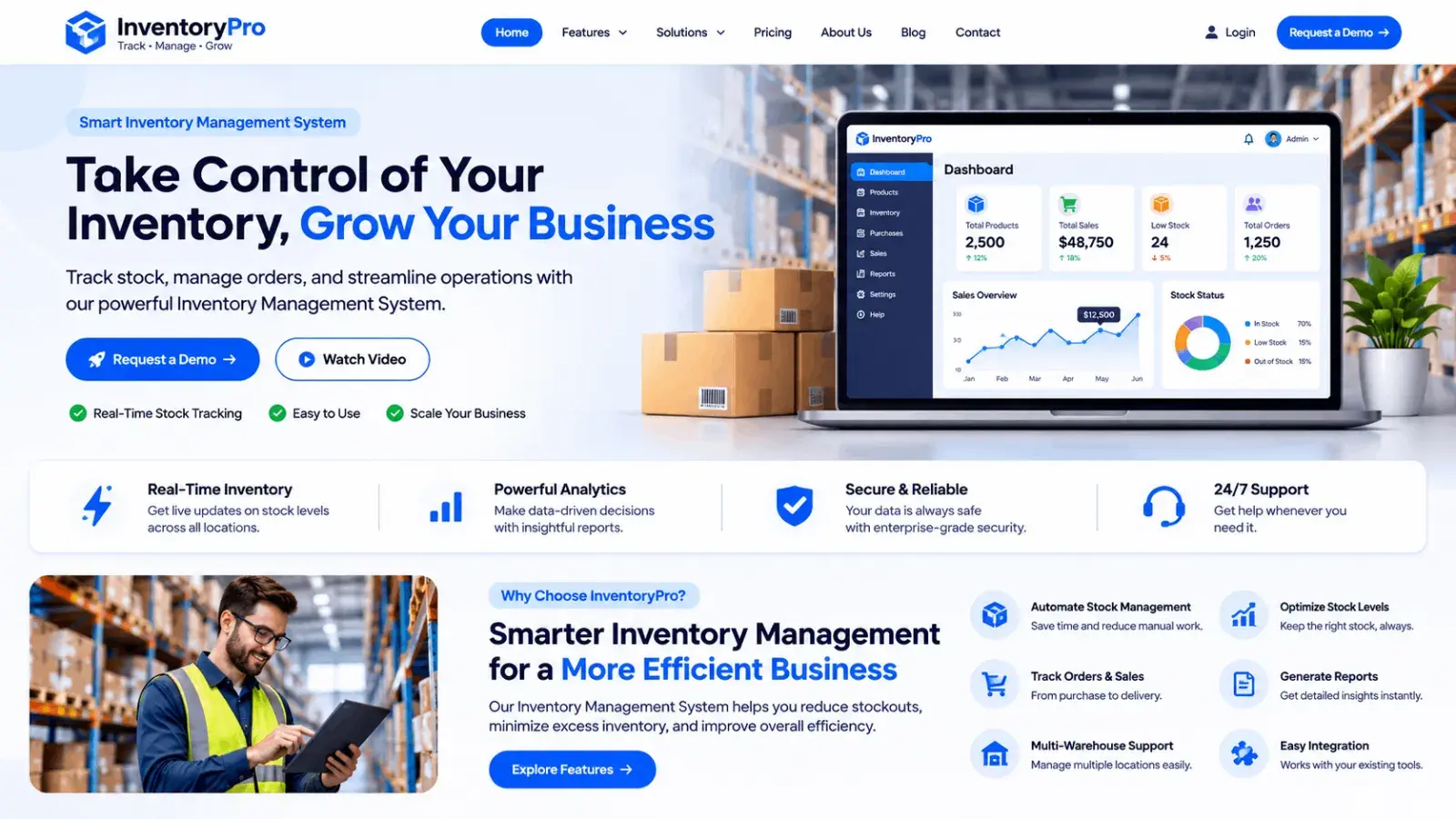
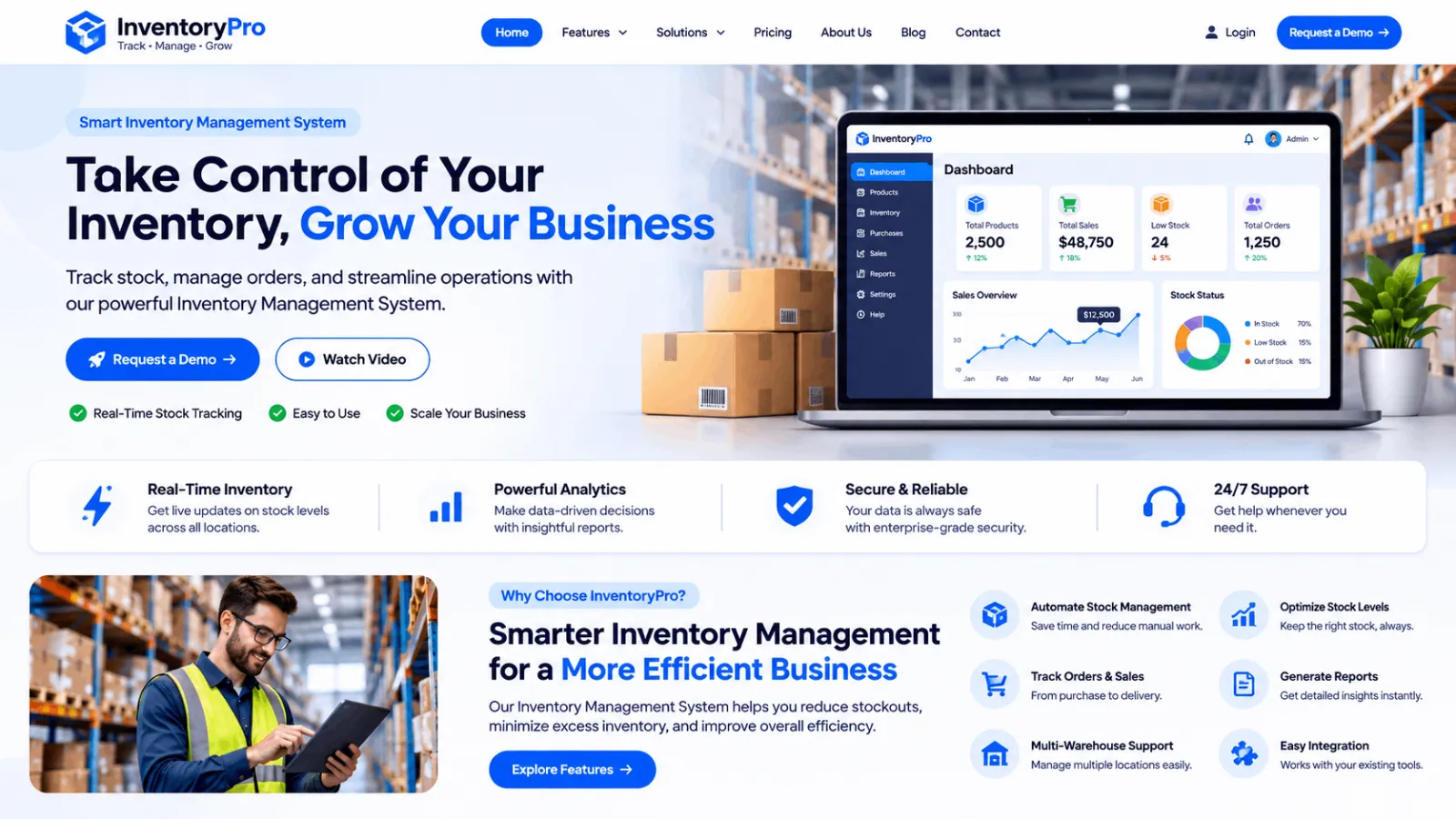
Managing inventory efficiently is essential for businesses that want to reduce operational costs, improve productivity, and deliver better customer experiences. Whether you operate a retail store, wholesale company, manufacturing business, warehouse, or e-commerce platform, maintaining accurate inventory records can be challenging without the right technology. A modern Inventory Management System helps businesses automate stock operations, monitor product availability, and manage purchases and sales from one centralized platform.
As businesses expand, traditional inventory management methods such as spreadsheets and handwritten records become increasingly difficult to maintain. Implementing professional inventory management software can help organizations streamline daily operations and make smarter business decisions.
## What Is an Inventory Management System?
An Inventory Management System (IMS) is a software application designed to track, organize, and control products throughout the inventory lifecycle. It allows businesses to manage stock quantities, product information, suppliers, purchase orders, sales transactions, and warehouse operations efficiently.
A well-developed inventory management solution provides real-time stock visibility and centralized data management. Business owners can monitor inventory activities, identify stock shortages, and understand product performance without depending on complicated manual processes.
## Essential Features of a Modern Inventory Management System
A professional Inventory Management System should include powerful features that simplify inventory operations and improve business efficiency.
Product Management: Organize products, categories, brands, SKUs, barcodes, prices, and product variations in one place.
Real-Time Stock Tracking: Monitor available stock, incoming products, outgoing items, low-stock alerts, and inventory movements.
Warehouse Management: Manage multiple warehouses, transfer products between locations, and monitor individual warehouse stock levels.
Purchase Management: Create purchase orders, manage supplier information, record received products, and maintain purchase histories.
Sales and Order Management: Process sales, manage customer orders, generate invoices, and handle product returns.
Supplier and Customer Management: Maintain organized records, transaction histories, and important business information.
Reports and Analytics: Generate reports covering inventory valuation, sales performance, purchasing activities, stock movements, and product availability.
User Roles and Permissions: Control employee access through role-based permissions to improve accountability and data security.
## Why Do Businesses Need Inventory Management Software?
Poor inventory management can result in overstocking, stock shortages, inaccurate records, delayed deliveries, and unnecessary expenses. These problems can negatively affect customer satisfaction and business profitability.
Inventory management software helps businesses overcome these challenges by automating repetitive tasks and improving operational visibility.
Retailers can monitor product availability, wholesalers can manage large product catalogs, manufacturers can organize raw materials and finished goods, and e-commerce businesses can synchronize inventory with their order management processes.
Modern solutions can also integrate barcode scanners, accounting software, payment systems, and other business applications. Cloud-based platforms and responsive interfaces allow authorized users to access important inventory information across different devices.
## Professional Inventory Management System Development by Productive IT BD
Choosing the right software development partner is important when building an inventory management solution. Every business has unique operational requirements, product structures, warehouse processes, and reporting needs. Therefore, a customized solution can provide the flexibility required to support specific business workflows.
Ready to improve your inventory operations with a professional software solution? Explore our development services at [https://www.productiveitbd.com/](https://www.productiveitbd.com/) and discuss your project requirements with Productive IT BD.
Productive IT BD provides website, web application, mobile application, and custom software development services. Our development focus includes user-friendly interfaces, responsive layouts, organized database structures, secure functionality, and scalable application architecture.
You can also explore our professional development profile and connect with us through Freelancer.com:
[https://www.freelancer.com/u/mdshakilhasan04](https://www.freelancer.com/u/mdshakilhasan04)
## Why Choose Professional Software Development?
A professionally developed Inventory Management System should do more than store product information. It should provide reliable performance, intuitive navigation, secure data handling, and the flexibility to grow with changing business requirements.
Responsive design ensures that users can work comfortably across desktops, tablets, and smartphones. Proper database architecture supports accurate inventory records, while security controls help protect sensitive business information. Scalable architecture and API integrations also make it easier to introduce additional features as business operations expand.
## Conclusion
An Inventory Management System is an important investment for businesses seeking better stock control, improved productivity, and more efficient operations. From product management and warehouse tracking to purchasing, sales, and advanced reporting, the right software can simplify complex business processes.
Productive IT BD aims to help businesses turn their operational requirements into practical digital solutions through professional web and application development services.
Build smarter business operations with the right technology. Visit [https://www.productiveitbd.com/](https://www.productiveitbd.com/) or connect with our developer profile to discuss your next software development project.


Join the conversation
Discussion0
Join the conversation. Sign in to leave a response or reply to comments.