
In the pantheon of intellectual giants, few figures straddle the worlds of medicine and philosophy with as much mastery as Abu Ali al-Husayn ibn Abdullah ibn Sina, known in the West simply as Avicenna. A Persian polymath of the Islamic Golden Age, Ibn Sina’s influence was so profound that in the Latin West he was hailed as the “Prince of Physicians” (princeps medicorum), while in the Islamic world he was honored as al-Shaykh al-Ra’is, the “Preeminent Master”. His monumental medical encyclopedia, the Canon of Medicine, served as the standard textbook in European universities for over six centuries, and his philosophical masterpiece, The Book of Healing, reshaped metaphysical thought from Persia to Paris.

Early Life: A Prodigy of Bukhara
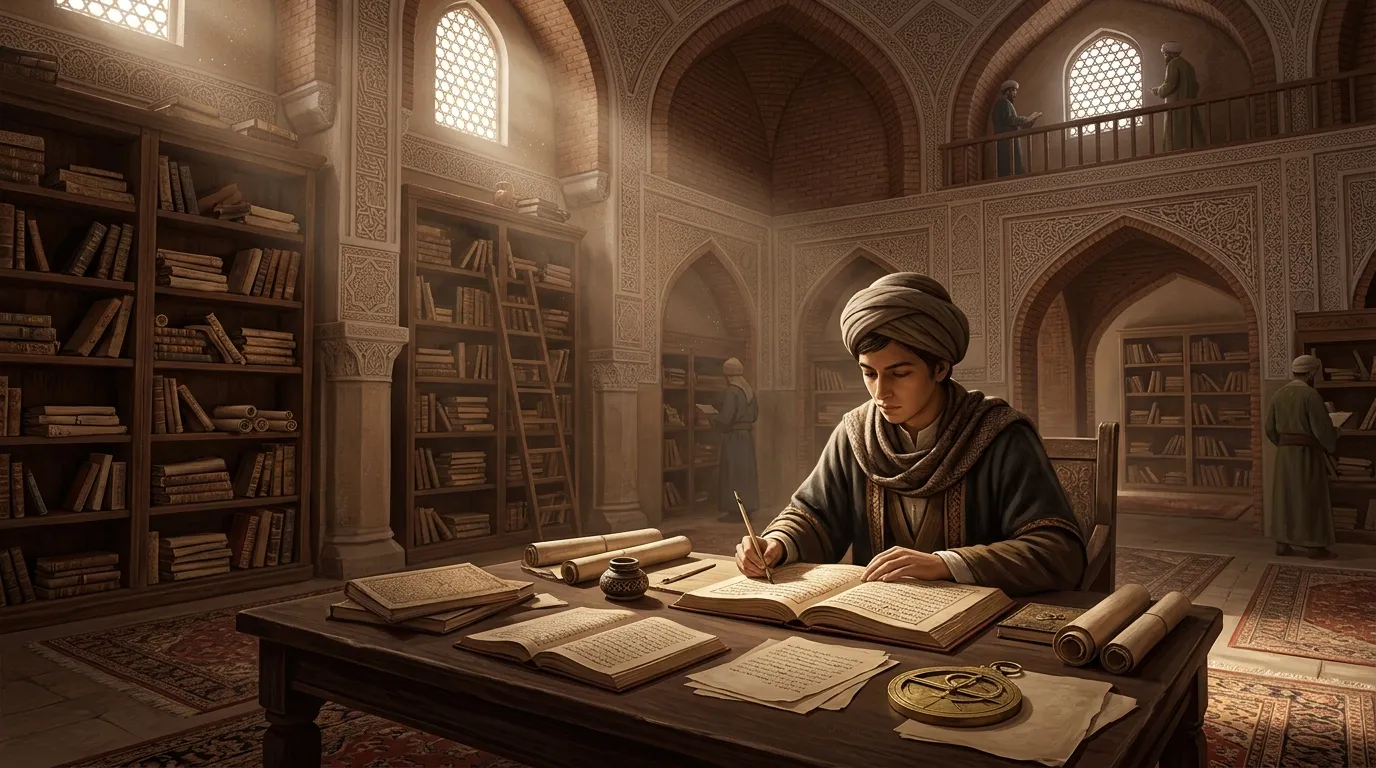
Ibn Sina was born around 980 CE in the village of Afshana, near Bukhara (in present-day Uzbekistan). His father, a scholar from Balkh, ensured that the young Ibn Sina received an exceptional education. According to his autobiography—dictated to his student al-Juzjani—Ibn Sina had memorized the Quran by the age of ten and had mastered Arabic grammar and literature shortly thereafter.
His intellectual curiosity was insatiable. He studied Aristotle’s metaphysics, the works of al-Farabi, and then turned to medicine. As he later recalled, “medicine is not one of the difficult sciences, and therefore I excelled in it in a very short time”. By the age of eighteen, he had earned a reputation as a skilled physician, so much so that the Samanid ruler of Bukhara, Nuh ibn Mansur, summoned him to treat a severe illness. His success at court opened the royal library to him, and he devoured its treasures of learning.
The Canon of Medicine: A Textbook for the Ages
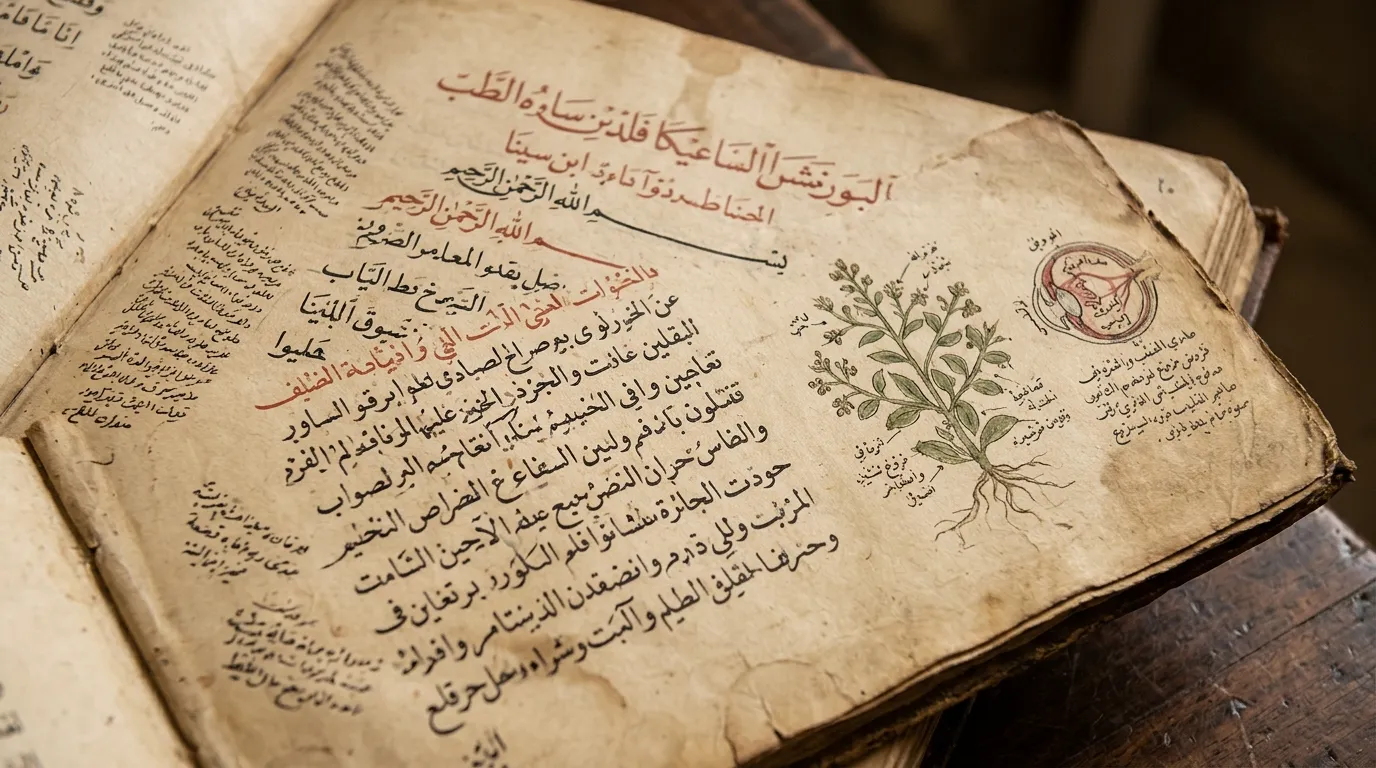
Ibn Sina’s fame in Europe rests principally on his magnum opus in medicine, al-Qanun fi al-Tibb (The Canon of Medicine), an encyclopedic synthesis of all medical knowledge of his time. The work was translated into Latin by Gerard of Cremona in the 12th century and became part of the standard curriculum for medical students across Europe until the late 17th century. Between 1500 and 1674 alone, some sixty editions of the Canon were published in Europe, a testament to its unparalleled authority.
The Canon is organized into five comprehensive books: general medical principles; materia medica listing approximately 800 individual drugs; special pathology covering diseases of specific organs; systemic diseases such as fevers and poisons; and a formulary of some 650 medicinal compounds. But the Canon was not merely a compilation. Ibn Sina introduced groundbreaking ideas that anticipated modern medicine by centuries. He was the first to introduce psychotherapy to the field, recognizing the connection between mental and physical health. He described the contagious nature of infectious diseases and suggested that water and air may contain tiny animals invisible to the naked eye that cause illness—a theory proven centuries later with the invention of the microscope. He was also among the first to describe meningitis, strokes, and paralysis caused by internal bodily factors, and he practiced a form of experimental medicine, testing drugs on animals before administering them to patients.
The Book of Healing: A Philosophical Summa
While the Canon established his medical authority, Ibn Sina’s philosophical legacy was equally formidable. His other major work, Kitab al-Shifa’ (The Book of Healing), is a vast philosophical and scientific encyclopedia comprising four parts: logic, natural philosophy, mathematics, and metaphysics. As the scholar Seyyed Hossein Nasr notes, the Shifa’ “contains in reality the sum of his Peripatetic philosophy, into which all the natural and mathematical sciences known at that time have been integrated”.
Ibn Sina’s metaphysics, particularly his distinction between essence and existence and his proof of the Necessary Being (God), became a turning point in the history of philosophy. His ideas profoundly influenced not only subsequent Islamic philosophers and theologians but also Christian and Jewish thinkers across medieval Europe. In Latin translation, Avicenna’s philosophy “influenced mightily the medieval and Renaissance philosophers and scholars,” and in the broader intellectual history of the world, his influence is second only to Aristotle.
A Polymath’s Broader Contributions
Ibn Sina’s genius was not confined to medicine and metaphysics. He wrote on a staggering range of subjects, including astronomy, physics, chemistry, psychology, geology, and music theory. He is credited with authoring around 450 works, of which approximately 240 have survived, including 150 on philosophy and 40 on medicine. In psychology, his Treatise on the Soul (Kitab al-Nafs) anticipated Descartes’ mind-body dualism, describing the soul as an immaterial substance distinct from the body. He also developed a new scientific vocabulary in Persian, writing the Danishnama (Book of Knowledge) to make philosophy accessible to Persian speakers.

Legacy: A Bridge Between Civilizations
Ibn Sina died in 1037 CE in Hamadan (present-day Iran), but his intellectual legacy only grew. His works, translated into Latin and Hebrew, became the bedrock of medical and philosophical education in Europe for centuries. Some scholars have even argued that his approach to clinical observation and the testing of remedies broadly resembled the principles of evidence-based medicine. Whether in the halls of the Sorbonne or the madrasas of Isfahan, the name of Ibn Sina commanded authority. His story is a testament to the vibrancy of the Islamic Golden Age and the power of cross-cultural exchange to illuminate the path of human civilization.
References
Stanford Encyclopedia of Philosophy – “Ibn Sina [Avicenna]” – Provides a comprehensive overview of his life, philosophical system, and influence on medieval and Renaissance thought.
Encyclopaedia Britannica – “Avicenna | Biography, Books, & Facts” – A detailed biography covering his life, works, and legacy as the most famous philosopher-scientist of the medieval Islamic world.
Library of Congress – “The Canon of Medicine” – Describes the Canon’s five-book structure, its translation by Gerard of Cremona, and its use in European medical curricula until the late 17th century.
Qatar National Library – “Ibn Sina and ‘The Canon of Medicine’ in Our Heritage Library” – Highlights his pioneering contributions to psychotherapy, infectious diseases, and experimental medicine.
National Library of Israel – “This Iranian Trailblazer Revolutionized Global Medicine and Thought” – Discusses his education, the Canon’s five sections, and the philosophical depth of The Book of Healing.
Internet Archive – “Nasr, 1975, Iran 7th-11th” – Contains scholarly analysis of the Shifa’ as the summa of Peripatetic philosophy and Ibn Sina’s metaphysical system.


Join the conversation
Discussion0
Join the conversation. Sign in to leave a response or reply to comments.