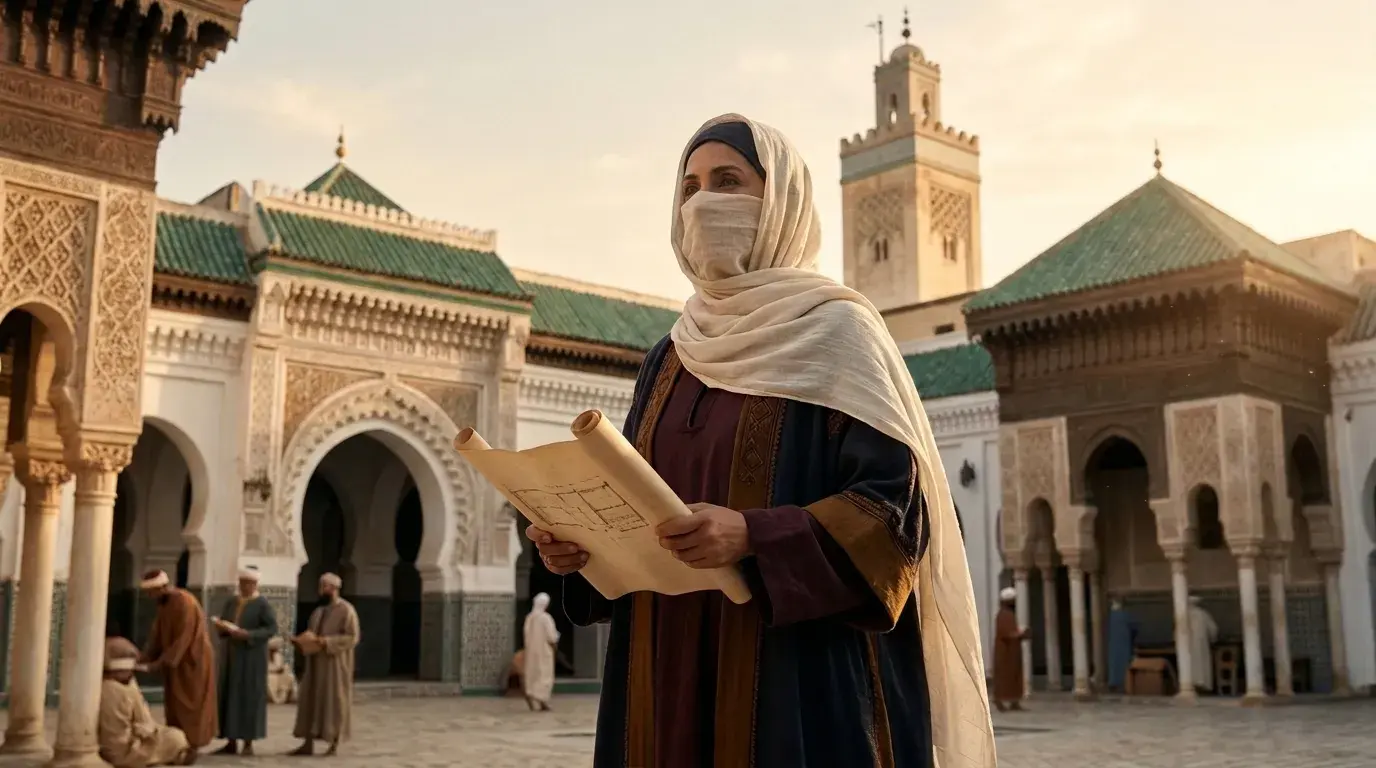
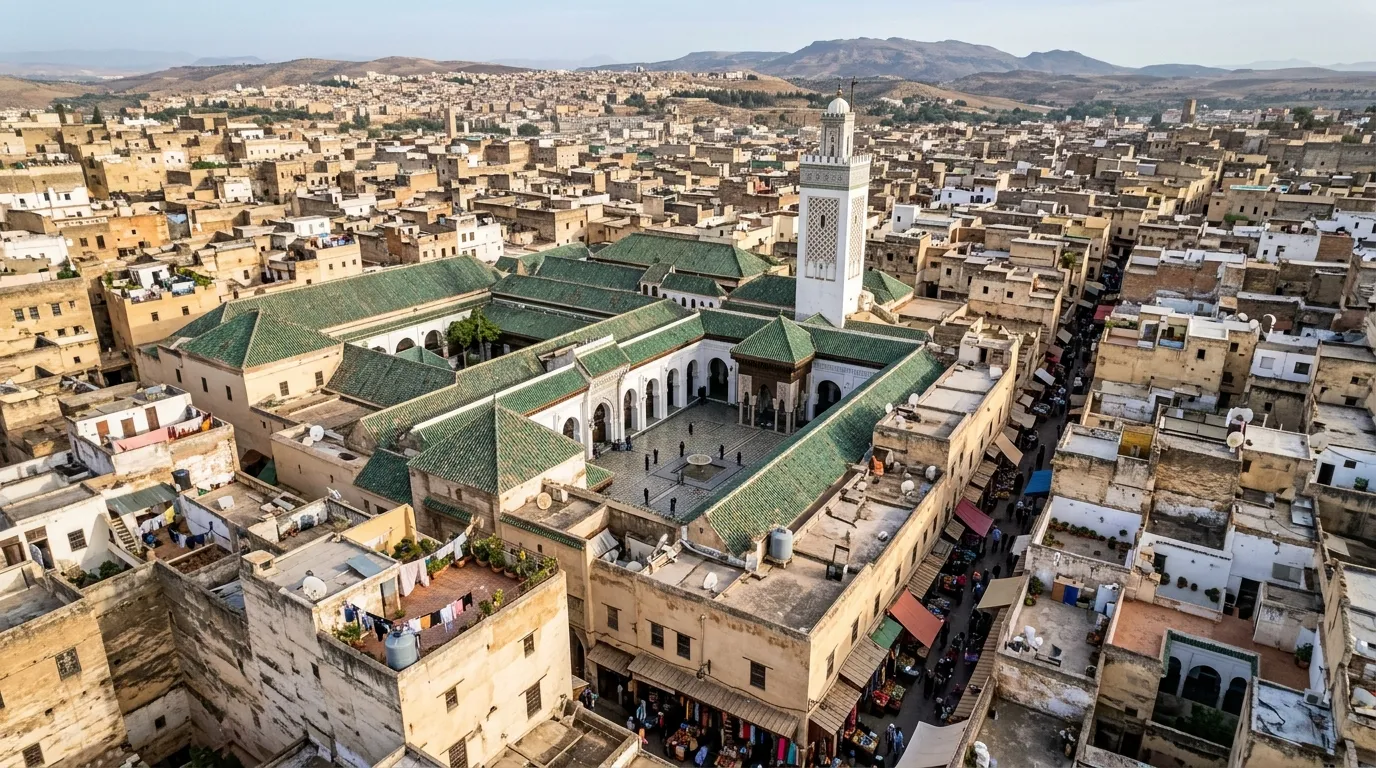
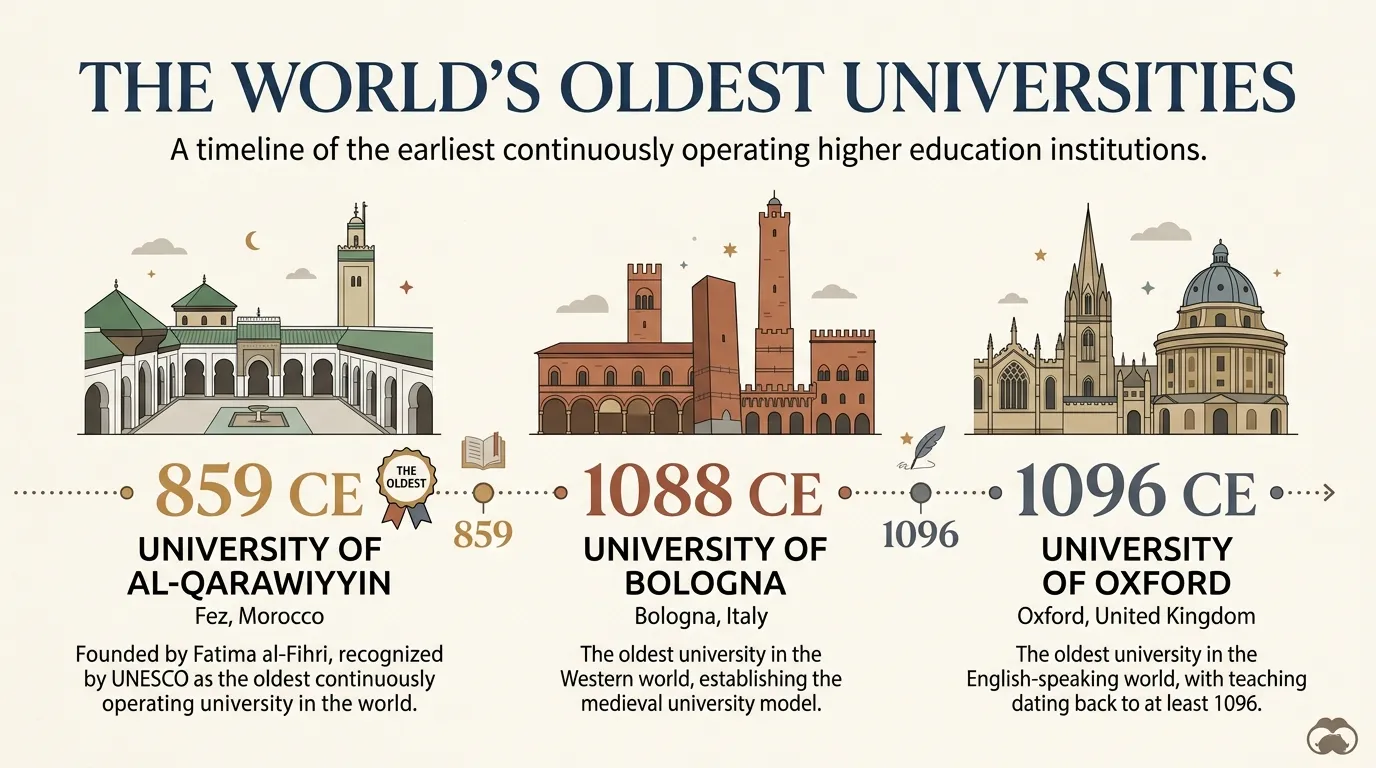
When asked where the world’s first university is located, many people instinctively think of Europe-perhaps Oxford or Bologna. The truth, however, lies in the ancient medina of Fez, Morocco. More than a thousand years ago, a visionary Muslim woman named Fatima al-Fihri used her inheritance to establish an institution of higher learning that continues to operate to this day: the University of Al-Qarawiyyin. Recognized by both UNESCO and Guinness World Records as the oldest existing, continually operating, and first degree-awarding educational institution in the world, Al-Qarawiyyin predates the University of Bologna by roughly two centuries .
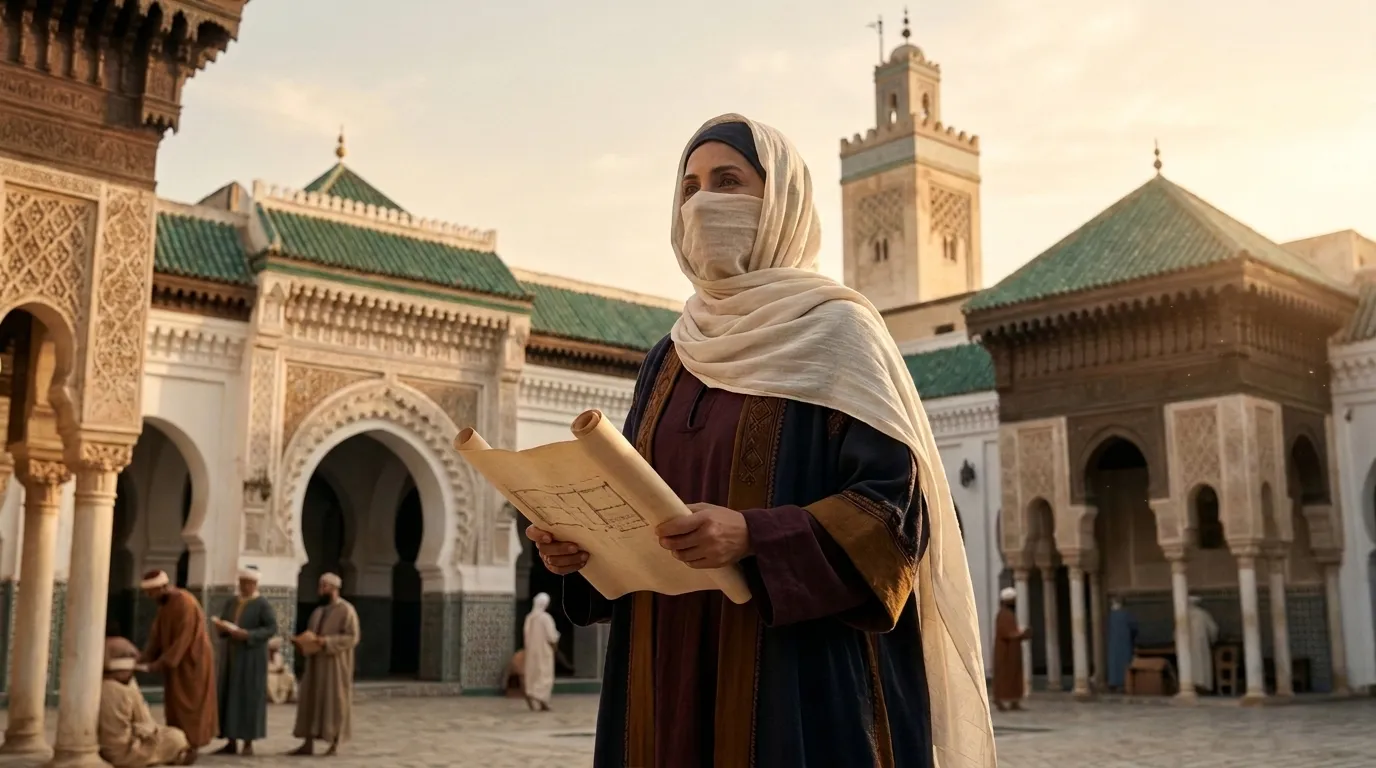
The Woman Behind the World’s Oldest University
Fatima al-Fihri was born around 800 CE into a wealthy merchant family that had migrated from Kairouan (in modern-day Tunisia) to Fez. After the deaths of her father and husband, she inherited a substantial fortune. Rather than spending it on personal luxury, Fatima chose to give back to her community by building a mosque that would also serve as a center of learning. According to the Dictionary of African Biography on Oxford Reference, “in 859, without knowing it, Fatima al-Fihri founded the oldest operating university in the world, the University of al-Qarawiyyin” .
Her sister, Mariam, used her share of the inheritance to build the Andalusian Mosque, while Fatima devoted all her money, time, and energy to the educational complex that would become Al-Qarawiyyin. Historical accounts note that Fatima was so dedicated to the project that she fasted during its construction, which is said to have taken years .
A Center of Advanced Learning
What began as a mosque quickly evolved into a major intellectual hub. By the 10th century, Al-Qarawiyyin had cemented its place as the largest Arab university in North Africa, attracting students and scholars from across the Muslim world. The curriculum was remarkably broad for its time. Alongside religious studies such as Tafsir (Quranic exegesis) and Fiqh (Islamic jurisprudence), the university taught mathematics, astronomy, physics, medicine, botany, geography, logic, philosophy, and foreign languages including Greek and Latin .
The institution also introduced a structured system of degree-granting across various levels of study, a model that would later influence the development of universities in Europe . Its rigorous admissions standards required students to have memorized the Quran and possess strong knowledge of Arabic and general sciences.
Notable Alumni and the Al-Qarawiyyin Library
Al-Qarawiyyin has produced and attracted some of history’s greatest minds. Among its famous alumni and associated scholars are Al-Idrisi, the renowned cartographer whose maps were used by European explorers; Ibn Tufayl, author of the philosophical novel Hayy ibn Yaqdhan, often considered a precursor to science fiction; and Ibn Khaldun, the father of sociology and modern economic theory. Some historical sources also suggest that Pope Sylvester II (Gerbert of Aurillac) studied there and helped introduce Arabic numerals to Europe.
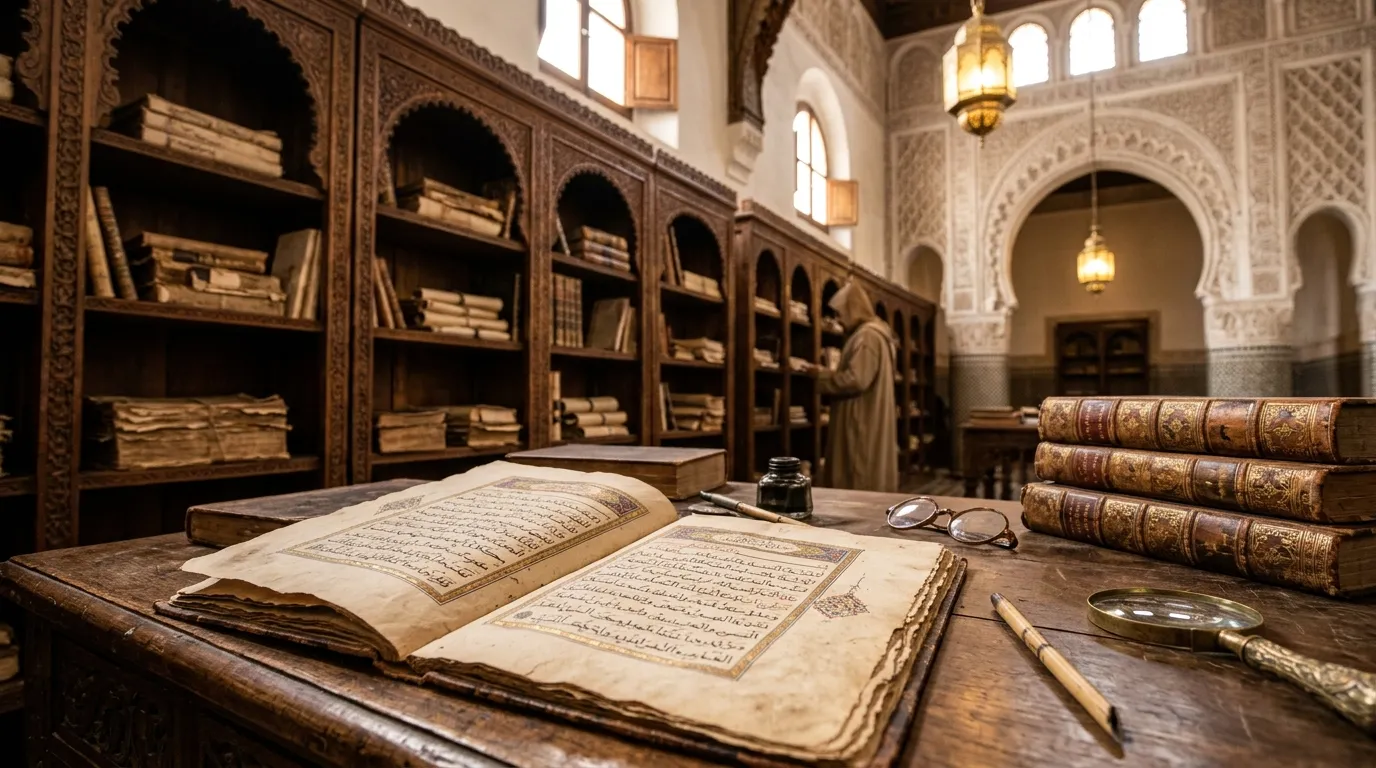
The university’s historic library, which recently underwent restoration, houses over 4,000 manuscripts, including a 14th-century copy of Ibn Khaldun’s Muqaddimah and one of the oldest manuscripts of the Quran in the world .
Why Al-Qarawiyyin Holds the Record
It is important to clarify that older centers of learning did exist. Ancient India’s Taxila and Nalanda, as well as Sumerian scribal schools (Eduba), date back further in time. However, these institutions did not survive as continuously operating degree-granting universities. As the BBC explains, “Al-Karaouine proudly holds the world record as it has continually offered education since its founding” . Al-Qarawiyyin’s unique claim to the record rests on its unbroken operation since its founding in 859 CE and its status as the first institution to systematically award degrees. The University of Bologna, often cited as the oldest university in Europe, was established in 1088—229 years after Al-Qarawiyyin .
A Legacy That Endures
Today, the University of Al-Qarawiyyin remains a symbol of the Muslim Golden Age’s commitment to education and of the pivotal role women have played in shaping intellectual history. Fatima al-Fihri’s story challenges narratives that place the origins of higher education exclusively in the West. As Fox News reports, the University of al-Qarawiyyin “is widely recognized as the oldest university in the world,” holding the Guinness World Record for oldest higher learning institution .
References
Guinness World Records – “Top 10 Back-to-School Guinness World Records”
Relevance: This official Guinness World Records page lists the University of Karueein (Al-Qarawiyyin) as “the oldest existing, and continually operating educational institution in the world” .
UNESCO (via BBC News Mundo) – “Dónde nació la primera universidad y qué tuvo que ver una mujer en su creación”
Relevance: This BBC article explicitly confirms that the University of Al Qarawiyyin is “considered by UNESCO and the Guinness Book of Records as the oldest in the world that is still in operation” .
Oxford Reference (Dictionary of African Biography) – “Fatima, al-Fihri”
Relevance: This is the direct entry from the Dictionary of African Biography, which states: “Thus, in 859, without knowing it, Fatima al-Fihri founded the oldest operating university in the world, the University of al-Qarawiyyin” .
BBC Travel – “The world’s oldest centre of learning”
Relevance: This article confirms that the university “was founded in 859 and is considered by Unesco and the Guinness Book of World Records to be the oldest continually operating university in the world” .
Relevance: This report states the university “is widely recognized as the oldest university in the world” and holds the Guinness World Record .


Join the conversation
Discussion0
Join the conversation. Sign in to leave a response or reply to comments.