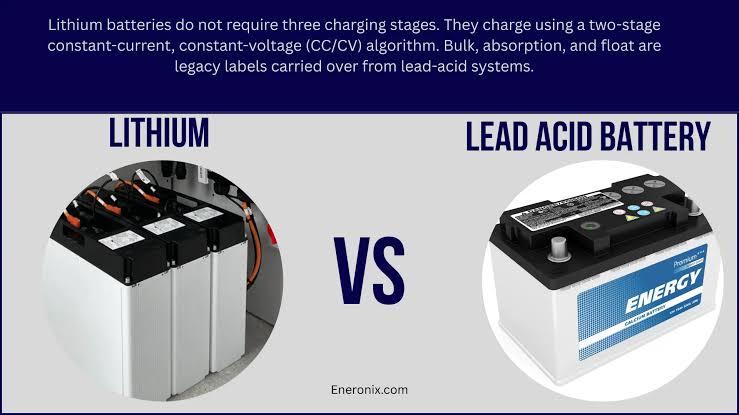
Choosing the right battery for a UPS is important for maintaining a reliable power backup system. Two commonly used battery technologies are lead-acid and lithium-ion batteries. Both provide backup electricity during power interruptions, but they differ in price, lifespan, charging speed, maintenance, and performance.
If you are confused about Lead Acid vs Lithium Battery for UPS, understanding their differences can help you make a better decision. Lead-acid batteries are traditionally popular because of their lower initial cost, while lithium-ion batteries are known for their longer lifespan, lightweight design, and faster charging.
In this article, we will compare lead-acid and lithium batteries, discuss their advantages and disadvantages, and explain which option may be more suitable for different UPS requirements.
What Is a Lead-Acid Battery?
A lead-acid battery is a rechargeable battery that uses lead-based plates and an electrolyte solution to store and release electrical energy.
It is one of the oldest and most widely used battery technologies for backup power systems. Lead-acid batteries are commonly found in home UPS systems, emergency power supplies, and other electrical applications.
There are different types of lead-acid batteries, including:
Flooded lead-acid batteries
Sealed lead-acid batteries
Valve-regulated lead-acid (VRLA) batteries
AGM batteries
Gel batteries
Lead-acid batteries are popular because they have a relatively low purchase price and are compatible with many traditional UPS systems.
What Is a Lithium Battery?
A lithium-ion battery is a rechargeable battery that uses lithium-based technology to store electrical energy.
These batteries are becoming increasingly popular in modern UPS systems because they offer higher energy density, faster charging, and a longer operating life.
Lithium batteries are generally smaller and lighter than comparable lead-acid batteries. Many modern lithium UPS batteries also include a Battery Management System (BMS) that monitors important operating conditions and provides protection.
Lithium iron phosphate (LiFePO4) is one lithium battery chemistry commonly used in energy storage applications.
Lead Acid vs Lithium Battery for UPS: Key Differences
Both battery technologies have their own benefits and limitations. Here is a comparison of their main characteristics.
Features | Lead-Acid Battery | Lithium-Ion Battery |
Initial Cost | Lower | Higher |
Lifespan | Generally shorter | Generally longer |
Charging Speed | Slower | Faster |
Weight | Heavy | Lightweight |
Size | Larger | More compact |
Maintenance | Depends on battery type | Generally low |
Energy Density | Lower | Higher |
Cycle Life | Lower | Higher |
Battery Monitoring | Depends on system | Often includes BMS |
UPS Compatibility | Widely supported | Requires compatible UPS |
Actual performance depends on battery quality, chemistry, operating temperature, charging conditions, and manufacturer specifications.
Advantages of Lead-Acid Batteries for UPS
Lead-acid batteries remain a common choice for backup power systems. Here are some important advantages.
1. Affordable Initial Cost
One of the biggest advantages of lead-acid batteries is their relatively low purchase price. They are suitable for customers who want a backup solution without spending a large amount initially.
2. Wide Availability
Lead-acid batteries are widely available through battery retailers and UPS suppliers. Customers can find different capacities and models in the market.
3. Established Technology
Lead-acid batteries have been used for many years in backup power applications. Their technology is well established, and many UPS systems are specifically designed to work with them.
4. Recycling Availability
Lead-acid batteries have established recycling systems in many markets. Proper recycling helps recover valuable materials and reduces environmental waste.
Disadvantages of Lead-Acid Batteries
Despite their advantages, lead-acid batteries also have some limitations.
They are heavier and bulkier than lithium batteries.
Their charging speed is generally slower.
They usually have a shorter service life.
Some types require regular maintenance.
High operating temperatures can reduce battery life.
Frequent deep discharging can affect their performance.
Advantages of Lithium Batteries for UPS
Lithium-ion batteries offer several advantages over traditional lead-acid technology.
1. Longer Lifespan
Lithium batteries generally provide a longer service life than conventional lead-acid batteries. This can reduce the frequency of battery replacements and maintenance expenses over time.
2. Faster Charging
Lithium batteries can generally recharge faster than lead-acid batteries when used with compatible charging equipment.
This feature can be useful in locations where electricity interruptions happen frequently.
3. Lightweight Design
Lithium batteries have a higher energy density, meaning they can store more energy in a smaller and lighter package.
This makes them useful where installation space is limited.
4. Low Maintenance
Many lithium battery systems require less routine maintenance than flooded lead-acid batteries.
However, they still require proper installation, monitoring, and charging.
5. Battery Management System
Many lithium UPS batteries include a Battery Management System (BMS). It monitors battery conditions and helps protect against problems such as overcharging, excessive discharging, and unsuitable temperatures.
Disadvantages of Lithium Batteries
Lithium batteries also have some limitations that customers should consider.
Their initial purchase price is generally higher.
They require compatible charging systems.
Not every traditional UPS supports lithium batteries.
Their installation requires attention to manufacturer safety requirements.
Battery quality and BMS performance can vary between products.
Which Battery Lasts Longer: Lead Acid or Lithium?
Battery lifespan is one of the most important differences between these technologies.
Traditional lead-acid UPS batteries often have a service life of approximately 3–5 years under suitable operating conditions. Lithium-ion UPS batteries can commonly provide around 8–10 years or longer, depending on their chemistry, quality, and usage.
However, these are general estimates rather than guaranteed lifespans.
Factors affecting battery life include:
Operating temperature
Charging and discharging habits
Depth of discharge
Battery quality
Installation conditions
Maintenance practices
Lithium batteries generally have an advantage when long-term performance and fewer replacements are important.
Which Battery Is More Cost-Effective?
The answer depends on your budget and how frequently you use your UPS.
Lead-acid batteries generally have a lower initial purchase cost. This makes them attractive for customers who need an affordable backup solution.
Lithium batteries usually cost more initially, but their longer lifespan and lower maintenance requirements may provide better long-term value.
When comparing costs, consider the following:
Initial battery purchase price.
Expected operating lifespan.
Replacement expenses.
Maintenance requirements.
Charging efficiency.
Warranty coverage.
Instead of comparing only the purchase price, consider the total cost of ownership over the battery's expected lifespan.
Lead Acid vs Lithium Battery for Home UPS
For home UPS systems, both battery types can be suitable when correctly matched with the equipment.
Lead-acid batteries may be a suitable option for households looking for a lower-cost backup solution with a traditional compatible UPS.
Lithium batteries may be worth considering for households that want faster charging, reduced weight, longer service life, and lower routine maintenance.
Before selecting either option, check the UPS manufacturer's compatibility requirements, voltage specifications, and charging settings.
Never replace a lead-acid battery with a lithium battery unless the UPS manufacturer confirms that the system supports the specific lithium battery.
Safety and Maintenance Considerations
Battery safety is important regardless of the technology.
Lead-acid batteries may release gases during charging, so suitable ventilation and correct installation are important. Their electrolyte can also be corrosive.
Lithium-ion batteries require suitable protection and temperature monitoring. A compatible BMS and charger are important for safe operation.
For both battery types:
Follow the manufacturer's installation instructions.
Use a compatible UPS and charging system.
Keep batteries away from excessive heat.
Avoid damaged or unsuitable electrical connections.
Arrange installation and inspection through a qualified technician.
Recycle old batteries through appropriate recycling facilities.
Frequently Asked Questions (FAQs)
1. Which is better for UPS: lead acid or lithium battery?
Both have advantages. Lead-acid batteries are generally more affordable initially, while lithium batteries offer a longer lifespan, faster charging, and a lighter design.
2. How long does a lead-acid UPS battery last?
A conventional lead-acid UPS battery may last approximately 3–5 years, depending on usage, temperature, and maintenance.
3. How long does a lithium UPS battery last?
Many lithium-ion UPS batteries are designed to last approximately 8–10 years or longer, depending on the battery chemistry and operating conditions.
4. Do lithium batteries charge faster than lead-acid batteries?
Yes. Lithium batteries generally support faster charging when paired with compatible charging equipment.
5. Are lithium batteries more expensive than lead-acid batteries?
Lithium batteries generally have a higher initial purchase price. However, their longer lifespan may make them more economical over time.
6. Can I use a lithium battery in a lead-acid UPS?
Not necessarily. The UPS must specifically support the lithium battery's voltage, charging profile, and communication or protection requirements.
7. Which battery requires less maintenance?
Lithium-ion batteries generally require less routine maintenance than flooded lead-acid batteries. However, both require proper installation and periodic inspection.


Join the conversation
Discussion0
Join the conversation. Sign in to leave a response or reply to comments.