
AI video creation is evolving rapidly, but not every tool is designed to solve the same problem. Some platforms focus on generating cinematic footage from text and images, others specialize in realistic digital presenters, while a growing category of tools is built specifically around music-driven video production.
For creators choosing between 1MV.ai, Runway, and HeyGen, the important question is not simply which platform has the most AI features. It is which tool best matches the content they want to produce, how much creative control they need, and how much time they are willing to spend editing.
This comparison examines the three platforms from a practical user perspective, focusing on their capabilities, workflows, limitations, and suitability for music video production.

1. Understanding the Different Categories of AI Video Tools
Before comparing individual products, it helps to understand three distinct categories of AI video creation.
General-purpose AI video generators create footage from text prompts, images, or existing video. They are primarily used for visual storytelling, creative experimentation, cinematic scenes, and advertising assets.
AI avatar video platforms focus on digital presenters who speak, explain, or deliver scripted content. Their main applications include marketing, education, corporate communication, and multilingual video localization.
AI music video makers are designed around a soundtrack. They automate the relationship between audio, visual performance, camera movement, and editing rhythm.
These categories overlap, but their workflows differ considerably. A general-purpose generator may produce excellent individual shots without automatically assembling an entire song. An avatar platform may synchronize speech accurately but prioritize dialogue rather than musical performance.
2. Product Overview
1MV.ai: Music-First Video Production
Free AI Music Video Generator: Create AI Music Videos
1MV.ai is designed specifically for users who already have a song and want to turn it into a complete music video.
Its workflow centers on uploading an image and an audio track. The system then generates a video with AI lip sync, automatic camera movements, angle changes, and beat-synchronized cuts.
Unlike a general AI video generator, it does not require creators to build a storyboard or generate individual scenes one by one.
The platform is particularly relevant to independent musicians, AI music creators, virtual performers, and users who want to produce a ai music video without learning professional editing software.
Its main strength is workflow specialization: the music itself becomes the foundation for video direction and editing.
Runway: General-Purpose AI Video Generation
Runway focuses on generative video creation and creative editing.
Users can start from text, images, or existing footage, then generate, extend, transform, or refine video content. Its image-to-video capabilities are useful for animating artwork, creating cinematic scenes, and developing visual concepts.
Runway is better suited to creators who want to control the content of individual shots rather than automatically generate a complete music video from a soundtrack.
For music video production, users can create multiple clips, experiment with camera choreography, and assemble them into a finished project using an editing workflow.
HeyGen: Digital Avatars and Presenter Videos
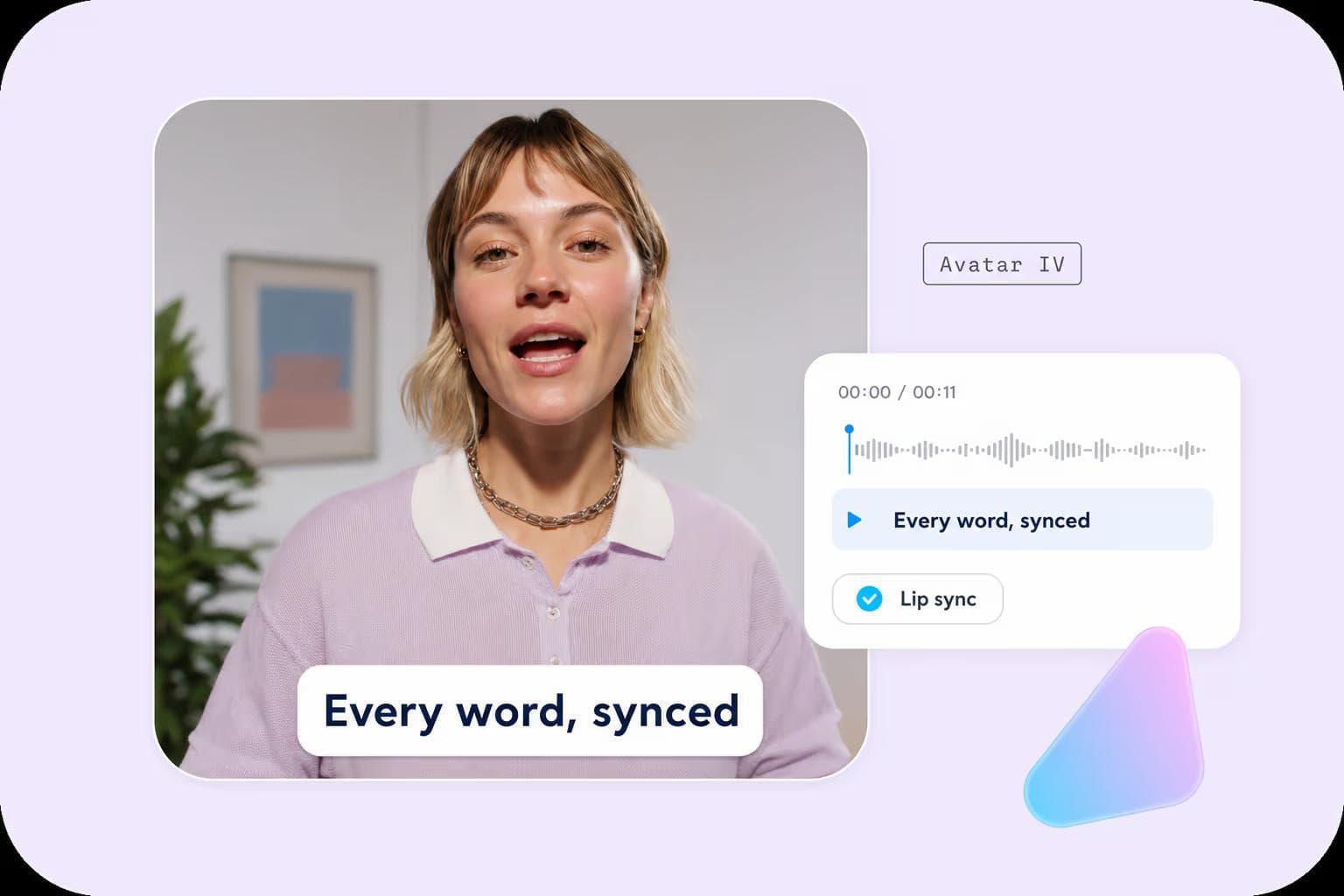
HeyGen specializes in avatar-based video creation, script-to-video production, voice generation, and multilingual video translation.
Its photo avatar functionality can animate a single image, while its broader avatar ecosystem supports digital presenters, personalized avatars, and scripted video production.
HeyGen is particularly valuable for businesses that need consistent presenters, product explainers, educational videos, or localized marketing content.
Although it supports audio-driven lip synchronization, its primary workflow is built around speech and presentation rather than musical performance and beat-based editing.
3. Feature Comparison
The following comparison focuses on each platform's publicly documented capabilities and its practical suitability for music video production.
Feature | Runway | HeyGen | |
|---|---|---|---|
Primary purpose | Music video generation | General AI video generation and editing | AI avatar and presenter videos |
Image-to-video | Animates a performer from an uploaded image | Generates visual motion from reference images | Animates photo avatars |
AI lip sync | Designed for singing synchronization | Not its primary music-video workflow | Strong focus on speech and avatar lip sync |
Beat synchronization | Automatically plans cuts around music | Requires a creative editing workflow | Not primarily designed for musical beat editing |
Camera control | Automated camera direction | More prompt-based creative control | Presenter and avatar-focused framing |
Video aspect ratios | 21:9, 16:9, 4:3, 1:1, 3:4, 9:16 | Multiple formats depending on model | Common landscape, portrait, and square formats |
Ease of use | Simple music-first workflow | More experimentation and production steps | Beginner-friendly for scripted videos |
Pricing model | Subscription and credit-based generation | Subscription and credits | Subscription and usage-based credits |
Best use case | Complete music videos | Cinematic visual scenes | Talking avatars and localized presentations |
The comparison does not mean that one tool universally produces better visuals than the others. They are optimized for different tasks.
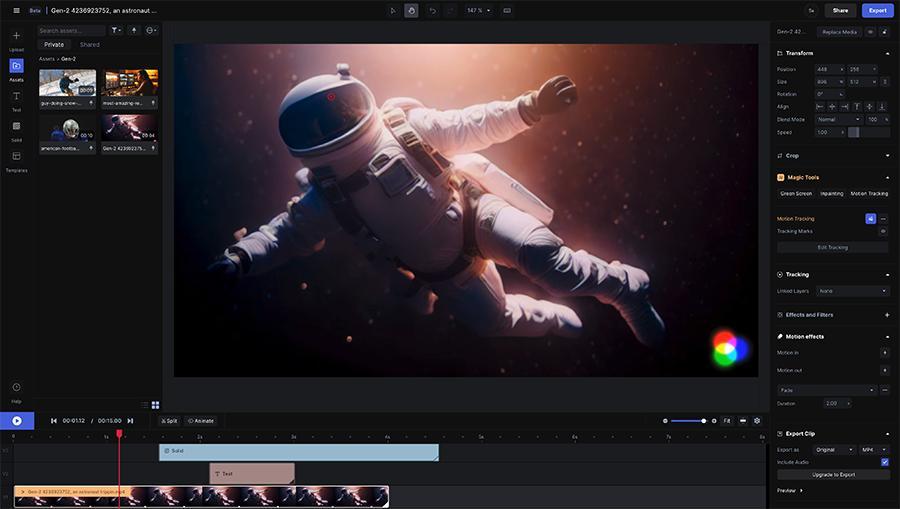
Image-to-Video Capabilities
All three platforms can work with image-based inputs, but their intended results differ.
1MV.ai uses an image as the identity and visual foundation of a singing performer. Its generation process is oriented toward making that performer appear to sing throughout a song.
Runway treats the image as a visual starting point for generating motion. Users can describe how the scene, subject, or camera should move, making it suitable for creative visual experimentation.
HeyGen uses photos to create talking avatars, with facial expressions and lip movements driven by speech or audio.
For a single album-cover portrait that needs to become a singing performance, 1MV.ai offers the most specialized workflow. For turning artwork into a cinematic scene, Runway provides a broader generative approach.
AI Lip Sync and Music Synchronization
Lip synchronization is an important distinction between these platforms.
1MV.ai is designed to match the singer's mouth movements to vocals while maintaining synchronization through camera movements and shot changes. This is especially relevant for multilingual songs and AI-generated music.
HeyGen provides sophisticated lip-syncing for spoken dialogue, including multilingual voice generation and video translation. Its capabilities are useful for presentations, dubbing, and talking-photo videos, but speech synchronization and singing synchronization are different tasks.
Runway offers creative video generation and character animation capabilities, but users should not assume that its general video generation workflow automatically produces a complete, accurately lip-synced music video.
Camera Movement and Creative Control
Runway offers greater flexibility for creators who want to describe and experiment with individual scenes, movements, compositions, and visual effects.
1MV.ai automates camera direction according to the music. This is convenient for users who want a finished performance video without specifying every shot.
HeyGen focuses on presenter framing, avatar performance, and scripted delivery. It is less concerned with cinematic music-video camera choreography.
This creates a clear trade-off: automation reduces production effort, while manual creative control increases the potential for customization.
4. Which Tool Is Better for Different Users?
Independent Musicians
Independent musicians usually need a video that complements their song without requiring a separate production budget.
Recommended: 1MV.ai
If the song is finished and the creator has a portrait or character image, 1MV.ai provides a direct workflow from audio to video. It is especially practical for singles, demos, covers, and promotional releases.
Runway becomes more attractive when the artist wants a conceptual music video featuring different environments, symbolic imagery, or cinematic scenes rather than a singing portrait.
Suno Users
Recommended: 1MV.ai
Suno users already have a finished audio track, so the next challenge is creating visual content around it. Uploading the downloaded song and a cover image allows them to produce a complete music video without generating separate footage.
Runway is a better alternative for users who want to create a visual narrative inspired by their song rather than animate the singer directly.
Social Media Creators
Recommended: Depends on the content
For singing portraits, music clips, and short promotional videos, 1MV.ai offers a straightforward workflow.
For creative short-form videos featuring unusual scenes, transitions, visual effects, or different AI-generated characters, Runway may offer more flexibility.
HeyGen is more appropriate for creators producing educational content, product recommendations, scripted commentary, or videos featuring a virtual presenter.
Digital Marketing Teams
Recommended: HeyGen or Runway
Marketing teams often require more than music videos. They may need product demonstrations, multilingual advertising, corporate presentations, training materials, and branded visual assets.
HeyGen is particularly useful for producing consistent presenter-based content and localized videos at scale.
Runway is suitable for creative advertising campaigns that require customized visuals and generated footage.
1MV.ai may be useful when a campaign involves an original song, branded musical content, or a virtual performer, but it is less suited to general marketing video production.
5. Pricing and Workflow Considerations
Pricing structures differ because each platform charges for different types of production.
1MV.ai: Credit consumption is based primarily on video duration and output resolution. Its free plan allows short videos, while paid plans support longer videos and higher resolutions. Downloading a completed video does not require additional credits.
1MV+1
Runway: Uses subscription plans with monthly credits. Different video models and generation settings consume different amounts of credits, so costs depend on the chosen model and the number of generations.
Runway AI+1
HeyGen: Uses plans and credits associated with avatar video generation, with additional features for voice, translation, and avatar creation depending on the plan.
HeyGen+1
For music video creators, the total production cost should include unsuccessful generations, editing time, and any additional tools required to finish the video.
A seemingly inexpensive AI video generator may become more costly if the user needs to generate dozens of short clips, manually synchronize them, and assemble the final video. Conversely, an automated music video maker may offer better workflow efficiency for a complete song, even if its individual generation price is not the lowest available.
6. Can You Combine These Tools?
These platforms do not necessarily need to be treated as competing alternatives. They can be used at different stages of the same production process.
For example, an independent musician could:
Use Runway to create a cinematic background or establish the visual concept.
Use 1MV.ai to generate a singing performance from the artist's portrait and completed song.
Use a traditional editing application to combine the performance and cinematic footage.
Use HeyGen if the final promotional video also requires translated spoken introductions or a digital presenter.
This hybrid workflow provides more creative flexibility than relying on a single tool, although it requires additional time and potentially additional subscriptions.
Final Verdict: Which AI Video Tool Is Better for Music Videos?
The choice between 1MV.ai, Runway, and HeyGen ultimately depends on what kind of video you are trying to make.
If your priority is... | Recommended tool |
|---|---|
Turning a finished song into a complete music video | |
Creating cinematic AI scenes and visual storytelling | Runway |
Producing talking avatars and multilingual presentations | HeyGen |
Animating a portrait to sing an original song | |
Creating highly customized visual sequences | Runway |
Localizing marketing videos with AI presenters | HeyGen |
1MV.ai occupies a more specialized position in the AI video market. Its main advantage is not necessarily that it offers the most advanced general-purpose video generation model, but that it combines music-driven editing, singing lip sync, camera movement, and beat synchronization into a single workflow.
Runway offers broader creative freedom for visual storytelling, while HeyGen provides a more mature workflow for digital presenters, speech generation, and video localization.
For independent musicians, Suno users, and virtual artists who already have a song and want to turn it into a visual performance, 1MV.ai is arguably the most directly relevant option among these three.
For creators producing cinematic narratives or commercial video campaigns, Runway may be a better fit. For marketing teams and educators creating presenter-led videos, HeyGen is more appropriate.
The best AI video tool is therefore not necessarily the one with the most features. It is the one that minimizes the work required to achieve the specific creative result you want.



Join the conversation
Discussion0
Join the conversation. Sign in to leave a response or reply to comments.